

Not too long ago, you could reliably bring a cozy conversation to an abrupt halt by steering the table talk toward the topic of climate change. This was followed by embarrassed glances at the floor and houseplants, accompanied by nervous coughing or fidgeting with the tablecloth. You quickly felt like a killjoy, a moralist, or a prophet of doom—or, even worse, of self-denial.
The same pattern could be observed in political debates: as soon as the topic of climate protection came up, rows of blank faces in the National Council, flippant downplaying of the problem, fear of change, and so on.
How can that be? Especially when climate scientists have been tapping their feet in their chairs for decades. When we’re faced with a mountain of facts that clearly show that even on our perceived “island of bliss,” nothing will be left standing if we don’t get moving. And what are we doing with this mountain of facts?
Pigeonholing. Or simply ignoring. And not even maliciously. What we need are stories that hit like a bomb. Stories that make all 8.8 million Austrians prick up their ears, even in the remotest corners of our valleys. Stories that make you feel like you’re standing next to the Pummerin bell in St. Stephen’s Cathedral on a major holiday, as it rings out. They would have to be stories that don’t leave scorched earth within us, but rather open our eyes and hearts. Stories that make us shout “Yesss!” and “Count me in!” when it comes to truly breaking new ground together. But what might these stories look like, who writes them, and who tells them?
These stories are woven from a fabric that only many skilled hands working together can create. The supporting threads of the fabric—the hard facts—come from science. But what ultimately makes the tapestry a tapestry are the beautiful, soft, colorful threads that bring this framework of facts to life. These are stories that show us how these facts relate to us personally and what concrete changes we can make.
Of course, you don’t have to be able to weave intricate tapestries yourself to have meaningful conversations with others about climate change. But it might be worth taking a quick peek behind the scenes at the professionals—the people who have been working for years to understand how climate communication works.
Curtain up.
[av_heading heading='A wake-up call, yes, but for whom?' tag='h3' style=" size=" subheading_active=" subheading_size='15' padding='10' color=" custom_font=" admin_preview_bg="][/av_heading]
This question may sound simplistic. But it is based on the realization that, when it comes to climate protection, some people are still in a deep, comatose sleep, while others may be only just dozing and are much easier to rouse[1]. Of course, it may seem tempting to tackle the really tough nuts (e.g., climate deniers). But all too often, facts—no matter how convincingly presented—achieve nothing here. It may be more worthwhile to focus on people who have some idea of what all this climate madness could mean for all of our futures.
And there are many such cases in Austria. Many people find themselves in a sort of limbo. Researchers describe this state as the “awareness-action gap”[2]. It refers to the act of (not) taking action despite knowing better. But information alone is simply not enough to motivate people to act.
[av_heading heading='Because we know what we (don't) do' tag='h3' style=" size=" subheading_active=" subheading_size='15' padding='10' color=" custom_font=" admin_preview_bg="][/av_heading]
It’s a fact that most people in Austria are beginning to realize what needs to be done. Ask any school class in Austria—whether in Burgenland or Vorarlberg—what it would take to effectively combat climate change in the country. The solutions will reliably be on the table within 10 minutes: switch to renewable energy, take public transportation whenever possible, fly less, eat a healthy diet with less meat, think about what you really need, and don’t buy unnecessary knick-knacks.
So we know that something is coming our way.
[av_heading heading='Why is it so easy for us to watch and so hard to take action?' tag='h3' style=" size=" subheading_active=" subheading_size='15' padding='10' color=" custom_font=" admin_preview_bg="][/av_heading]
So most of us have a vague idea of where we could start. But that’s just a possibility. What’s stopping us? We’re held back by the terms and conditions of “climate spectating” (German: “watching motionlessly”):
A – Alternatives are too complicated,
G – Changing habits is hard work
B – Comfort comes first
s – Self-doubt holds us back
However, according to the latest findings in climate communication research, the last point in particular should be given top priority. In fact, the most effective way we hold ourselves back is by doubting our own ability to make a difference.
[av_heading heading='How Can We Overcome Our Inferiority Complex?' tag='h3' style=" size=" subheading_active=" subheading_size='15' padding='10' color=" custom_font=" admin_preview_bg="][/av_heading]
We Austrians collectively suffer from an inferiority complex when it comes to climate protection. On the one hand, we doubt the impact of our individual efforts: “What difference can I really make on my own?” On the other hand, given our modest national size, we often cowardly talk ourselves out of it: “What difference can a small country like Austria really make if the big players—the US and China—don’t get on board?” Either way, the fact is that we’re thereby blocking our own effectiveness.
At the heart of meaningful conversations about climate change is the idea of effectiveness—showing others that every individual can make a difference. People who have overcome their self-doubt and simply done things a little differently now find themselves in good company.

Image by PublicDomainPictures on Pixabay
[av_heading heading='Where to start?' tag='h3' style=" size=" subheading_active=" subheading_size='15' padding='10' color=" custom_font=" admin_preview_bg="][/av_heading]
Let’s say you’re walking toward a large building. What are you looking for—the main entrance or a hidden, dimly lit back entrance? Every person you want to convince of the importance of climate protection has something like a main entrance: a topic they’re particularly passionate about. Maybe it’s the financial markets, fashion, or cars. Maybe they live for sports, music, or good food. No matter the topic, climate change affects everything. Any topic is a good starting point for a conversation about climate change. Choose that “main entrance,” meet the person where their core interests lie, and show how that topic connects to climate change. Alternatively, current events often provide good entry points for climate conversations.
And if you do happen to find yourself facing groups that are completely unfamiliar with the topic of climate change, it can also help to avoid using the term altogether. Instead, steer the conversation toward other topics that are more tangible (experiences with heat waves, public transportation access in their area, renewable energy supply) to avoid triggering resistance from the outset.
[av_heading heading='Who is your hero?' tag='h3' style=" size=" subheading_active=" subheading_size='15' padding='10' color=" custom_font=" admin_preview_bg="][/av_heading]
Draw on the wide range of inspiring role models and everyday climate heroes to encourage others. And try to choose stories that are relevant.
What values does the person or group you want to engage with hold dear: openness to the world? Environmental protection? Social values? Tradition? Raving to a conservative person about the Fridays for Future movement could backfire. Others, on the other hand, will jump into the discussion enthusiastically the moment Greta Thunberg’s name comes up. In any case, look for role models with whom your conversation partner can identify.
And it doesn’t always have to be the big names. Feel free to share stories of climate heroism in your own community: like a neighbor who finally got the message and decided to thoroughly renovate his house and say goodbye to his oil-fired heating system.
[av_heading heading='Motivating Without Sugarcoating It' tag='h3' style=" size=" subheading_active=" subheading_size='15' padding='10' color=" custom_font=" admin_preview_bg="][/av_heading]
Fear-mongering and doomsday predictions alone are not an effective way to motivate people to take action on climate change. After all, it’s the dose that makes the poison. When used strategically, they can help achieve the desired effect. However, to reach people who have so far turned a deaf ear, two things are needed: first, a wake-up call—for example, through information about the impending consequences. But: Who among you would voluntarily let the alarm clock keep ringing throughout breakfast?
When it comes to climate communication, this is why we talk about “positive framing.” It’s not just about scaremongering, but also about focusing on the opportunities. Where there is something to lose, there is also something to gain. And that is exactly what we should be talking about much more.
What incentives do we see dangling before us when we hop on a bike or take public transportation? Better health? Fewer children with asthma? Maybe it’s cheaper, too? Or more time to read? Many climate protection measures not only reduceCO2 emissions but also have another positive side effect. Far too little is said about the truly great benefits—which we take for granted—that effective climate protection helps to preserve: a peaceful and secure future.
So, when trying to win people over to the cause of climate protection, avoid overwhelming them solely with the “horrors” of the climate crisis; instead, bring these incentives into play as well.
[av_heading heading='Together, we're less alone' tag='h3' style=" size=" subheading_active=" subheading_size='15' padding='10' color=" custom_font=" admin_preview_bg="][/av_heading]
Research in recent years has shown that people feel particularly empowered to do things differently when they see and feel that they are not on this journey alone—when a friend, sibling, or other trusted person accompanies and supports them along the way.
One recommendation is therefore to focus on this domino effect within social groups and make deliberate use of it. Rather than always addressing just one individual, we should engage social groups (circles of friends, family, clubs, etc.). The fact that climate protection will thus cease to be seen as the behavior of outsiders within these groups and instead become the new “normal” (the new social norm) offers significant leverage.
And that’s not just because we feel more confident as a group and care about what others think of us, but also because it’s simply more fun. Climate protection is a collective responsibility, and we’re best off tackling it together.
[av_promobox button='no' label='Click me' link='manually,http://' link_target="" color='theme-color' custom_bg='#444444' custom_font='#ffffff’ size=’large’ icon_select=’no’ icon=’ue800’ font=’entypo-fontello’ box_color=“ box_custom_font=’#ffffff’ box_custom_bg=’#444444’ box_custom_border=’#333333’ admin_preview_bg=“]
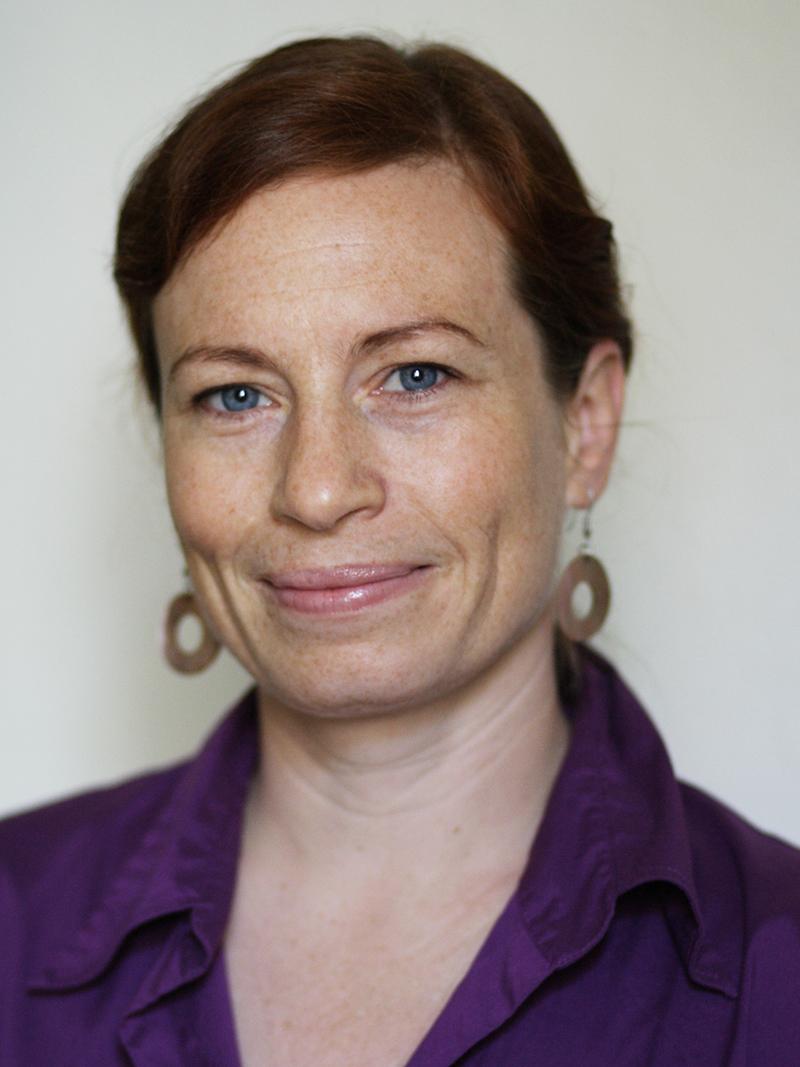 About the Author
Dr. Sybille Chiari is a member of the editorial team for “Nachhaltigkeit. Neu denken” and has been engaged in sustainability and climate communication for many years—both through research and writing. She is part of the Scientists for Future movement and chairwoman of the Bele Co-Housing association (a communal housing project featuring organic, regenerative agriculture ; www.belehof.at).
[/av_promobox]
Read more articles in our Climate Crisis series now and find out how you can help advance climate protection.
[av_notification title=" color='silver' border=" custom_bg='#444444' custom_font='#ffffff' size='normal' icon_select='yes' icon='ue80b' font='entypo-fontello' admin_preview_bg="]
Source:
[1] Metag, J., Füchslin, T., Schäfer, M. (2015): Global warming’s five Germanys: A typology of Germans’ views on climate change and patterns of media use and information. URL: https://journals.sagepub.com/doi/abs/10.1177/0963662515592558
[2] Kollmuss, A., Agyeman, J. (2002): Mind the gap: Why do people act environmentally and what are the barriers to pro-environmental behavior? Environmental Education Review 8(3):239–60
[/av_notification]