
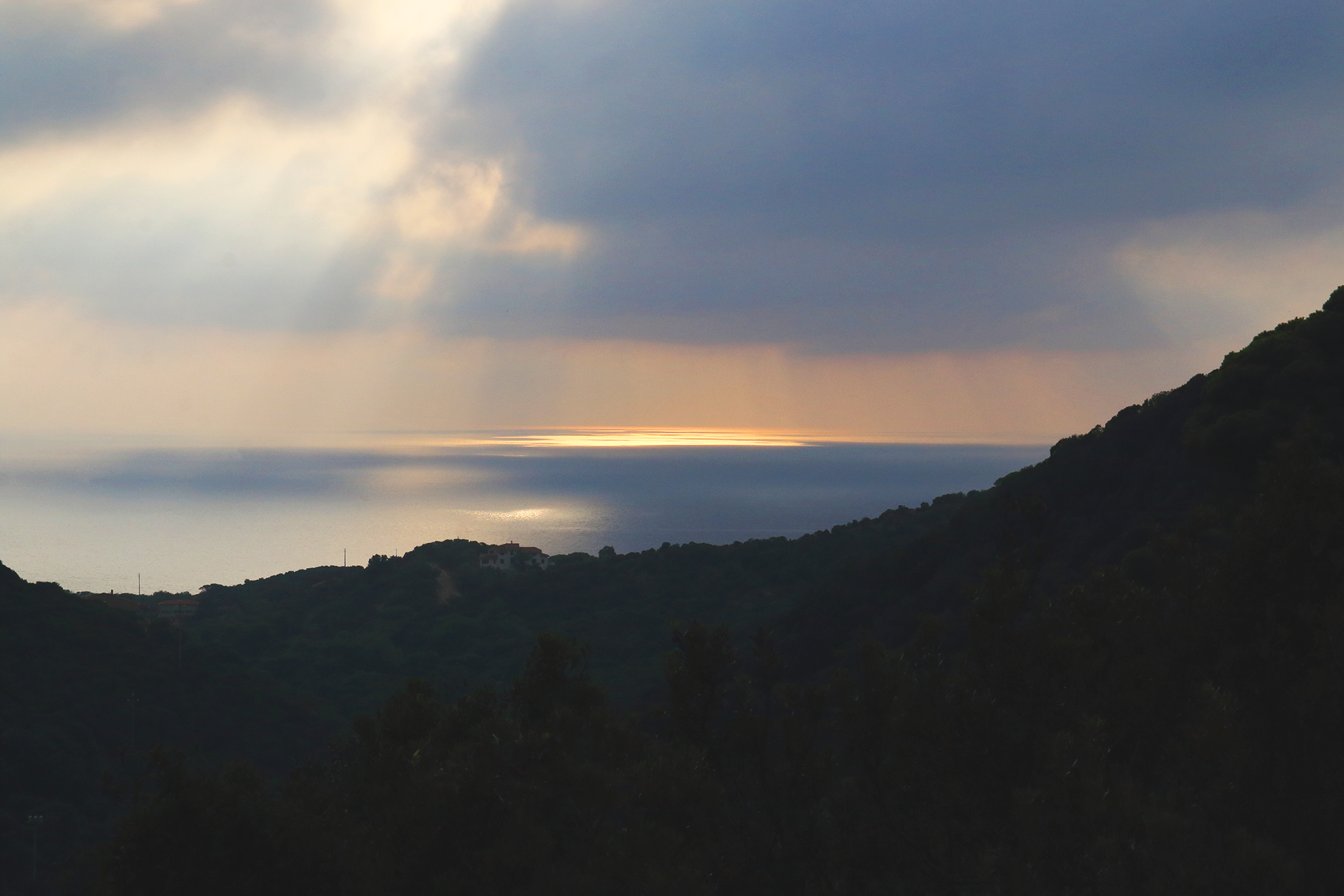
Suppose the sky turned a bright purple due to human-caused greenhouse gas emissions. Suppose we could no longer even gaze at the stars from the highest peaks in Austria. If that were the case, the problem might have received attention much sooner. And there would likely be hardly anyone who would deny climate change. But things remain as they are: Greenhouse gases are transparent, and we (more easily) believe what we see. But is global warming really a matter of faith?
From a scientific standpoint, the answer is quite clear: no. Over 97% of scientists agree that global warming is primarily caused by human activities [1]. This level of consensus is exactly the same as that regarding the fact that smoking causes lung cancer [2]. While no one publicly doubts this connection, there is doubt as to whether humans are truly to blame for climate change. Why is that?
We all have a personal connection to smoking. Perhaps we even know someone close to us who became seriously ill or died as a result of smoking. We have less of a personal connection to climate change. Most of us don’t have relatives or friends who have been personally affected by major climate disasters, such as the one currently unfolding in Australia, where people have had to be evacuated due to devastating wildfires.
For many people, the climate crisis remains an overwhelming problem. The idea of having to do without fossil fuels still causes panic in large segments of society.
It is easier to cast doubt on the causes, as well as on the possible consequences or the value of climate protection measures.
So if you find yourself in a heated discussion with friends or at your regulars' table where climate myths and false claims are being bandied about, we’d like to equip you with easy-to-understand facts to help you navigate the conversation.
Definitely yes. Especially since the 1980s, global warming has been accelerating at an alarming rate as a result of human greenhouse gas emissions [3], [4]. In Austria, the average annual temperature has already risen by well over 2°C (the global average is more than +1°C). Since 2000, we have experienced the 14 warmest years on record. The last four years were the warmest globally since records began [5].

Unfortunately, it is clearly humans. The rapid rise in temperature is almost entirely due to greenhouse gas emissions resulting from our economic activities and lifestyle. The sun, as well as the influence of other natural factors, plays an extremely minor role[6]. If we were to imagine the causes of global warming as an orchestra, natural sources would be the triangle. The rest of the instruments would be played by humans.
At first glance, it may seem like a good thing that climate change is causing lilacs to bloom earlier, delaying the need to break out our winter coats, and allowing us to farm our fields for a few more weeks each year. But on closer inspection, we in Austria are already grappling with climate-related damage costing millions due to floods, mudslides, droughts, and other extreme weather events. If we continue on our current path, it will cost us dearly by 2050: we would then have to draw up to 8.8 billion euros annually from the tax coffers [7]. An immense sum that corresponds exactly to our annual budget for education.
At least not in living memory. If we want to know what the Earth looked like the last time there were such highlevels of CO2 in the atmosphere, we have to turn the pages of Earth’s history book a very long way back—more than 3 million years to the Pliocene—when sea levels were up to 25 meters higher and forests grew in the Arctic.
How can we be so sure? Past geological eras have left us with insightful “climate diaries”: for example, marine sediments, ice cores, or fossilized leaves, which provide clues about the climate (andCO2 levels) during those periods.
Temperatures have never changed so rapidly. Never before has there been so little time to adapt. Just think for a moment about Eliud Kipchoge’s attempt to break the marathon record, in which he succeeded in breaking the 2-hour mark: we can all agree that not just any passerby could achieve such a feat in record time off the cuff. According to legend, the athlete who is said to have attempted this feat in ancient Greece died as a result. So, unfortunately, we must also expect to lose many more animal and plant species.
Today, due to climate change, global sea levels are already more than 20 centimeters higher than they were before the Industrial Revolution. According to a special report by the Intergovernmental Panel on Climate Change on the state of the oceans, published in September, sea levels could rise by more than a meter by the end of the century. However, if the ice in Antarctica were to melt rapidly, a rise of more than 2 meters is also possible. A NASA map impressively illustrates just how far-reaching these changes would be.
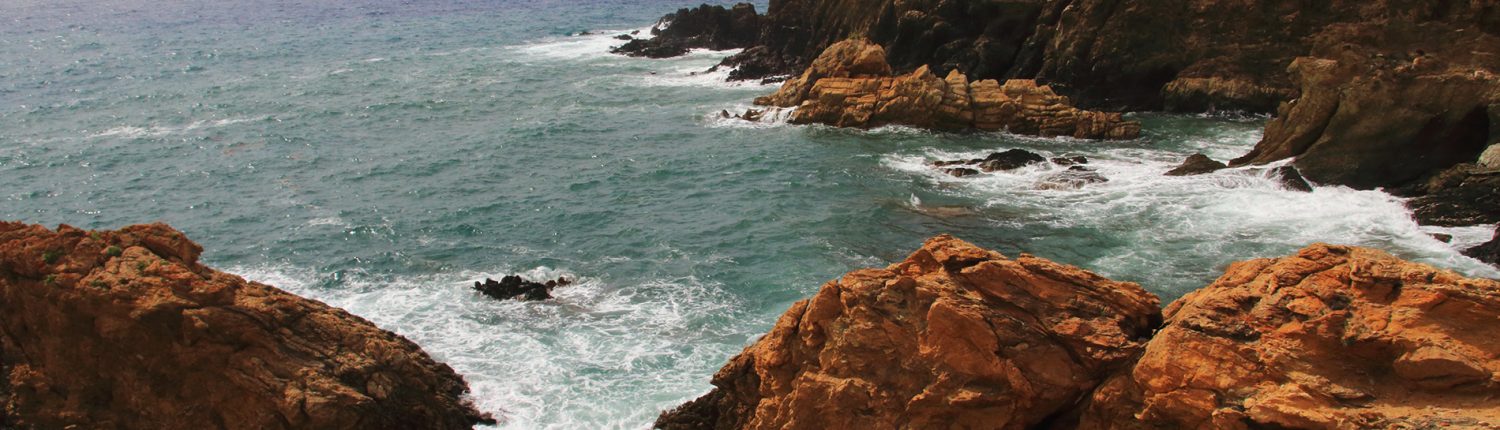
No matter how stable a system in nature may be, it theoretically has a point at which it ceases to be what it is. And that doesn’t always happen gradually or predictably. As global warming progresses, some processes within the climate system may turn out to be hidden triggers. Tipping points are the chamber of horrors of climate science.
What horrors does this chamber of horrors have in store? We pass the charred giants of the Amazon rainforest, which has collapsed due to drought. We pass depopulated villages and cities in India, China, and Africa (caused by the failure of the monsoon or as a result of droughts and devastation). Sadly, we trudge on through the mud of thawed permafrost, then hike what feels like an eternity through the dead forests of the North. All around us, ice is melting. Corals are bleaching into white skeletons. In some places, the sea looks like an oversized hot tub, with methane bubbles rising ceaselessly to the surface.
On a large sign in the chamber of horrors that is the tipping points, we read: “Unwanted side effects: please keep in mind that many tipping points influence and trigger one another.” And then, thankfully, we finally find the exit.
[av_heading heading='How much time do we have left to stop climate change?' tag='h3' style=" size=" subheading_active=" subheading_size='15' padding='10' color=" custom_font=" admin_preview_bg="][/av_heading]
The good news is: if we really step up our efforts, we might still be able to turn things around. The bad news: something has to happen right now.
To keep the effects of climate change somewhat in check and maintain a safe distance from tipping points, we need to shift into high gear and limit global warming to +1.5°C. The Intergovernmental Panel on Climate Change emphasizes the importance of the next 10 years[8]: the decisive decade for climate action has already begun
[av_heading heading='And where is the emergency exit?' tag='h3' style=" size=" subheading_active=" subheading_size='15' padding='10' color=" custom_font=" admin_preview_bg="][/av_heading]

At this point, I’d like to return to the metaphor of the marathon that lies ahead of us. We’re all signed up for this race. There will be virtually no spectators. But the field of participants is extremely diverse. Perhaps you’ll strike up a conversation with female corporate executives who have long been part of the energy transition, or with farmers who are successfully building up humus. Or maybe with teachers and students who have developed great climate protection projects. Perhaps you’ll also meet small businesses that have converted their fleets to electric vehicles.
It is clear that a mass event like this requires careful coordination. This important role would fall to policymakers. That would mean clearly marking the route, for example through robust climate legislation and a socially equitableCO2 tax. It would mean blocking off misleading forks in the road so that people cannot stray from the path—for example, through climate-damaging subsidies that are still being paid out in the billions.
But it would also mean boosting the participants’ stamina by offering a wide variety of climate-friendly foods (such as organic and authentic regional products). And to keep motivation high throughout the race, we should all support one another.
[av_promobox button='no' label='Click me' link='manually,http://' link_target="" color='theme-color' custom_bg='#444444' custom_font='#ffffff’ size=’large’ icon_select=’no’ icon=’ue800’ font=’entypo-fontello’ box_color=“ box_custom_font=’#ffffff’ box_custom_bg=’#444444’ box_custom_border=’#333333’ admin_preview_bg=“]
 About the Author
Dr. Sybille Chiari is a member of the editorial team for “Nachhaltigkeit. Neu denken” and has been engaged in sustainability and climate communication for many years—both through research and writing. She is part of the Scientists for Future movement and chairwoman of the Bele Co-Housing association (a communal housing project featuring organic, regenerative agriculture ; www.belehof.at).
[/av_promobox]
Read more articles in our Climate Crisis series now and find out how you can help advance climate protection.
[av_notification title=" color='silver' border=" custom_bg='#444444' custom_font='#ffffff' size='normal' icon_select='yes' icon='ue80b' font='entypo-fontello' admin_preview_bg="]
Source:
[1] Cook, J., Nuccitelli, D., Green, S. A., Richardson, M., Winkler, B., Painting, R., … & Skuce, A. (2013). Quantifying the consensus on anthropogenic global warming in the scientific literature. Environmental Research Letters, 8(2), 024024.
[2] Corner, A., Lewandowsky, S., Philipps, M., Roberts, O. (2015): Communicating uncertainty effectively. A practical guide for everyone reporting on climate change.
[3] https://wiki.bildungsserver.de/klimawandel/index.php/Aktuelle_Klima%C3%A4nderungen
[4] https://www.ncdc.noaa.gov/sotc/global/2014/13/supplemental/page-4
[5] World Meteorological Organization (WMO)
[6] IPCC (2014): Climate Change 2014. Synthesis Report, Figure p. 45.
[7] Steininger, K. W., König, M., Bednar-Friedl, B., Kranzl, L., Loibl, W., & Prettenthaler, F. (2016). Economic evaluation of climate change impacts. SPRINGER INTERNATIONAL PU.
[8] Intergovernmental Panel on Climate Change (IPCC) (2018): Global Warming of 1.5°. Special report on the impacts of global warming of 1.5 °C above pre-industrial levels and related global greenhouse gas emission pathways, in the context of strengthening the global response to the threat of climate change, sustainable development, and efforts to eradicate poverty
[/av_notification]