In light of the climate crisis, German physician, comedian, and climate activist Eckhart von Hirschhausen recently asked: “Shouldn’t there be something that is truly sacred to us and that we don’t destroy lightly?” In my view, our soils would be good candidates for this. In some countries, land already has a constitutionally enshrined right to be treated with respect, for example in Ecuador and Bolivia, where “Pachamama” (Mother Earth) has the legal status of a legal entity.
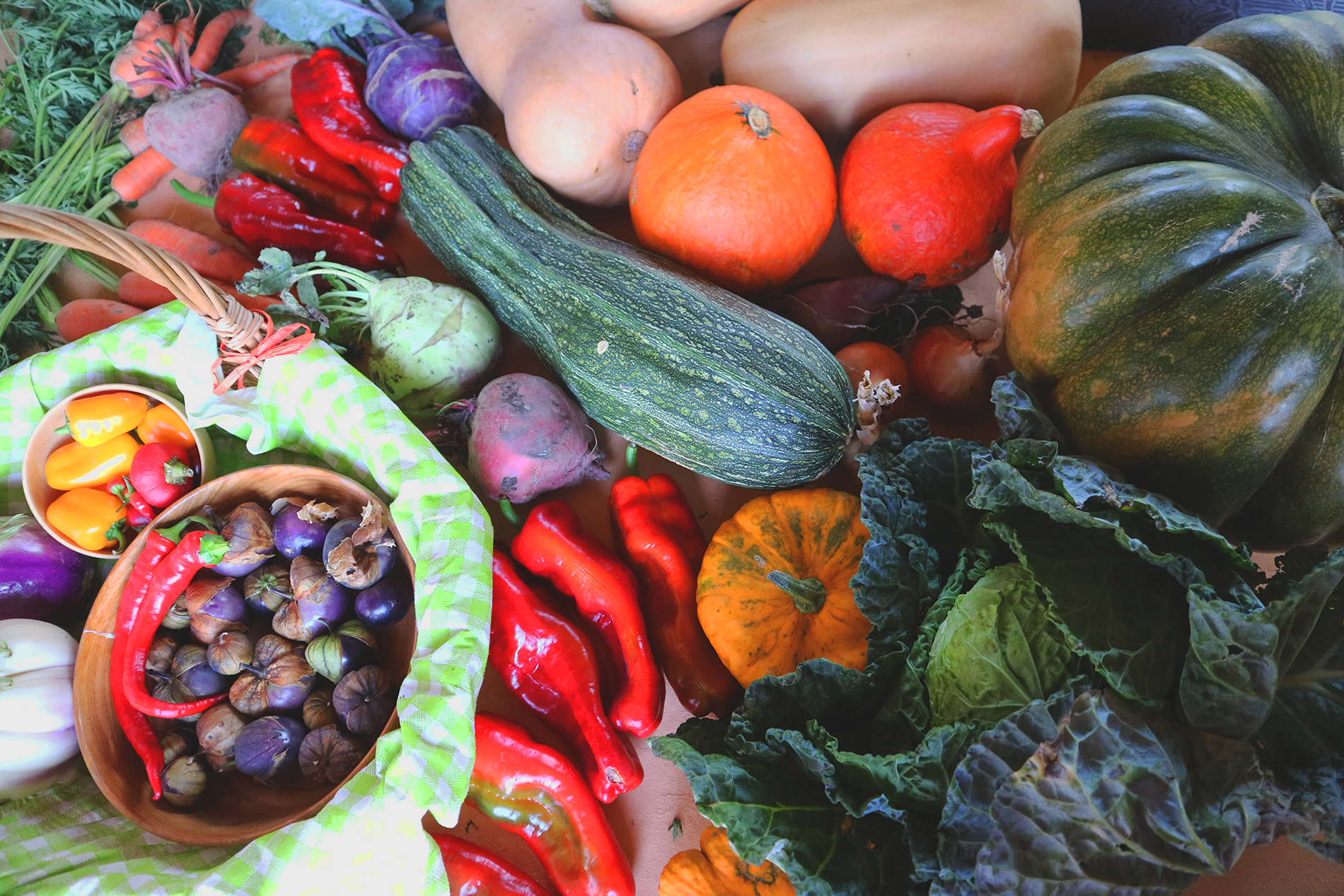
As we drive through the dusty wasteland of cleared agricultural landscapes, our gut tells us that in some places we have lost our sense of the “sacredness” of our soil. The excesses of industrialized agriculture also have a rather poor environmental reputation. And another imbalance should give us pause: numerous studies show that industrialized agriculture uses more calories in production than it ultimately yields in food calories. While this may still be economically profitable, it is certainly not sustainable. And then there are the undesirable side effects: depleted soils, immense water consumption, no more buzzing and chirping, vast amounts of greenhouse gases in the air, and not a soul far and wide who finds such agricultural wastelands attractive or livable.
[av_heading heading='But what might an alternative look like?' tag='h3' style=" size=" subheading_active=" subheading_size='15' padding='10' color=" custom_font=" admin_preview_bg="][/av_heading]
Wouldn’t it be desirable to have systems where the primary goal is not short-term profit, but the long-term fertility of the soil? Where the leading roles are played not by agrochemical corporations and massive farm machinery, but by healthy soils, animals, plants, farmers, and consumers? Let’s take a look around.
The organization Navdanja, which means “nine seeds,” has been active in India for over 30 years—founded by the charismatic organic farming pioneer and Alternative Nobel Prize laureate Vandana Shiva. She examines our relationship with food through the lens of her background as a quantum physicist with a Ph.D.
For Vandana Shiva, it’s clear: “The moment we take a bite of food, that bite becomes a part of us. We become what we eat.”
Conversely, this means that if we want to be healthy, our soil and food must be healthy. In the loving relationship between the eater and the food, there is no place for pesticides, genetic engineering, or antibiotics. And there are other thorns in Shiva’s side: the fact that malnutrition among the population, as well as the suicide rate among farmers, has increased in many places due to the industrialization of agriculture in India.
Mahatma Gandhi demonstratively sat down at the spinning wheel as a symbol of greater independence. In peaceful rebellion, Vandana Shiva is now weaving a web based on the same fundamental idea. At every knot in this web, diversity and independence—in the form of seeds—are preserved. The web now has many knots: 122 seed banks in 22 Indian states. To restore farmers’ independence through organic, reproducible, and regionally adapted seeds. In conversation, Vandana Shiva told me with a modest smile and without batting an eye where her fearlessness in dealing with giants like Monsanto comes from: “When we imagine how immeasurably vast our universe is, how big is Monsanto really?” A series of tangible successes[1] attest to the transformative power of her movement in the fight against these giants. In 2015, Sikkim became the first Indian state to transition 100% to organic agriculture.
[av_heading heading='A small farm in France is causing a stir' tag='h3' style=" size=" subheading_active=" subheading_size='15' padding='10' color=" custom_font=" admin_preview_bg="][/av_heading]
But even on European soil, there are stories that make one eager to rethink agriculture. In France, for example, a small farm (Ferme du Bec Hellouin) has been causing a stir for several years now—run by career changers Perrine and Charles Hervé-Gruyer, formerly a businesswoman and an author/filmmaker. On land where there was virtually nothing before, people are now talking about unimaginable yield miracles achieved through permaculture. And it makes economic sense: a 1,000m² plot yields vegetable crops worth over €50,000.
The icing on the cake: the soil doesn’t come out on the losing end here. Numerous scientific studies and a distinguished scientific advisory board repeatedly scrutinize the soil, farming practices, and crop yields. And they conclude that a particularly high amount of humus is being built up here, providing a bountiful feast for hungry plant roots. Humus consists mostly of carbon. And the permaculture soils here have plenty of that to offer. Up to 50 percent more carbon content compared to a conventionally farmed field located two kilometers away. But there’s more: six times as much nitrogen has also been detected compared to conventional soil. And whether it’s magnesium, calcium, potassium, or phosphorus: the plants here seem to lack nothing. All four nutrients are available in very high concentrations in the permaculture soils, whereas the neighboring conventional soil shows only low to very low levels of magnesium and potassium.
These forms of bio-intensive permaculture feature a number of clever techniques designed to keep cycles as closed as possible—whether it involves water, energy, or nutrients.
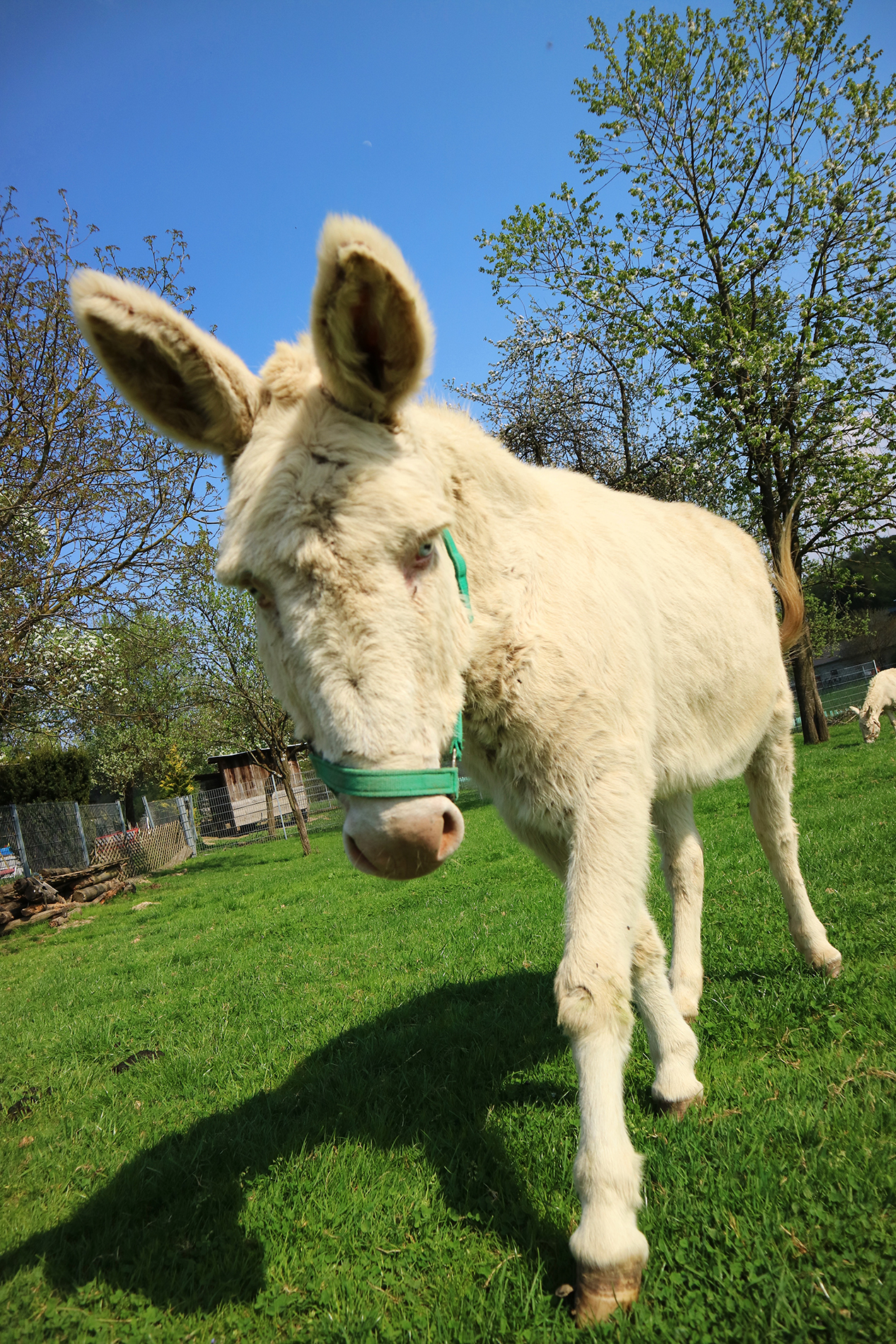 At Bec-Hellouin, you won’t hear the rumble of tractors. Here, manual labor reigns supreme. The goal is to consciously do without dependence on “fossil fuels.” Every now and then, however, you hear the clatter of hooves. Workhorses pull implements across the beds with graceful strides. In vegetable farming, there is much to be said for taking “horsepower” back at face value. What’s more, these four-legged friends have an impeccable carbon footprint. Quite a few pioneers of modern, small-scale organic vegetable farming are now turning back to these animal employees.
Many people and initiatives—including those in Austria—would be strong contenders for the title of “Climate Heroes of Agriculture.” And almost all of them have one thing in common: guided by the motto “more beauty” or “cooperation instead of competition,” they invite others to take a look behind the scenes. Recipes for success are sown like seeds across the colorful garden of social media (websites, videos, blogs…). Stacks of books invite readers to dive into the experiences and farming tips of sustainable agriculture pioneers.
Against this backdrop, the path toward climate-friendly agriculture should not be viewed as a purely technical task focused solely on reducing greenhouse gas emissions.
It’s also about a shift in values—toward a supportive, respectful way of living together. With other farmers, but also with the soil, plants, and animals.
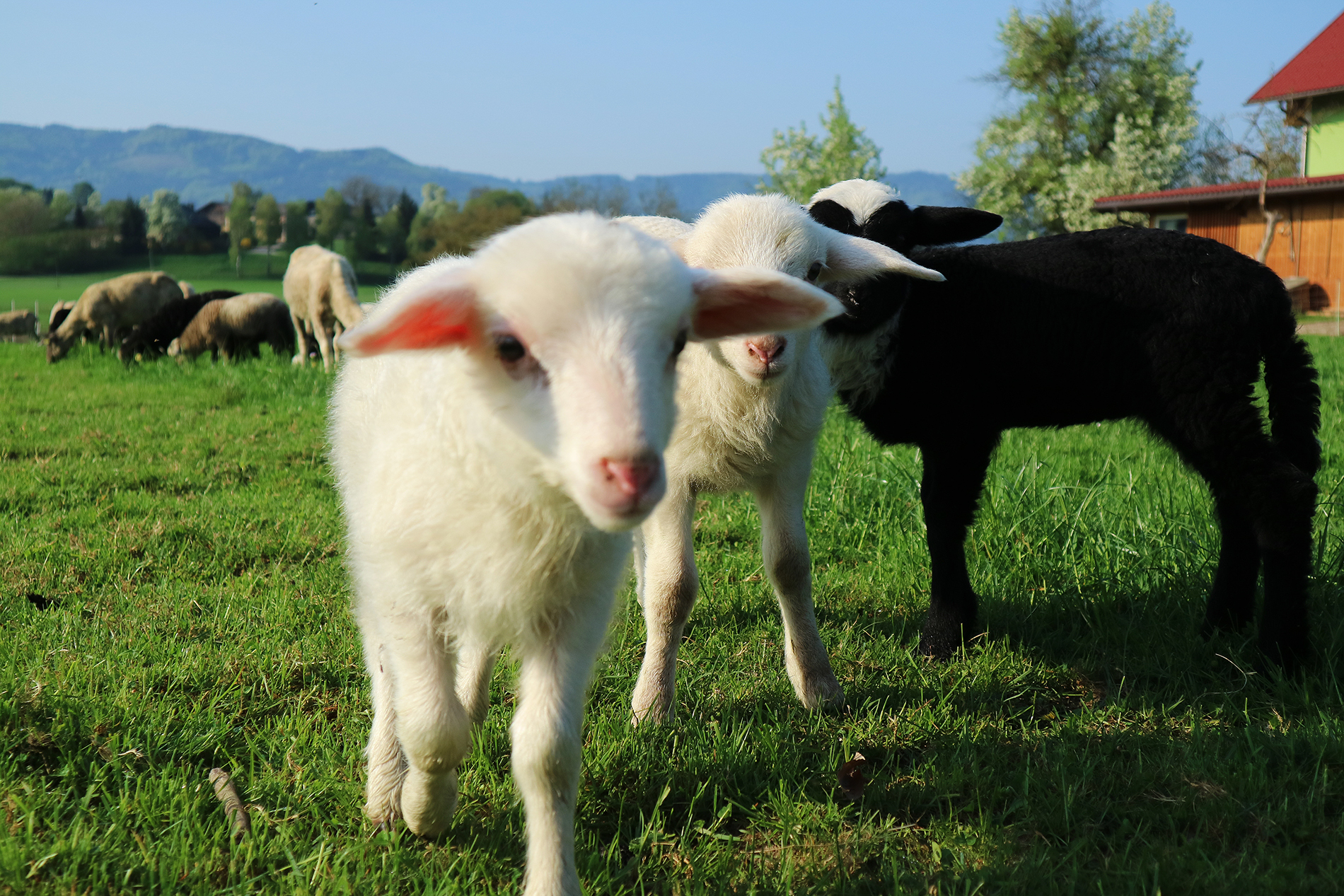 In this spirit, Visolela Namises, leader of the Khomanin tribe in Namibia, invites us to ask ourselves time and again: “What does the land actually want?” Probably a lively swarm of chirping and buzzing—biodiversity. Probably fertile soil. Probably plenty of humus to help store water. And much more. Many of these “wishes” go hand in hand with prudent, climate-friendly economic practices. The Food and Agriculture Organization (FAO) even goes so far as to describe the key role of agriculture in addressing the climate crisis as follows: Agriculture accounts for a quarter of the problem, but holds the key to solving nearly half of it. And part of the solution lies right on your plate. Or, to quote Vandana Shiva: “Let’s remember: eating is an ethical act, but also a political one.”
Well then, enjoy your meal.
[av_promobox button='no' label='Click me' link='manually,http://' link_target="" color='theme-color' custom_bg='#444444' custom_font='#ffffff’ size=’large’ icon_select=’no’ icon=’ue800’ font=’entypo-fontello’ box_color=“ box_custom_font=’#ffffff’ box_custom_bg=’#444444’ box_custom_border=’#333333’ admin_preview_bg=“]
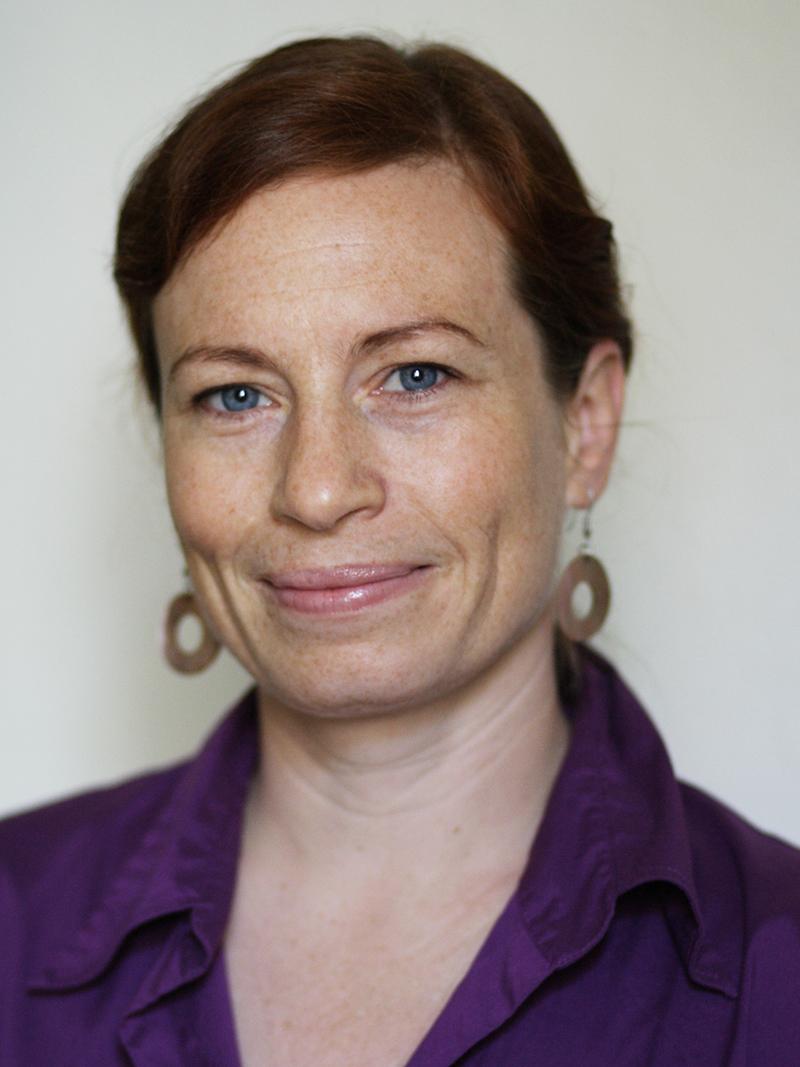 About the Author
Dr. Sybille Chiari has been working at the Center for Global Change and Sustainability at the University of Natural Resources and Life Sciences (BOKU) in Vienna since 2011, where she coordinates international research projects focused on climate communication, climate action, and sustainable lifestyles. She is a co-founder of the Climate Communication Working Group at the Climate Change Center Austria and a member of the Scientists for Future movement. In her private life, she is the chairwoman of the Bele Co-Housing Association, which runs a climate-friendly communal living project with organic farming in Upper Austria (www.belehof.at).
[/av_promobox]
Read more articles in our Climate Crisis series now and find out how you can help advance climate protection.
[av_notification title=" color='silver' border=" custom_bg='#444444' custom_font='#ffffff' size='normal' icon_select='yes' icon='ue80b' font='entypo-fontello' admin_preview_bg="]
Source:
[1] Virmani, A., & Lépineux, F. (2015). Spiritual-based entrepreneurship for an alternative food culture: the transformational power of Navdanya. In The spiritual dimension of business ethics and sustainability management (pp. 125–142). Springer, Cham.
[/av_notification]