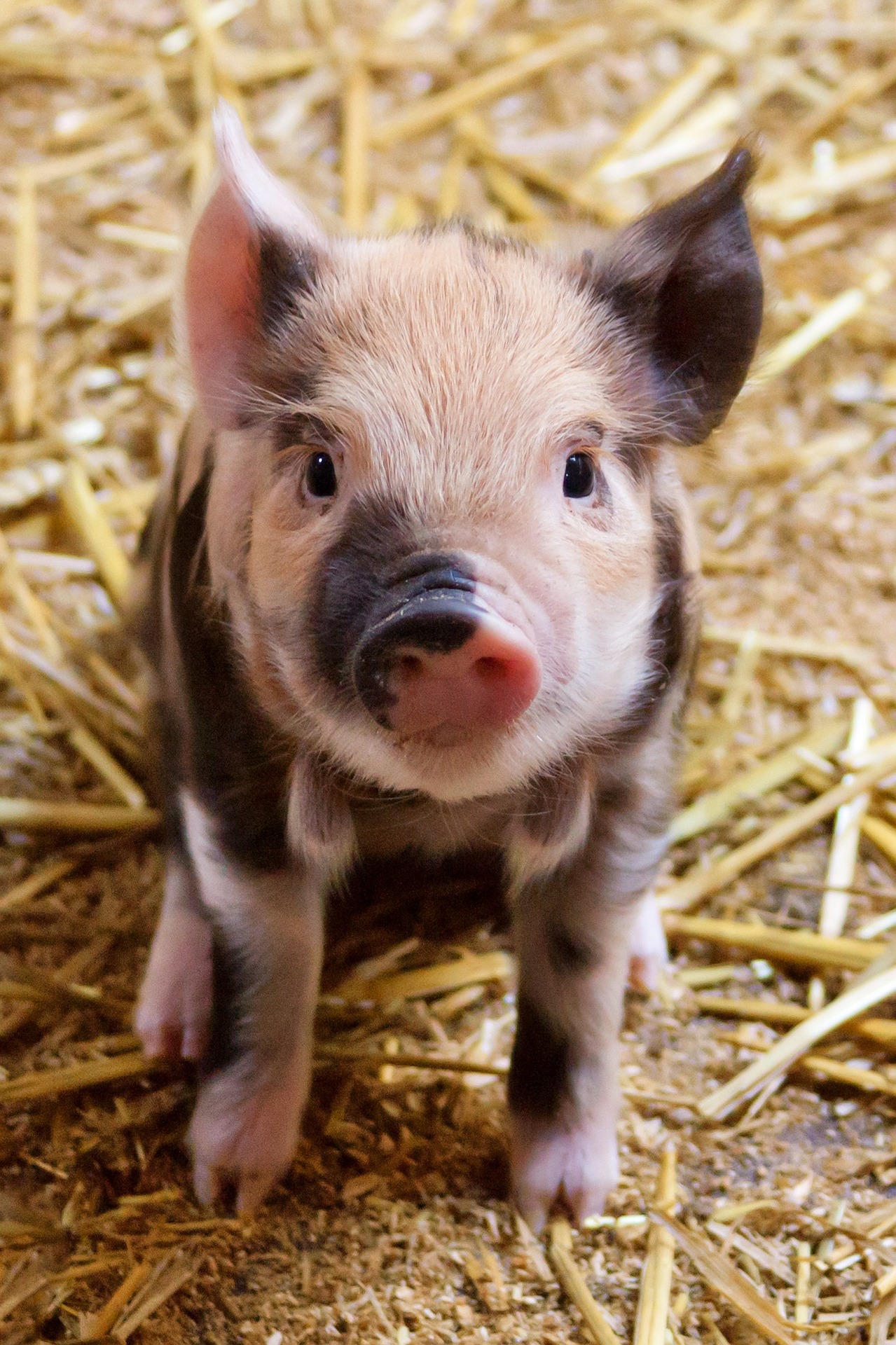
We have food waste that could be used to feed pigs. We’ll explore the reasons why it isn’t (or isn’t allowed to be) used for that purpose right now and take a look at the future of pig feeding.
Well done. You’ve decided to take a brief journey with us into the depths of the Sautrog. And perhaps to reflect on its return. A topic that may seem unappealing at first glance, but which, hidden deep within, holds great potential for lasting change.
2001 was a fateful year for the pig trough in Austria. Not so long ago, the pig trough was considered a fixture in just about every rural extended family in Austria. The snouts of the domestic pigs would happily root through food scraps and kitchen waste. These pig troughs had a distinctive olfactory “aroma.” For the country bumpkins among us, this smell might involuntarily hit our noses the moment we see even a single photo of a pig.
Of course, it’s not the smell of the pig trough that we miss in today’s society; rather, it’s about its function—the role it has played for centuries as a link in our food chain, a link that allowed leftovers to be put to use and the cycle to be closed.
[av_heading heading='The Spectres of Pig Farming' tag='h3' style=" size=" subheading_active=" subheading_size='15' padding='10' color=" custom_font=" admin_preview_bg="][/av_heading]
In 2001, as mentioned, this cycle was abruptly interrupted because a farm fed food scraps under hygienically questionable conditions, which fatally led to an outbreak of foot-and-mouth disease.
Scientific evidence shows that feeding food scraps to pigs poses no health risk if they are specially heat-treated. This also reliably prevents the transmission of every pig farmer’s worst nightmare—foot-and-mouth disease and African swine fever. Technically, therefore, there are many possibilities here.
Nevertheless, in the wake of the outbreak, the EU reflexively decided to ban “home-cooked meals” from pigs’ diets by regulation . Since then, only a portion of food waste—bread and grain products—has been fed to farm animals in Europe (5 million tons per year). If the legal regulations were less strict, nearly three times that amount would be possible (14 million tons per year).
The lingering effects of the feed ban also suggest that this may have been a case of throwing the baby out with the bathwater. Pig farming became more expensive as a result. Small-scale pig farming became even less popular. Since 1995, an average of 4 out of 5 pig farmers in Austria have thrown in the towel. The remaining farms, however, are raising all the more animals.
Imports of genetically modified soy have risen dramatically over the past 20 years. Since then, pigs—in part because they are now “only” fattened on soy and grains—have come into even greater competition with humans for food.
[av_heading heading='What if...?' tag='h3' style=" size=" subheading_active=" subheading_size='15' padding='10' color=" custom_font=" admin_preview_bg="][/av_heading]
Other countries have long recognized that using food waste as feed for omnivorous animals (pigs, chickens) makes sense both environmentally and financially, and is also safe from a health perspective. In Japan, a large portion of food waste is thermally processed and used as animal feed. For example, 52% of the waste from the Japanese food industry is recycled in this way.
What might be possible if we were to think beyond the current legal framework? A study by the University of Cambridge concludes that relaxing EU regulations and allowing food scraps to be fed to pigs could set a major shift in motion: since significantly less feed would need to be grown for pigs, 20,000 km² of farmland in Europe alone could be freed up for other, more sustainable uses.
[av_heading heading='Piggy Daydreams' tag='h3' style=" size=" subheading_active=" subheading_size='15' padding='10' color=" custom_font=" admin_preview_bg="][/av_heading]
Voices calling for what could be described metaphorically as a “resurrection of the communal trough” are growing louder. In England, the movement“The Pig Idea”has been founded for this purpose; it is campaigning—primarily for environmental reasons—to ease current legal restrictions. The principle is simple: incentives must be created for a “hierarchy of food use.” First and foremost, food waste must be avoided. Second, leftovers should be shared with others. Third, leftovers that people can no longer eat should be fed back to animals. And the very last tiny bit? That gets composted.
This would give the expression “to feed to pigs” a whole new meaning in the future: it would no longer refer to “far too much” (the production of food waste in vast quantities), but rather to the sensible use of unavoidable leftovers in the truest sense of the word: to feed to pigs.
[av_promobox button='no' label='Click me' link='manually,http://' link_target="" color='theme-color' custom_bg='#444444' custom_font='#ffffff’ size=’large’ icon_select=’no’ icon=’ue800’ font=’entypo-fontello’ box_color=“ box_custom_font=’#ffffff’ box_custom_bg=’#444444’ box_custom_border=’#333333’ admin_preview_bg=“]
 About the Author
Dr. Sybille Chiari is a member of the editorial team for “Nachhaltigkeit. Neu denken” and has been engaged in sustainability and climate communication for many years—both through research and writing. She is part of the Scientists for Future movement and chairwoman of the Bele Co-Housing association (a communal housing project featuring organic, regenerative agriculture ; www.belehof.at).
[/av_promobox]