
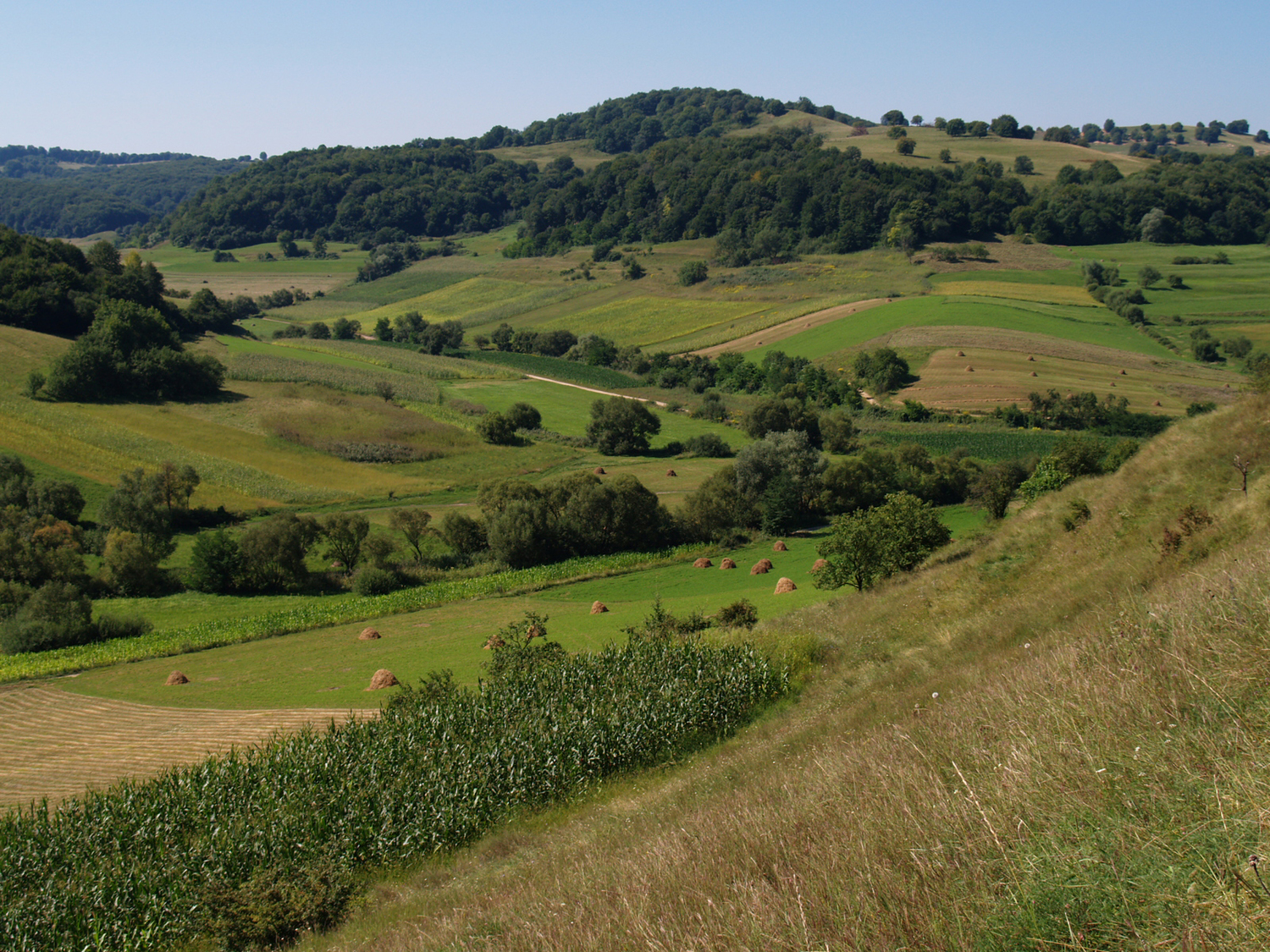
By converting natural areas into farmland or pasture, agriculture is one of the main contributors to the decline in biodiversity. Scientists and conservationists repeatedly debate how to reverse this trend, putting forward two opposing approaches. But perhaps a combination of both is the best way forward?
How can biodiversity in agriculture be increased? There are various approaches to this: one seeks to maximize yields on existing farmland, intensify conventional farming practices, and establish nature reserves on separate plots of land. The other approach calls for agriculture that is not optimized for yield, is environmentally friendly, and requires more land to do so. However, land use always comes at the expense of biodiversity.
In a study published in May 2019, researchers at the University of Göttingen argue for maintaining high levels of agrobiodiversity to safeguard ecosystem services, but also emphasize the importance of nature conservation areas. At the same time, however, agricultural production should not be reduced too drastically. The findings were published in the journal *People and Nature*.
[av_heading heading='Man vs. Nature?' tag='h3' style=" size=" subheading_active=" subheading_size='15' padding='10' color=" custom_font=" admin_preview_bg="][/av_heading]
“Many researchers argue that agricultural production on existing land should be intensified to increase yields while reducing agricultural pressure on the last remaining wilderness areas. This approach is pursued primarily in tropical countries,” explains Dr. Ingo Grass of the Department of Agroecology at the University of Göttingen and lead author of the study. “However, biodiversity and agriculture are often closely intertwined, and many species are also beneficial to farmers. In Europe’s cultivated landscapes, many species worthy of protection have adapted to gently managed habitats. These species are threatened by increasing agricultural intensification,” adds Prof. Dr. Teja Tscharntke, head of the department.
The researchers explain that both approaches have merit and should be applied together. “Modern and sustainable agricultural landscapes require land-efficient, high-yield production areas, undisturbed habitats, and extensively managed areas. This combination not only enables the highest biodiversity but also promotes ecosystem services such as pollination and biological pest control by insects and field birds. These are essential for sustainable agricultural production,” says Grass.
To this end, landscape features and various small habitats—such as hedges, flower strips, rows of trees along streams and rivers, fallow land, etc.—should be integrated into agricultural areas. Ideally, these should be connected to one another and to nature conservation areas. These structures can help prevent the extinction of beneficial organisms and promote their spread. Another way to increase biodiversity is through mixed cropping in fields.
[av_heading heading='Biodiversity Offers Economic Benefits' tag='h3' style=" size=" subheading_active=" subheading_size='15' padding='10' color=" custom_font=" admin_preview_bg="][/av_heading]
A study, for example, shows that increasing biodiversity also holds economic potential: damage caused by the winter wheat leaf beetle (Oulema melanopus) to winter wheat near flower strips was reduced by 40 percent, while crop yields increased by 10 percent. More stable crop yields have also been observed on coffee and cocoa plantations where biodiversity is higher.
In some regions where traditional agriculture has all but disappeared—such as the Midwestern United States—a more cautious approach is needed when promoting near-natural habitats; unfortunately, many introduced species have become established there, and with them, pests. It is interesting to note that native plants tend to host beneficial organisms, while invasive species tend to host pests.
[av_heading heading='Biodiverse agriculture is possible' tag='h3' style="" size="" subheading_active="" subheading_size='15' padding='10' color="" custom_font="" admin_preview_bg=""][/av_heading]
In any case, the researchers conclude that nature reserves must be preserved at all costs. Many species cannot cope with agricultural land and need natural habitats if they are to survive. Other species, however, have adapted to human agriculture over thousands of years. To preserve the latter, we must not move solely toward the intensification of agriculture.
Sustainable food production therefore requires a network of nature reserves, semi-natural areas, and extensively farmed yet high-yielding fields.
By working together with scientists, policymakers, farmers, and other stakeholders, we could create landscapes that offer both the potential for food security and high biodiversity. This proves once again that we already have the tools for sustainable food production right at our fingertips!
[av_notification title=" color='green' border=" custom_bg='#444444' custom_font='#ffffff' size='normal' icon_select='yes' icon='ue837' font='entypo-fontello' admin_preview_bg="]
Editorial article based on a press release from the University of Göttingen. Approved by Dr. Ingo Grass.
[/av_notification]
[av_notification title=" color='silver' border=" custom_bg='#444444' custom_font='#ffffff' size='normal' icon_select='yes' icon='ue80b' font='entypo-fontello' admin_preview_bg="]
Sources