The nonpartisan initiative “Upper Austria Blooms” was launched in the spring of 2019 by Upper Austria’s Regional Minister for the Environment, Rudi Anschober. Experts have developed a package of measures that can be supported through the petition “Save the Bees – For the Protection of Soils and Biodiversity” at www.ooebluehtauf.at. Already 16,000 signatories and many prominent voices, including sustainability expert Werner Lampert, are advocating for this cause. Thirty-six Upper Austrian municipalities with 150,000 residents have adopted the corresponding resolution. The goal is to highlight the necessary solutions for the future and to form broad social alliances to ensure their implementation.
Ultimately, the scientific data—which could not be more dramatic—has certainly contributed to this. Foremost among these is the Krefeld study, which has garnered significant attention and reveals a decline in insect biomass in Germany of over 80 percent over the past 30 years—even in nature reserves! Since 1980, more than half of Europe’s farmland birds have disappeared, and up to 80 percent of our meadow butterflies are critically endangered. What a depleted world would we be leaving behind for future generations? We must take action.
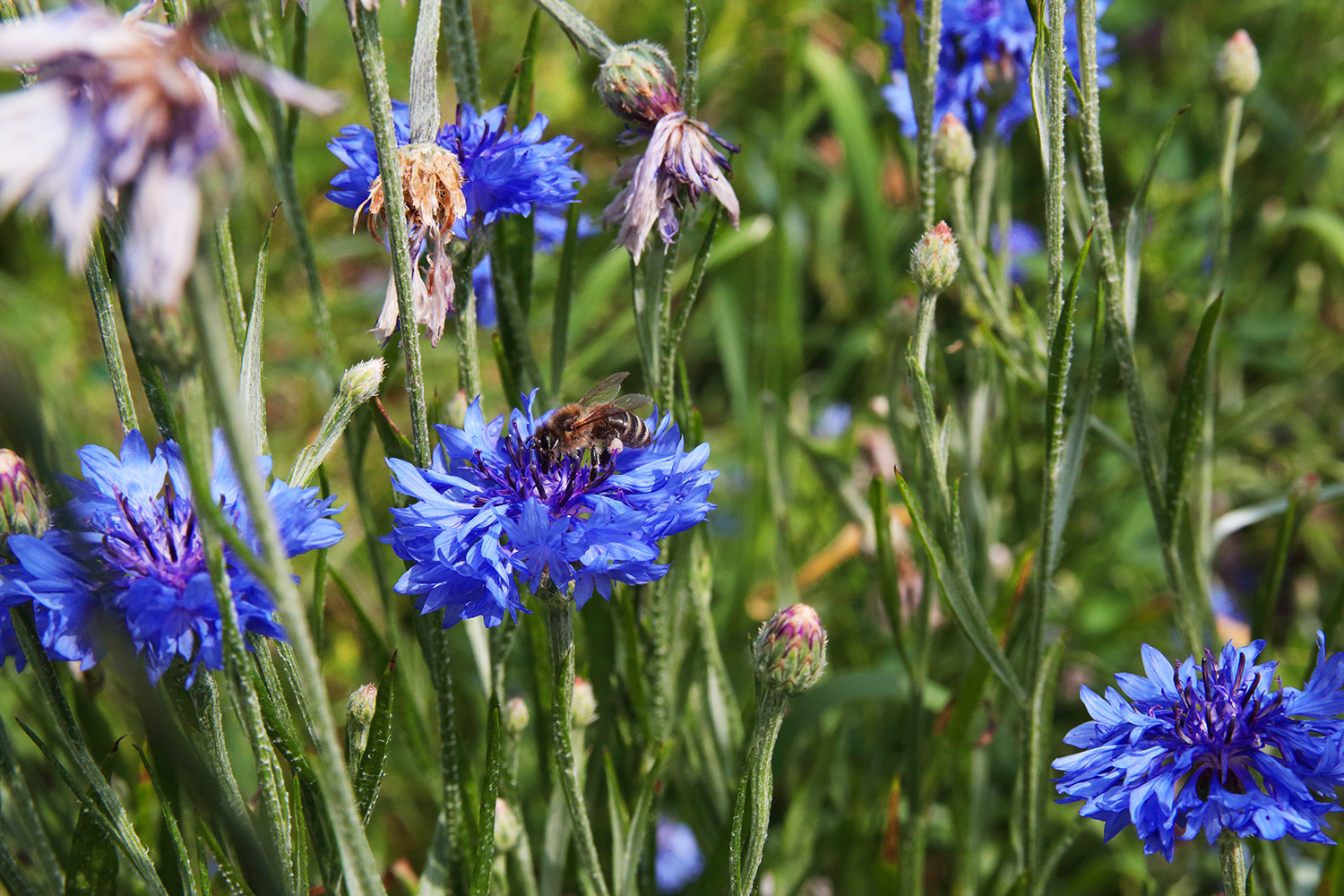
I’d like to turn that around: where can you feel biodiversity most strongly, and how rare has it become? A flower meadow buzzing with life, a colorful border of blooms along the roadside—the everyday beauty of diversity in our environment has become a rare sight.
There is a whole range of factors contributing to the decline of bees, wild bees, butterflies, and many other insects—and, as a result, birds. A key factor, alongside the intensification of agricultural practices, the use of pesticides, land consumption, and light pollution, is the impoverishment of landscapes and gardens. And it is becoming increasingly clear that the disappearance of bees and insects in general threatens the entire ecosystem and our very livelihood; we are caught in a downward spiral that we must break.
Land use is one of the biggest environmental challenges facing Europe. If we continue on this path, we will destroy the very foundations of our existence. Soil functions and public spaces dedicated to soil conservation must be incorporated into legislation; brownfield sites and vacant lots must be put to use; and, overall, we need strategic land management with concrete targets. One thing is certain: to halt the decline of insect populations, we must stop land loss.
Everyone can do their part to protect the environment and preserve biodiversity—by gardening without pesticides, creating a flower meadow in their yard, practicing sustainable consumption, buying organic products, and, above all, recognizing that the destruction of biodiversity also harms humans. These are often very simple steps, but they require knowledge.
An insect-friendly garden can often be created quickly with simple measures. Whether it’s a wild perennial bed, a deadwood corner, or simply a “wild corner” with stinging nettles, ground elder, and thistles in the garden, anyone can create a habitat for insects and birds. Even a small strip of wildflowers is a good start. We humans benefit from this too: these tiny beneficial creatures help us control unwanted insects and keep our garden plants healthy. Even a small city balcony can be transformed into a blooming, nature-inspired garden that insects love to visit. A nesting box or a pot of flowering herbs can be set up in the smallest of spaces.
With “Upper Austria in Bloom,” I want to show what we are giving up and what consequences we are accepting as a result of our careless treatment of our soil, nature, and land. We must finally begin to stand up for our environment and biodiversity—together and on a broad scale. Schools are focusing on bee-friendly school gardens, and bee-friendly communities are on the rise in Upper Austria. Or consider the dozens of community gardens that garden pesticide-free and our organic farmers who cultivate their fields without environmental toxins—there are so many wonderful pioneers, and they deserve to be brought into the spotlight.
Only through tremendous effort will we be able to avert this global catastrophe, but yes, I am optimistic. The response to the petition has been remarkable, and we’ve received a great deal of constructive feedback from the public, the scientific community, and local governments. The general consensus is: “Finally, something is being done,” and “It’s time to take action!” That makes me feel very positive.
[av_promobox button='yes' label='Go to the petition' link='manually,https://www.ooebluehtauf.at/' link_target='_blank' color='theme-color' custom_bg='#444444' custom_font='#ffffff’ size=’medium’ icon_select=’no’ icon=’ue800’ font=’entypo-fontello’ box_color=“ box_custom_font=’#ffffff’ box_custom_bg=’#444444’ box_custom_border=’#333333’ admin_preview_bg=“]
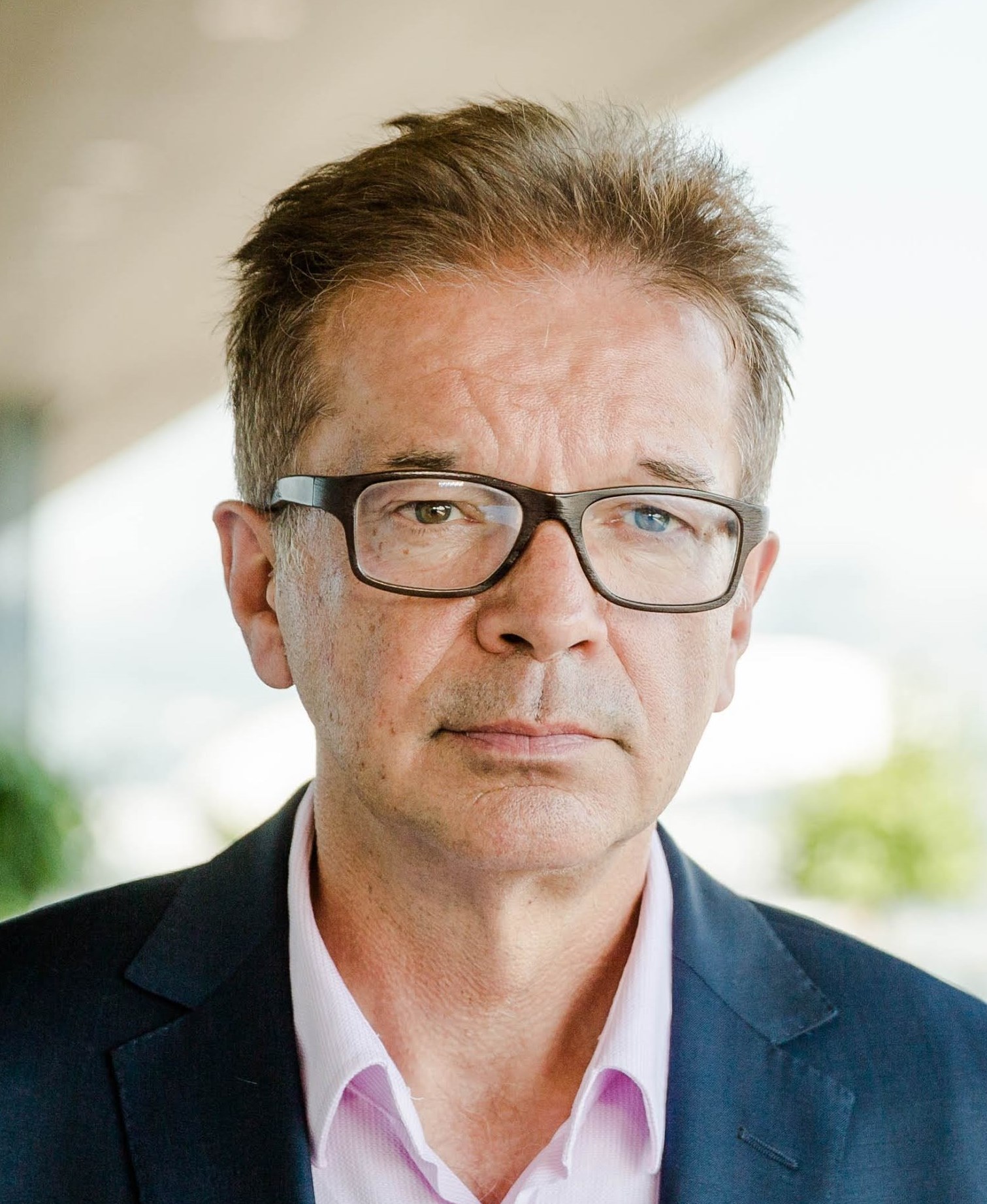
© State of Upper Austria
About Rudi Anschober
Rudi Anschober (born 1960) is a Green Party politician from Upper Austria who has served as State Councilor for Integration, Environment, Climate, and Consumer Protection in the Upper Austrian State Government since 2003. He worked for several years as a trained elementary school teacher and as a journalist for various media outlets before entering politics due to his strong opposition to the construction of the Temelin nuclear power plant.
[/av_promobox]
[av_notification title=" color='silver' border=" custom_bg='#444444' custom_font='#ffffff' size='normal' icon_select='yes' icon='ue80b' font='entypo-fontello' admin_preview_bg="]
Source: Interview on July 15, 2019
[/av_notification]
[av_notification title=" color='green' border=" custom_bg='#444444' custom_font='#ffffff' size='normal' icon_select='yes' icon='ue837' font='entypo-fontello' admin_preview_bg="]
Editorial article
[/av_notification]