
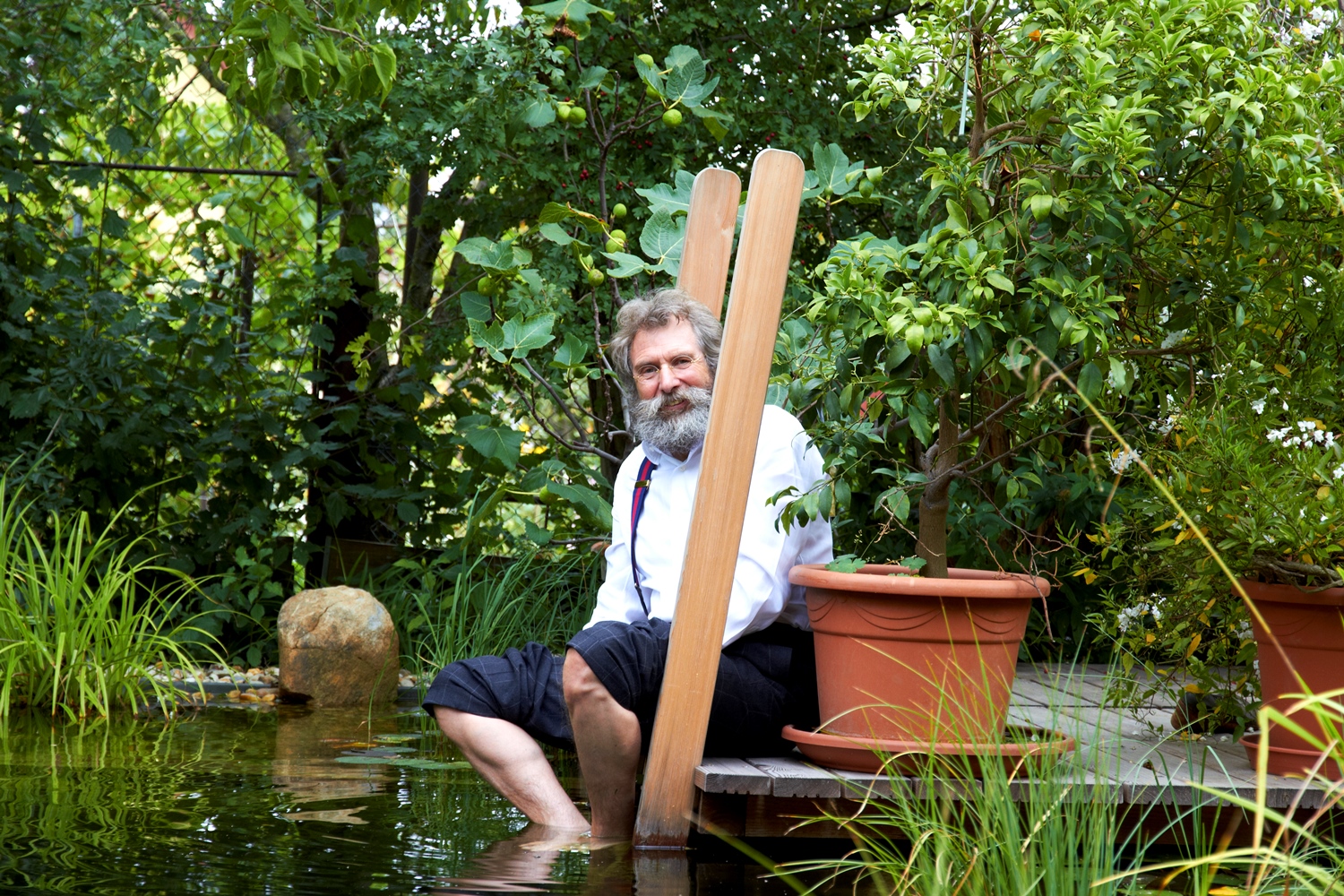
Austrian sustainability expert Werner Lampert consistently sparks debate with his controversial views. He championed organic farming as a model for the future long before the general public caught on. Now he is calling on everyone to visualize what the loss of biodiversity means and, once again, encouraging a new perspective.
The strange thing is that the phrase “1 million species” doesn’t really register—because that number is unimaginable; these are species we simply cannot picture. The report renders extinction anonymous the moment it mentions 1 million species; our emotional response is disconnected from the reality of their disappearance.
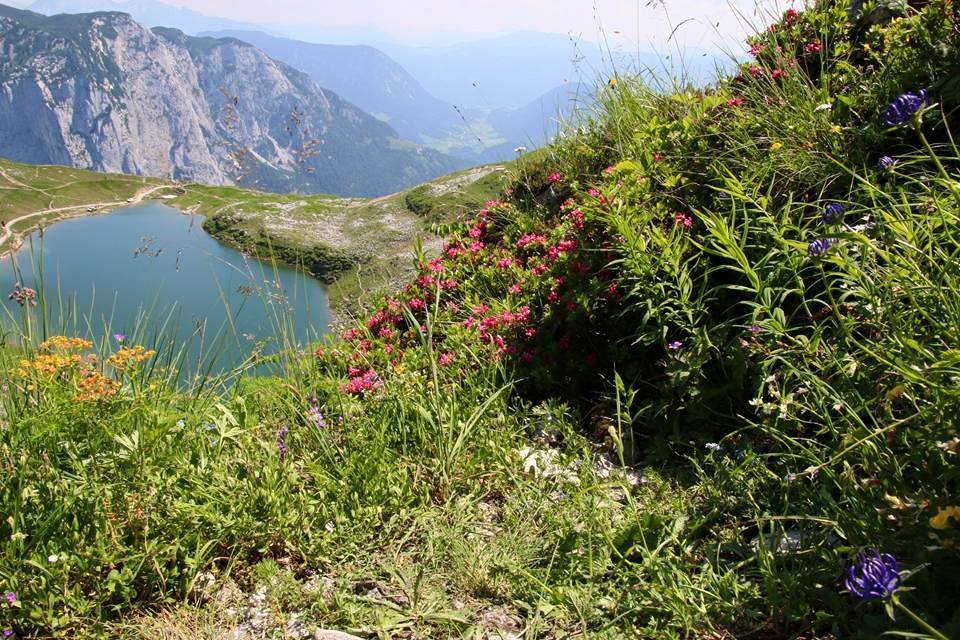 So instead, try to picture exactly what is disappearing. Over the past few weeks, I’ve been hiking in the mountains at altitudes over 2,000 meters, and I suddenly realized—where are all the butterflies? When I walked here 20 years ago, there were butterflies everywhere. There are hardly any butterflies left—that’s what’s so horrifying. That’s when we truly feel a sense of loss, not just a general one, but a personal one as well. Because we won’t encounter them anymore; that won’t happen anymore. What I found even more dramatic is the loss of bird diversity. The number of birds has decreased dramatically.
Think about what brings you joy on a summer morning—perhaps it’s the dragonfly flying toward you. That won’t happen anymore—it simply won’t. We’re no longer talking about general losses, about 1 million species; these are very personal losses, and we must take massive action to prevent them.
I’ve always had a large rose garden, but then I started looking at it from a different perspective—namely, in terms of how interesting it is to insects: bees, bumblebees, wasps, butterflies, dragonflies—my favorite insect—and I realized it’s actually not very interesting. So I completely redesigned it.
I evaluated each plant based on how much food it provided for insects, particularly hymenoptera, and if it didn’t meet the criteria, I replaced it with another plant, no matter how much I liked it. I even have a beehive with brown bees from the Pinzgau region in my garden, and a pond with frogs, toads, and snakes—I counted five of them.
I have also been buying only organic food since 1967. That’s because well-managed organic farming—such as that certified by Prüf Nach!, for example—is highly sustainable and places a strong emphasis on biodiversity.
I really try to keep busy, and I really enjoy it.
In the regions where my team and I work, we are fortunate that the local environment remains largely intact. Of course, all the global problems exist, but there is also a high level of biodiversity. Regional sustainable agriculture can preserve this; it still possesses ancient, pre-industrial knowledge, and there are still connections to nature. It takes responsibility out of the hands of politics, so that real progress can be made and we can take the change into our own hands.
Through our "Check It Out!" guidelines, we are working to gently—not forcefully—guide farmers toward greater consideration for biodiversity. Surveys of mountain farms show that this approach is effective. Their pastures are more diverse than those on conventional farms.
There is also a social aspect to this. A farm with good biodiversity, where the local and micro-ecosystems are still intact, naturally creates a very different atmosphere for a potential successor—whether a son or a daughter—making a smooth transition more likely.
And as consumers, we need to realize that there is no area where we can make a greater contribution to biodiversity than through the food we eat. Diet is the biggest destroyer of biodiversity, and if you think about what you eat and what impact it has on the environment, nature, and biodiversity, you’ll completely change your diet. Not just because it’s good for your well-being, but because we want to do something for the greater good—for biodiversity.
I think we have now reached the point where we no longer need to say: “Please buy organic food because it’s better for you and your children.” Instead, there is no longer any alternative to organic farming; only through organic farming can we steer clear of this looming catastrophe.
In preparation for the book, I traveled to Rome to visit the Food and Agriculture Organization (FAO), which is working to preserve a vast treasure trove of indigenous domestic animal breeds. At the time, I asked about the reasoning behind their strong commitment. “Because the changes brought about by global warming are something the ‘engineered’ domestic animals we have today cannot cope with,” was the answer. They wouldn’t survive! We need robust breeds, such as those found among old domestic animal breeds.
Furthermore, indigenous livestock breeds are also part of regional and local culture. Even the European Union will only function if we succeed in preserving regional characteristics, breathing new life into them, and infusing them with vitality. Then Europe would become the Europe of our dreams.
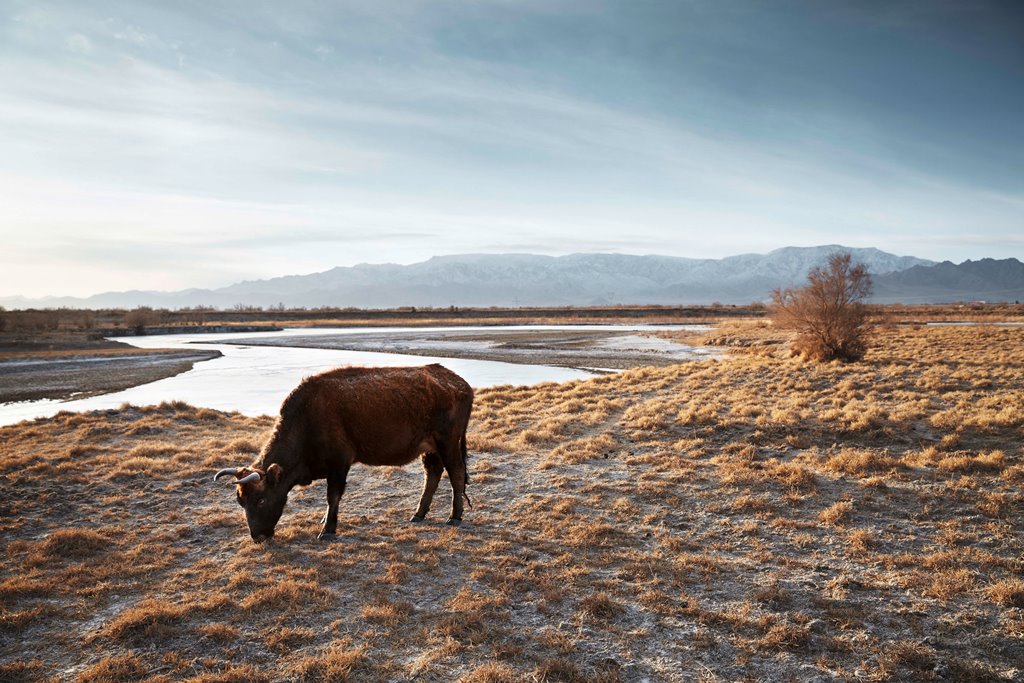
Caidamu © Werner Lampert GmbH, Photo by Ramona Waldner
When the FAO launched a program for indigenous livestock breeds, all countries participated with considerable enthusiasm; only two rejected it outright and failed to see the point of the initiative—namely, the United States and China. After a few years, China suddenly joined the effort, and today it is the most active country in the conservation of indigenous livestock breeds. The Chinese have realized the incredible value of these ancient domesticated breeds and that they need these genes if they want to feed their population in the future. China is now the biggest spender! If someone keeps ancient domesticated breeds, they receive enough money to live in the city and hire a shepherd.
Cows play a very important role. In her book *Cows Are Not Climate Killers!*, Anita Idel clearly describes the tremendous contribution cattle make to the Alpine region. Cattle have shaped the landscape for decades and millennia. By grazing, they prevent alpine pastures from becoming overgrown. The forests in the Alps tend to be species-poor, whereas the open areas are highly diverse.
At the same time, cattle increase soil fertility. As Anita Idel writes, “Today’s grass roots are tomorrow’s humus.” That’s a wonderful image. First, these moist soils sequester an incredible amount of carbon, and second, they provide the foundation for healthy plant growth.
In contrast, there are green deserts. Meadows that are green, yes, but where you can count the different types of grass on one hand, where diversity no longer thrives. Frequent mowing, fertilizers, and pesticides have ruined everything; the manure that’s been spread destroys it all.
I believe that every person is created by God, and that God has placed us in a world with only those problems that we, as human beings, are capable of solving. Many futurists believe that we will easily overcome today’s challenges with technology and artificial intelligence. I don’t believe that for a second; I trust in the creativity, strength, and intelligence of human beings. And when people understand that we are not isolated, lost individuals, but a community—and that we belong together—then we will begin to truly solve these problems.
[av_promobox button='yes' label='About the Author' link='manually,http://www.wernerlampert.com/wer-ist-werner-lampert/' link_target='_blank' color='theme-color' custom_bg='#444444' custom_font='#ffffff’ size=’snmall’ icon_select=’no’ icon=’ue800’ font=’entypo-fontello’ box_color=“ box_custom_font=’#ffffff’ box_custom_bg=’#444444’ box_custom_border=’#333333’ admin_preview_bg=“]
About Werner Lampert
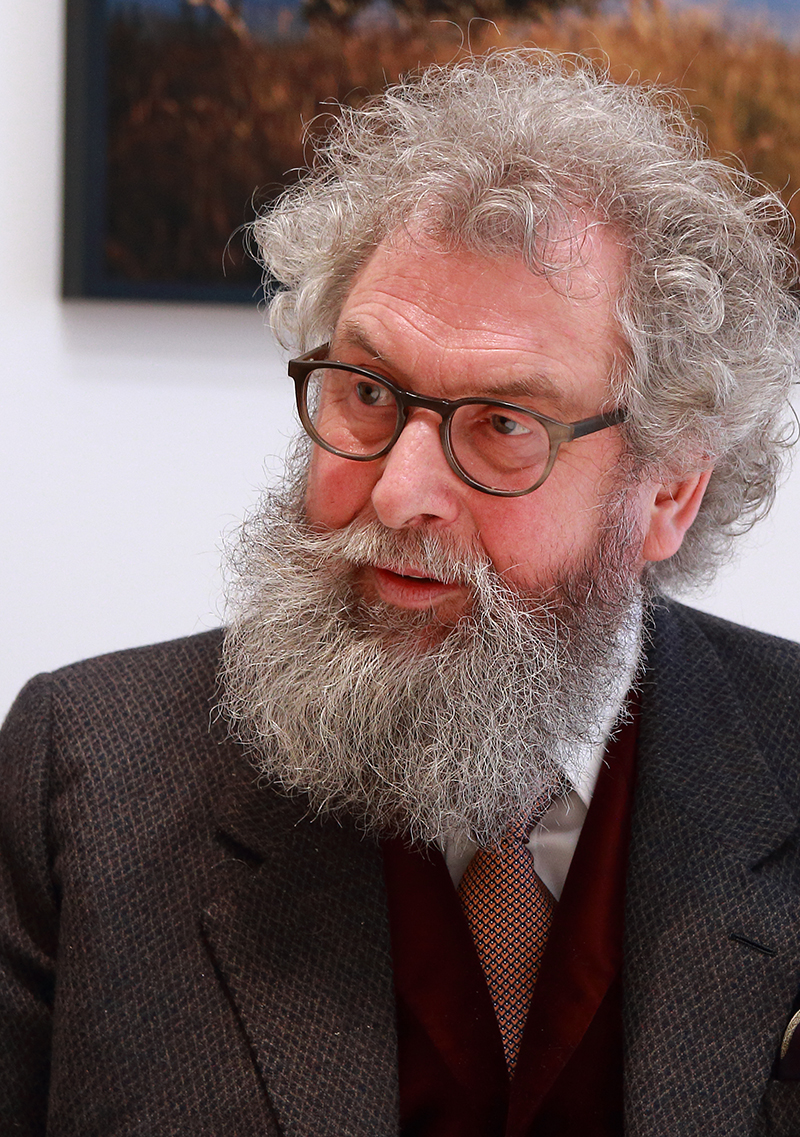 Werner Lampert (born in 1946 in Vorarlberg, Austria) is considered one of the pioneers in the field of sustainable products and their development in Europe. This organic pioneer has been deeply involved in organic farming since the 1970s. With Back to the beginning (Hofer) and Ja! Natürlich—he developed two of the most successful organic brands in the German-speaking world.
[/av_promobox]
[av_notification title=" color='silver' border=" custom_bg='#444444' custom_font='#ffffff' size='normal' icon_select='yes' icon='ue80b' font='entypo-fontello' admin_preview_bg="]
Source: Interview from July 17, 2019
[/av_notification]
[av_notification title=" color='green' border=" custom_bg='#444444' custom_font='#ffffff' size='normal' icon_select='yes' icon='ue837' font='entypo-fontello' admin_preview_bg="]
Editorial article
[/av_notification]