

since
+
~
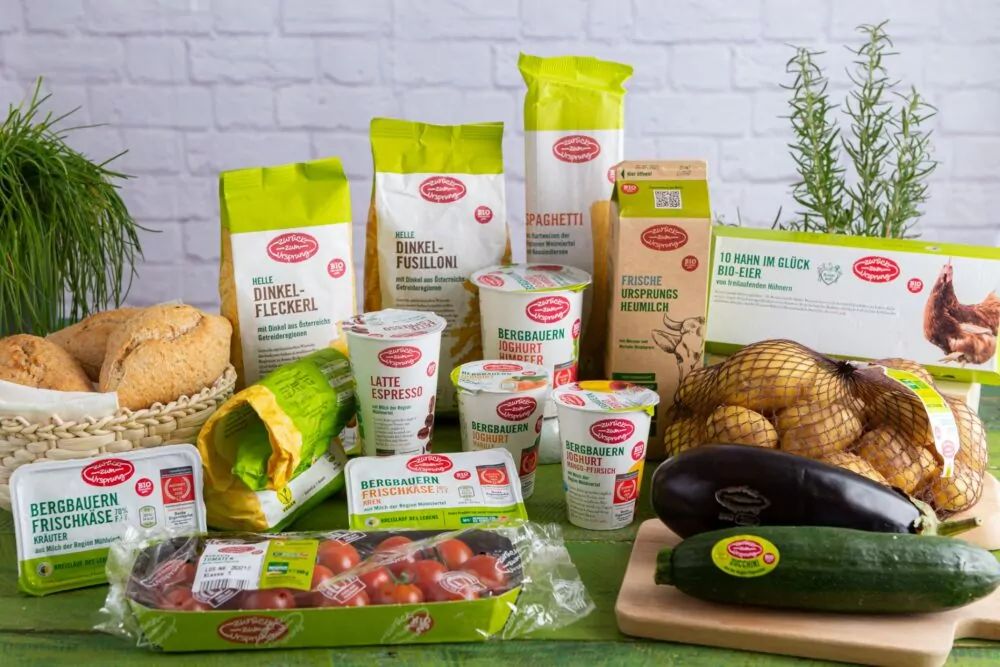
Organic food must be accessible to everyone, not just a niche product—that was Werner Lampert’s vision. In 2006, together with 200 Murau hay milk farms and HOFER, he launched a project to preserve this traditional product. “Back to the Roots ” was born—and it was the first time that a fully traceable, transparent organic system had been established in Austria: with its own standards, its own quality assurance, and a direct line to organic farmers.
Over the years, additional Austrian regions were added, the product range expanded—and with it, further proof that organic farming, combined with regionality, transparency, and sustainability, is a true recipe for success.
In 2026, Zurück zum Ursprung will celebrate its 20th anniversary—and has long since become more than just a brand. It is a network of thousands of Austrian organic farmers who have committed to operating according to the same core values: transparency, regional focus, animal welfare, GMO-free production, environmental and nature conservation, food quality, fair treatment of partners, and consistent traceability all the way back to the farm.
Every product can be traced back to its farm of origin via a batch code. Every farm is scientifically evaluated. And behind every core value lies not just a promise—but a measurable standard. “Back to the Source ” has thus set new standards: from traceability to animal welfare criteria and projects like “Hahn im Glück” for the organic rearing of male chicks in egg production.
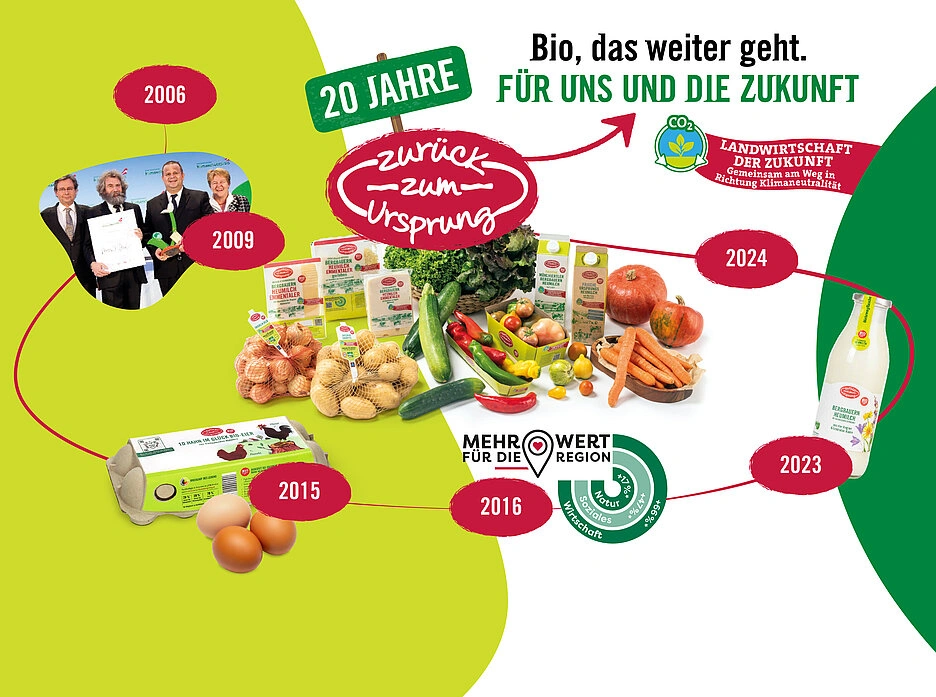
In this project, numerous farms are tackling the greatest challenge of our time—climate change: Starting in 2026, Zurück zum Ursprung will roll out its pioneering project, “Agriculture of the Future,” across Austria. Currently, more than 800 vegetable and hay-milk farms are implementing measures for climate protection and climate change adaptation—not through certifications, but through active action.
The greatest potential for climate action lies where food is produced—in agriculture and the food system. Together with the organic farmers of “Zurück zum Ursprung,” emissions are systematically reduced and carbon is sequestered directly on the farm through soil humus development, sustainable forest management, and smart livestock farming. This creates climate-resilient farms that not only withstand extreme weather and ensure stable yields—but also guarantee Austria’s long-term supply of regional organic food.

General inquiries
info@lampert.bio