
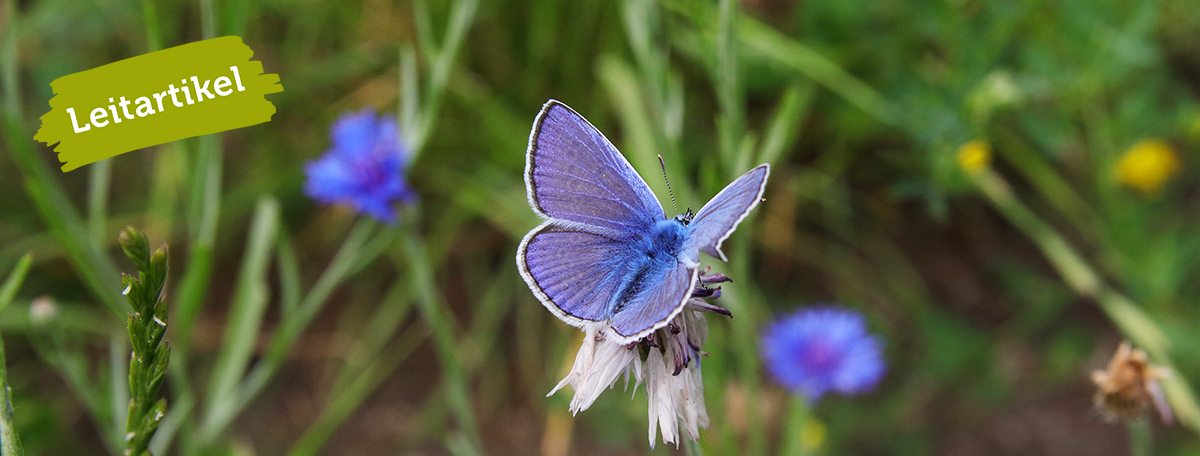
Homo sapiens, the rational human being, is arguably the most successful species in world history—the species that has had the greatest impact on the world and altered its course. At the same time, humans bear the heavy burden of being aware of this and reacting emotionally to their actions and the consequences of those actions. The disappearance of bees, blackbirds, and butterflies from the garden is felt as a loss. But this disappearance doesn’t have to happen—we can do something about it! That is why Sustainability. Rethinking. is dedicating this focus to biodiversity.
Scientists affectionately call the last remaining individual of a species an “endling”; with this emotional term, which is somewhat reminiscent of concepts from fantasy or science fiction, they aim to help the general public understand the loss that comes with the extinction of a species. All too often, ecosystems, species, or breeds disappear without the media or the public even noticing.
The situation was different with the report published in May 2019 by the Intergovernmental Science-Policy Platform on Biodiversity and Ecosystem Services (IPBES). It brought biodiversity prominently into the public consciousness, as the scientists’ findings are shocking. One million plant and animal species could be driven to permanent extinction by human activity—a scale that would threaten the very foundations of human civilization. (Facts about biodiversity and the IPBES report)
It is indeed hard to imagine why we need 700 different species of bees in Europe—wouldn’t one species be enough? No, because ecosystems are a complex network of animals, plants, fungi, microorganisms, and their habitats; every species has its place and function within the system. Just like a machine, where every screw, every cable, and every gear is important. If you remove a screw, the machine still stands, but woe betide anyone who bumps into it—it could collapse. The same is true of natural habitats; they continue to thrive for a long time even after some species have gone extinct, but a storm or a drought can throw everything into chaos.
“It’s safe to say that a massive decline or even the extinction of insects alone would make life on this planet, as we know it, impossible,” emphasizes Lars Jaeger, a maverick thinker, in his article“Another Eco-Crisis—And No One Notices.”
[av_heading heading='Humans will always survive' tag='h3' style=" size=" subheading_active=" subheading_size='15' padding='10' color=" custom_font=" admin_preview_bg="][/av_heading]
The go-to argument from people who are too comfortable to change their ways is always: “Humans will survive all of this!”
That is absolutely true: the human species, Homo sapiens, will survive any impending catastrophe simply because there are so many of us—8 billion people. But what about our civilization? In an overheated world plagued by food shortages, will there still be room for beauty and peace?
“Aren’t human creations—such as music, literature, film, and photography—worth saving?” asks ecologist Dr. Isabell Riedl.
[av_heading heading='People's reactions are growing stronger' tag='h3' style="" size="" subheading_active="" subheading_size='15' padding='10' color="" custom_font="" admin_preview_bg=""][/av_heading]
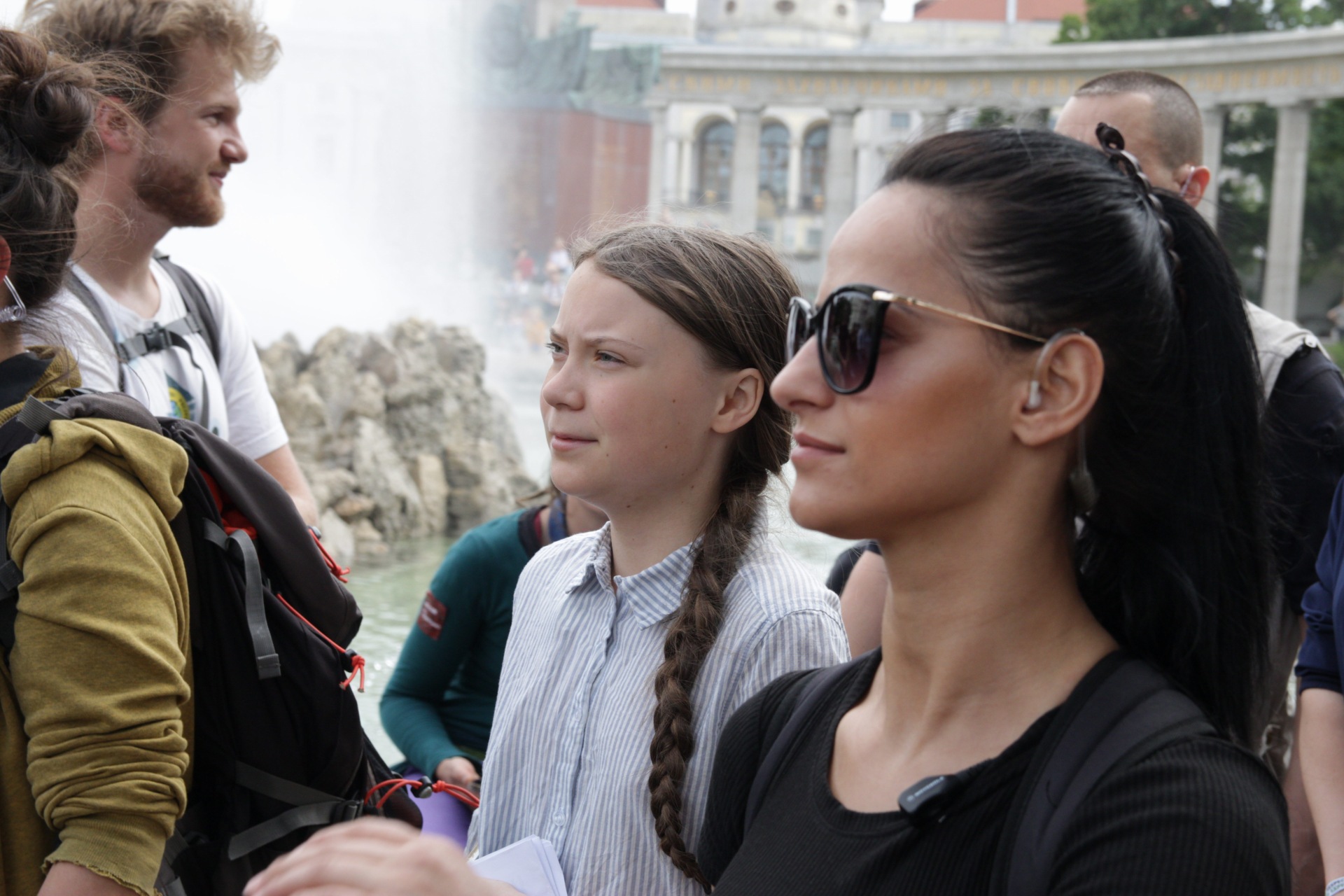 Most people understand that things cannot continue as they have been, but now the number of people taking action and demanding change is growing noticeably. The climate protection movement “Fridays for Future” is attracting ever-greater participation. Slogans like “There is no future on a dead planet” echo through the streets time and again. Research by Dr. Alice Vadrot also shows that movements like this can truly set the ball rolling. She investigated why policymakers react so sluggishly to scientific reports and findings:
“The problem lies, in particular, in the fact that the public does not demand sufficient environmental and nature conservation, a trend that is also reflected in voting patterns. We must therefore appeal first and foremost to people’s ‘hearts and minds’ so that nature conservation measures are implemented more effectively.” (Read the interview)
And indeed, political pressure has increased significantly in recent months, and things finally seem to be moving forward. Ursula von der Leyen recently stated after her election as the new President of the European Commission: “In my first 100 days, I will present the first European Climate Law, which will make the 2050 target legally binding.” Or take Austrian politician Rudi Anschober, who has been gathering signatures since this year for the protection of soil and biodiversity; 16,000 people have already signed the petition.
[av_heading heading='Don't bury your head in the sand—plant some flowers' tag='h3' style=" size=" subheading_active=" subheading_size='15' padding='10' color=" custom_font=" admin_preview_bg="][/av_heading]
The call for action is backed by science, which provides us with the tools and knowledge to take the right steps. Researchers at the University of Göttingen recently published findings on how to maintain biodiversity in agriculture while ensuring a reliable food supply. On the one hand, this requires preserving genuine nature conservation areas; on the other hand, targeted landscape planning can increase biodiversity on agricultural land. Agriculture can become the most important guardian of biodiversity, and this also pays off economically, explains environmental consultant Dr. Daniel Bogner:
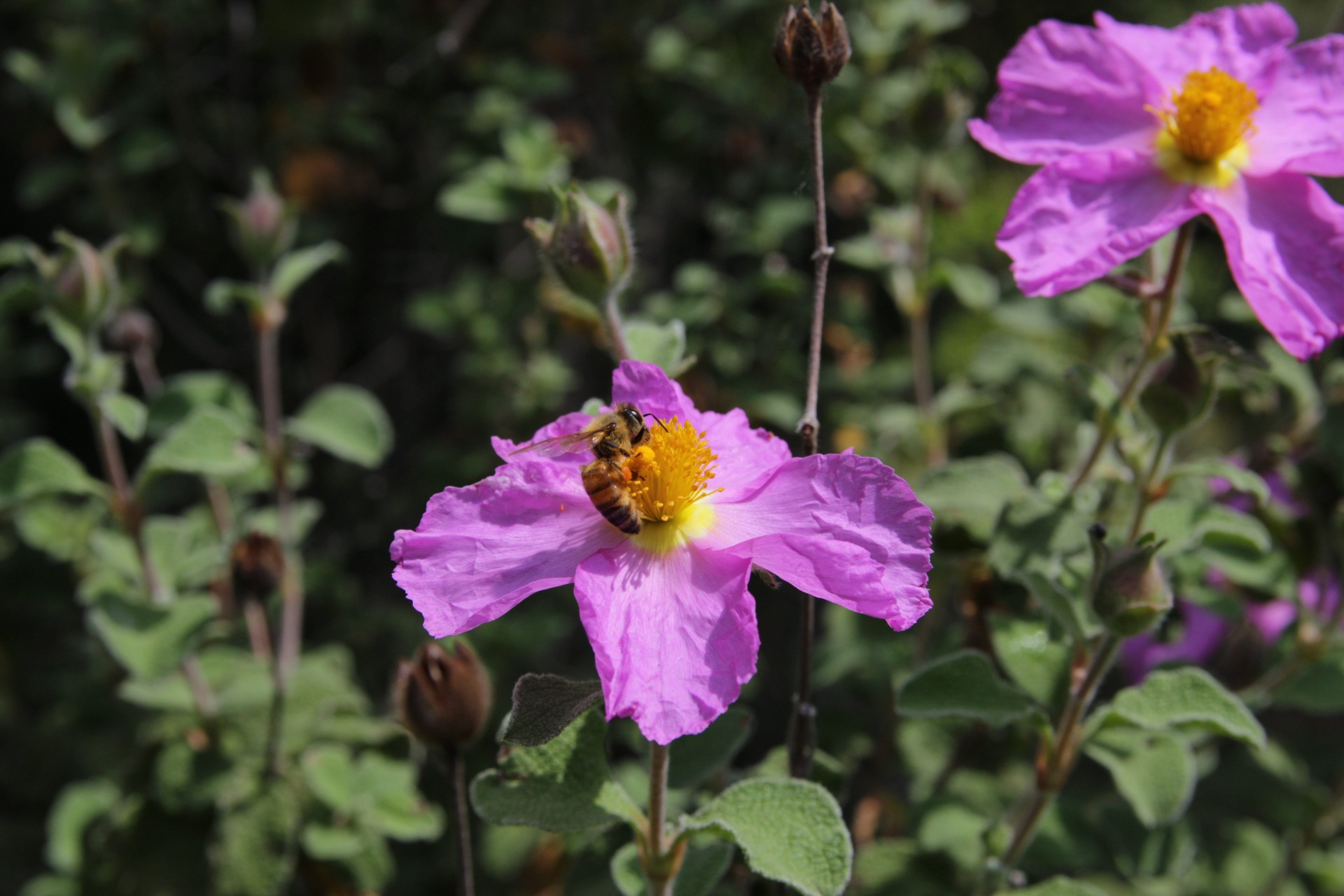
But even as an individual, don’t let reports of disasters discourage you—never underestimate the impact you can make. Start where it’s easiest for you, perhaps in your garden, on your balcony, or within your own home.
“I evaluated every plant based on how much food it provided for insects—specifically hymenoptera—and if it didn’t meet the criteria, I replaced it with another plant, no matter how much I liked it,” suggests organic farming pioneer Werner Lampert. (Read the full interview)
 The next step is to step outside. It is by far the more difficult one, because suddenly people are watching what you do. But it is precisely this step—where you begin to interact with others—that is the most fulfilling. Suddenly, you meet like-minded people, and doors open for you that you hadn’t even noticed before. When you come together with others, a dynamic full of hope emerges, and the power for positive change grows by leaps and bounds. Suddenly, your trust in humanity and in yourself begins to grow again. And suddenly, we’re saving the world.
Will you take the first step with us?
Steps to preserve biodiversity:
[av_promobox button='no' label='Click me' link='manually,http://' link_target="" color='theme-color' custom_bg='#444444' custom_font='#ffffff’ size=’large’ icon_select=’no’ icon=’ue800’ font=’entypo-fontello’ box_color=“ box_custom_font=’#ffffff’ box_custom_bg=’#444444’ box_custom_border=’#333333’ admin_preview_bg=“]
 About the Author
Dr. Isabell Riedl has served as Sustainability Officer and worked in communications at Werner Lampert GmbH since 2012. She studied ecology at the University of Vienna, specializing in nature and landscape conservation and tropical ecology. Her dissertation focused on the importance of tree lines in agricultural areas for forest birds in Costa Rica. Throughout her life, she has been particularly dedicated to ecological sustainability. She is part of the editorial team of the online magazine “Nachhaltigkeit. Neu denken.”
[/av_promobox]