
Food sovereignty is the right of a population to determine its own diet and agricultural practices. But what criteria do we actually use to choose what we eat? Who or what influences our decisions? Zurich-based professor Dr. Christine Brombach is researching these and other questions and has been studying the topic of food and nutrition for over 25 years.
Eating is, to a large extent, a social act, one that is deeply rooted in community. It begins even before birth, in the womb, and evolves into an active, social interaction after birth. This intimate bond—usually formed through the mother—creates a space of experience and connection for the child. Here, “being fed” is a holistic act: the child feels the mother’s warmth, not only taking in oral stimuli but perceiving the mother with all its senses and experiencing a “primordial taste of security,” which serves as both the breeding ground and foundation for social development. Here, the child learns that eating occurs more or less periodically; through the repetition of these routines, experiences and taste sensations become consolidated. Above all, however, the child learns that eating is directly connected to people.
As soon as children are old enough to sit at the table with us and eat with us, they learn how to handle food through the social group into which they were born. Evolutionarily speaking, we are omnivores—that is, we eat everything—which is an immense survival advantage for the human species. A koala can only eat eucalyptus leaves, so it can only live where eucalyptus leaves are available. To do this, it simply has to categorize the world into “eucalyptus leaves = edible” and “everything else = inedible.” It’s different for humans; we first have to learn what is edible and what isn’t. And this categorization isn’t biologically determined, but largely socially determined.
What is considered “edible,” “healthy,” or “proper” within a given social group—and what is not—are social norms that people must first learn from their environment. At no point in human history has food been a “given.” And every society has developed specific structures and rules surrounding meals, which naturally vary greatly. In our culture, everything takes place at the table; in other cultures, for example, people eat on the floor with their hands, which is something that must also be learned.
Georg Simmel, a German sociologist, noted as early as the beginning of the last century in his essay that it is precisely these meals that all people have in common; to put it bluntly: animals eat, but humans have a meal structure that they share.
As Heidegger said, humans are “thrown into the world”—that is, living beings endowed with only a rudimentary set of instincts for survival. We are born with a preference for sweet tastes because breast milk has a slightly sweet flavor and carbohydrates are an essential source of energy. Newborns have an innate aversion to bitter tastes, but we learn to like them later on because taste is also something we learn through role models. So, as we get older, we come to like bitter-tasting foods such as coffee, beer, or dark chocolate.
There are various stages of development and overarching issues within a society regarding food and its availability. As late as the 1950s, scarcity remained a central concern for many people; postwar shortages and experiences of hunger were still fresh in the minds and memories of people here in war-torn Europe.
It was not until the 1950s that food production became increasingly industrialized and mechanized, leading to a broader range of products as the first global goods entered the market. Today, the digitalization of food production has been added to this mix. This has had a massive impact on the entire food system. Entirely new, previously unencountered issues and challenges now face both individuals and societies.
Today, we have access to a round-the-clock supply of goods unlike anything seen before in human history. Suddenly, we must choose “a little” from this abundance and adopt a “no” attitude toward the constant availability and temptation of food. And this despite the fact that humans have always been programmed for scarcity, not abundance.
Thanks to digitalization, food has moved beyond a person’s immediate surroundings; it has become global, and as a result, my choices have also become global—for example, I can choose between European products and those that have traveled halfway around the world. Many people are rightly concerned about the consequences of these developments.
Since eating is something I have to do every day, several times a day, the way I eat also gives me the power to make decisions and influence the food system. But in order to make a choice, I also need an understanding of the consequences of my choice and of possible alternatives. And this is where digitalization could help create transparency. For example, by making products traceable, through digital labeling, or by using digital media to provide information on where something was produced locally and who produced it and how.
Knowledge is always a prerequisite for action. In many cases, such knowledge was traditionally learned within families. However, due to diverse social conditions and changes, this is no longer a given today. In my opinion, schools have a very important role to play in imparting both knowledge and practical skills. This is not just about cooking, but about acting sustainably when it comes to food. And that naturally includes food production, as well as the prevention of waste. And I am convinced that this can lay the necessary groundwork for food sovereignty.
But other institutions must also step up to ensure healthy dietary guidelines and food provision. For example, by offering appropriate options in institutional dining. Furthermore, it is also important to incorporate government-led health promotion initiatives, such as ensuring that laws regarding labeling and reformulation efforts are enforced. There is a vast range of possible actions, and we are only just getting started.
Food trends are developments we observe because food encompasses social, cultural, ethical, moral, and ideological aspects and is becoming a new arena for negotiation in an increasingly globalized society. It is evident that the concept of food—and especially “healthy eating”—is increasingly taking different paths, with products entering the market that aim to meet the diverse needs of consumers.
The term “superfood” originated in the world of marketing. The fact is that there are foods that contain significantly more active ingredients and nutrients than others, but they do not necessarily have to come from tropical or subtropical regions.
There are plenty of them in our part of the world, too:
There is a wide variety of locally grown produce, which allows us to build our food sovereignty here as well.
The selection in stores is vast and overwhelming. No one can possibly know the specific nutrients, production locations, manufacturing processes, or ingredients of the more than 60,000 products carried by the average grocery store. I think it’s clear to most people today that things cannot continue as they have been. We need to change our mindset—whether we like it or not. From a global perspective, we cannot continue to live and eat the way we have been. Our diet has a major impact on our ecosystems. About one-third of land, water, and resource consumption, as well as greenhouse gas emissions, can be attributed to food. This encompasses the entire chain from production to consumption and disposal. It is important to raise awareness about this. But it requires collective action; retailers, the business sector, and producers must work together, because ultimately, it is about our children’s future.
Everyone can do their part to promote sustainability, for example, by reducing their meat consumption. Meat is a valuable food and an integral part of our culture. It is also an important product for agriculture. There will never be a completely vegetarian Switzerland or Austria, because animals produce milk—for example—in areas like the Alps that could not otherwise be used for farming. Animal manure is important in agriculture for maintaining soil fertility.
However, we eat too much meat, and that’s not good for our health or the environment.
In 2012, the Swiss Federal Office for the Environment examined the environmental impact of private consumption among the Swiss population. The study revealed that 28% of the total environmental impact is caused by diet. Animal products are the primary contributors to this. It takes a great deal of water and resources to produce animal feed—such as grains—which is food that humans could also consume. The WHO has demonstrated in numerous studies that high consumption of red meat is associated with an increased risk of cancer. Meat often leads to excessive intake of fat and curing salts. Long-term studies show that people who eat little (i.e., max. 500 grams per week) or no meat have a lower risk of suffering from chronic diet-related diseases.
This doesn't mean giving up meat entirely; rather, as is always the case in life, it's about finding the right balance. You don't need to eat meat every day—vegetarian options are varied, easy to prepare, and delicious.
It is important to pay attention to what we put into our mouths every day, because it has a huge impact—not only on our bodies, but also on the environment and the agricultural system in which we live. To that end, we should educate ourselves and take the choices and decisions we make seriously. For as I eat, so I live; as I live, so I eat. This is not a new insight. It was a fundamental principle of ancient Greek philosophy, where the term diaita (which we now know only in its shortened form as “diet”) referred to a way of life. Thus, eating was always integrated into daily life, into the practical way of living. Enjoyable and healthy eating are the cornerstones of nutrition. So let’s eat and drink with joy!
[av_promobox button='no' label='Click me' link='manually,http://' link_target="" color='theme-color' custom_bg='#444444' custom_font='#ffffff’ size=’large’ icon_select=’no’ icon=’ue800’ font=’entypo-fontello’ box_color=“ box_custom_font=’#ffffff’ box_custom_bg=’#444444’ box_custom_border=’#333333’ admin_preview_bg=“]
About Christine Brombach
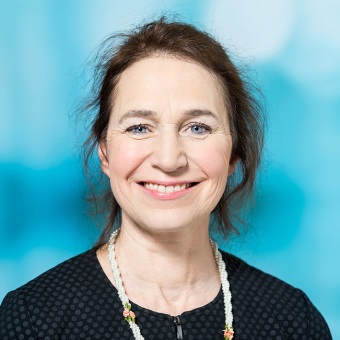 Prof. Dr.oec.troph Christine Brombach has been a lecturer at the Institute for Food and Beverage Innovation at the Zurich University of Applied Sciences (ZHAW) in Wädenswil, Switzerland, since 2009. She studied nutrition and home economics in Giessen (Germany) and Knoxville, TN (USA). After earning her diploma in Giessen, she obtained a Master of Science in Nutrition with a focus on gerontology in Manhattan, KS (USA). She earned her doctorate at the University of Giessen on the topic of “Nutritional Behavior of Women Over 65.” For four years, she served as project coordinator for the National Dietary Intake Survey II at the Max Rubner Institute in Karlsruhe (Germany).
[/av_promobox]
[av_notification title=" color='silver' border=" custom_bg='#444444' custom_font='#ffffff' size='normal' icon_select='yes' icon='ue80b' font='entypo-fontello' admin_preview_bg="]
Source: Abridged version of an interview with Christine Brombach on November 2, 2018
[/av_notification]
[av_notification title=" color='green' border=" custom_bg='#444444' custom_font='#ffffff' size='normal' icon_select='yes' icon='ue837' font='entypo-fontello' admin_preview_bg="]
Editorial article
[/av_notification]