
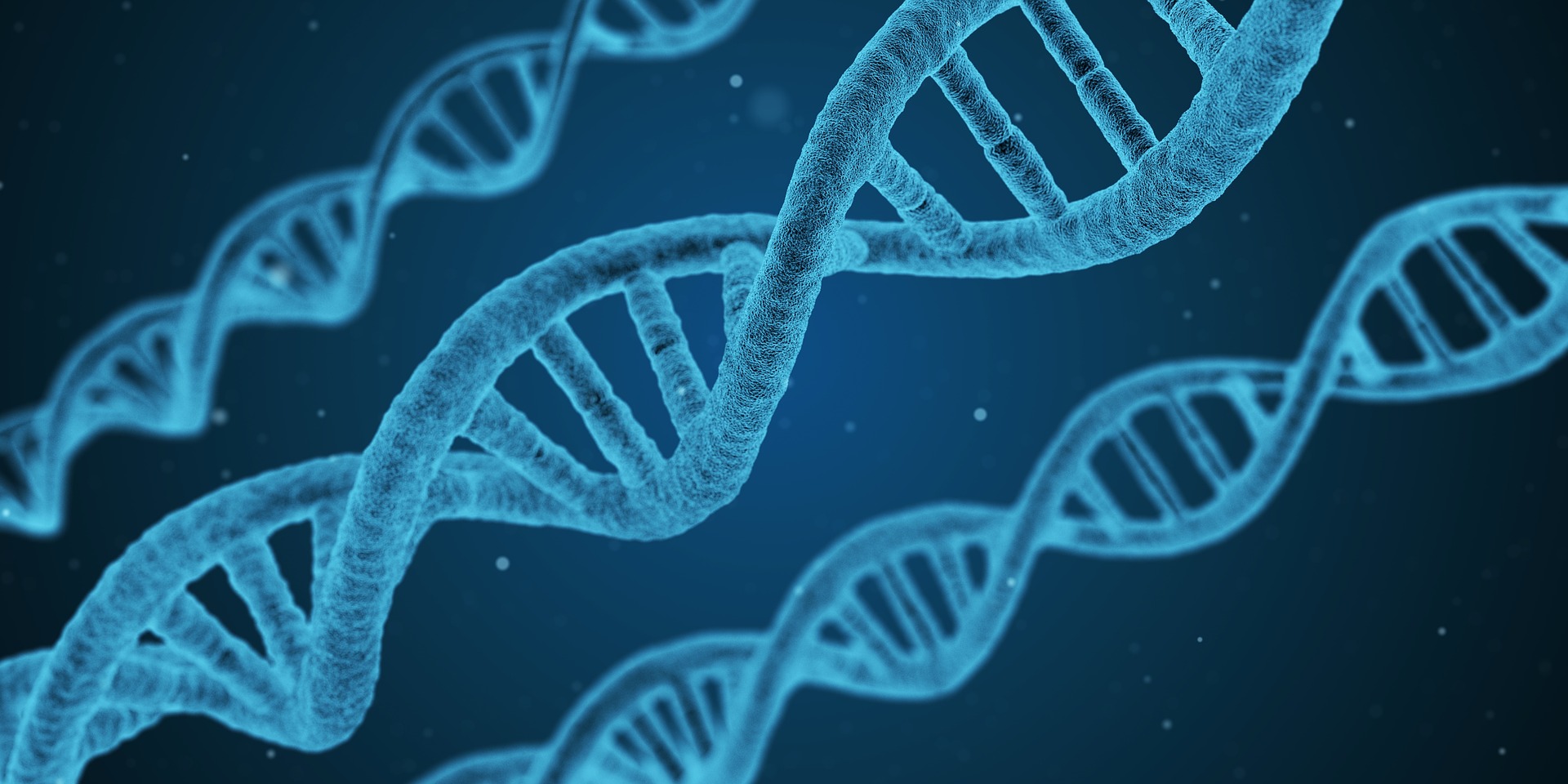
The Green Revolution reduced hunger around the world, but unfortunately also led to a decline in biodiversity. Through so-called “genome editing,” the goal is now to develop new crops that require fewer pesticides or fertilizers. Agriculture should become a force for creation rather than destruction.
Industrialized agriculture is one of the factors that significantly impacts biodiversity on Earth. Over the past hundred years, the so-called Green Revolution has indeed led to increases in productivity, but this has not come without side effects. The use of synthetic chemical pesticides, the increasing mechanization of farming and the resulting cultivation of monocultures, as well as rainforest deforestation and the resulting changes in land use, are three key factors that have a negative impact on biodiversity.
Representatives of industrialized agriculture now hope that technological advances will turn the negative effects of agricultural practices into positive ones. Using new genetic engineering techniques (genome editing), such as CRISPR/Cas9, the goal is to breed varieties that require fewer pesticides and are more efficient in their use of water and nutrients (Bayer, 2018). One might be forgiven for thinking the worst. The question arises: to what extent can genome editing preserve or promote crop diversity on the one hand and biodiversity in general on the other?
[av_heading heading='30 Plants Feed the World' tag='h3' style=" size=" subheading_active=" subheading_size='15' padding='10' color=" custom_font=" admin_preview_bg="][/av_heading]
Let’s start with the diversity of crop species and varieties. Globally, there are over 350,000 plant species, of which over 50,000 are edible and approximately 7,000 are collected and cultivated. Just 30 of these species account for 95% of the food consumed globally, with rice, wheat, and corn alone making up 60%. (ProSpecie Rara 2015) This loss of crop species and varieties is also known as genetic erosion and is a result of industrialized agriculture. Through mechanization and increased efficiency, all crop species that do not fit into the standard framework of mechanization have been “weeded out.” It is doubtful that new breeding methods will lead to a return to traditional practices. This is because new varieties will only be developed if seed companies can market them effectively or if a corresponding market is available.
Most crop species and varieties are the result of farming practices, and their development follows a different logic. It stems from the logic of adaptation and exchange among neighbors and/or groups. This stands in contrast to traditional high-yield varieties, which must be standardized and profitable (patented). Given these factors, it is therefore unlikely that the diversity of crop species and varieties can be improved through new genetic engineering.
[av_heading heading='Does Genetic Engineering Promote Biodiversity?' tag='h3' style=" size=" subheading_active=" subheading_size='15' padding='10' color=" custom_font=" admin_preview_bg="][/av_heading]
But how should the relationship between genetic engineering and biodiversity be assessed in general? Can genetically modified varieties contribute positively to biodiversity?
If the proponents of new genetic engineering have their way, the answer to these questions is yes. A brochure published by an international agribusiness claims that the use of genetically modified varieties could reduce pesticide use by up to 37 percent—while, of course, increasing yields by up to 22 percent. In contrast, a study by the Federal Agency for Nature Conservation showed that, over a 20-year period, pesticide use actually increased with herbicide-tolerant plants, and there was a significant decline in biodiversity on farmland (Schütte et al., 2014). This is primarily due to resistance that has developed in companion plants and weeds over time. While a definitive assessment may not yet be possible, it is clear that farming could proceed entirely without synthetic chemical pesticides, as organic agriculture has long demonstrated very successfully.
Another important factor influencing biodiversity in agricultural ecosystems is field size. Structural changes are leading not only to larger farms but also to larger fields. While this may offer time-saving benefits during cultivation, it does not promote biodiversity. A 2008 study concluded that the optimal field size is 1–2 hectares; beyond that, machine efficiency increases only marginally.
However, the new genetic engineering serves precisely that system of industrialized agriculture that is guided by the principles of mechanization and increased efficiency. And for that reason, it is highly unlikely that the new genetic engineering will make a positive contribution to biodiversity. Just to illustrate, an analysis of satellite data for the Sub-Andean region (Brazil and Argentina) concluded that 48% of all fields in this area are now larger than 50 hectares.
One thing is certain: biodiversity is under severe pressure. Researchers are even referring to this as the sixth major mass extinction, and agriculture bears some of the blame. Technological progress alone will not be able to stop this.
Rather, what is needed is a systemic shift in thinking, as demonstrated by organic farming, even though it faces major challenges (dependence on large seed corporations and trends toward conventionalization, such as larger fields and increased mechanization). And the external costs of food production must be quantified and charged to those responsible. For it is only through full cost transparency that fair conditions in agriculture can ultimately be ensured.
[av_promobox button='no' label='Click me' link='manually,http://' link_target="" color='theme-color' custom_bg='#444444' custom_font='#ffffff’ size=’large’ icon_select=’no’ icon=’ue800’ font=’entypo-fontello’ box_color=“ box_custom_font=’#ffffff’ box_custom_bg=’#444444’ box_custom_border=’#333333’ admin_preview_bg=“]
 About the Author
Florian Egger, M.A., studied Environmental and Bio-Resource Management and Ecological Agriculture at the University of Natural Resources and Life Sciences, Vienna, with a research focus on soil processes. Drawing on this knowledge and his practical experience, he is committed to promoting sustainable food production.
[/av_promobox]
[av_promobox button='no' label='Click me' link='manually,http://' link_target="" color='theme-color' custom_bg='#444444' custom_font='#ffffff’ size=’large’ icon_select=’no’ icon=’ue800’ font=’entypo-fontello’ box_color=“ box_custom_font=’#ffffff’ box_custom_bg=’#444444’ box_custom_border=’#333333’ admin_preview_bg=“]Definition
[/av_promobox]