
My heart races whenever I see fireworks—the vibrant colors, the radiance, the star-shaped glow in the darkness, accompanied by the strains of the Danube Waltz. For years, this combination has been the very essence of the New Year for me. But the more I learn, the less I can enjoy fireworks. Ever since I found out under what conditions cheap fireworks are manufactured, I haven’t been able to bring myself to buy them anymore.
You quickly notice after midnight that particulate matter pollution from fireworks rises rapidly and explosively (in the truest sense of the word). The view you had just moments before disappears into thick fog. However, you don’t see the poor conditions under which this colorful spectacle was produced. More on that later, though.
Throughout the year, approximately 2,050 tons of particulate matter are released in Germany from the burning of fireworks, with the majority occurring on New Year’s Eve. In the hours after midnight, hourly average levels of particulate matter (PM10—particles weighing less than 10 micrograms) can reach several thousand micrograms per cubic meter. Just how high that is becomes clear when you look at the maximum limit for the daily average set by the Federal Environment Agency, which is only 50 micrograms per cubic meter.
But why is there a limit in the first place? Fine particulate matter is harmful to health: heavy metals can accumulate on the surface of the dust, which can then enter the lungs and cause cancer. But the dust itself is also dangerous—the smaller the particles, the worse it is. It can even enter the bloodstream through the alveoli, reach organs, thicken the blood, and lead to heart attacks or strokes.
However, when looking at the year as a whole, particulate matter from agriculture—particularly intensive livestock farming—becomes a much more significant factor. According to researchers at the Max Planck Institute, agriculture is responsible for 45 percent of particulate matter in Germany.
These are also commonly found in fireworks—and intentionally so, since they produce the vibrant colors. Heavy metals such as barium, strontium, and copper are used, and they harm not only our bodies but also the environment. Illegal fireworks even contain lead, as evidenced by elevated lead levels observed on New Year’s Eve.
The battlefield-like scene that New Year’s Eve leaves behind in many places reveals the next problem—trash. Depending on the type , fireworks consist of 60–75 percent packaging, with only the rest being the burning pyrotechnic components. The packaging—which is trash—ends up everywhere, including meadows, pastures, and fields. Time and again, farmers call for a ban on fireworks (bauernzeitung.at). Pieces of fireworks—some as sharp as knives and up to 5 cm in size—are hard to find and therefore unfortunately end up in forage, where they can seriously injure or even kill livestock.
Wild animals also suffer greatly from New Year’s Eve fireworks. Many flee from the unfamiliar noise and flashes of light and do not return to their territory for weeks. Radar measurements in the Netherlands have shown that on New Year’s Eve, thousands of birds fly to great heights to escape the loud bangs.
But now for a topic I wasn’t aware of until recently… More than 80 percent of all fireworks, firecrackers, and bangers worldwide come from China. The second-largest producer is India. Due to the peak season leading up to New Year’s Eve, unskilled laborers must be hired; wages are low, and workplace safety is a major problem. Workers handle incendiary devices and metal salts that are inhaled or cause chemical burns on the skin of their hands. Additionally, the risk of explosion in the factories is high. An investigation by Solidar Suisse revealed that between 2015 and 2018, there were 19 major accidents in China, resulting in 92 deaths and 141 injuries.
And that's not all: in China, India, El Salvador, Guatemala, and Peru, child labor is still used in the production of fireworks—not officially, but illegally.
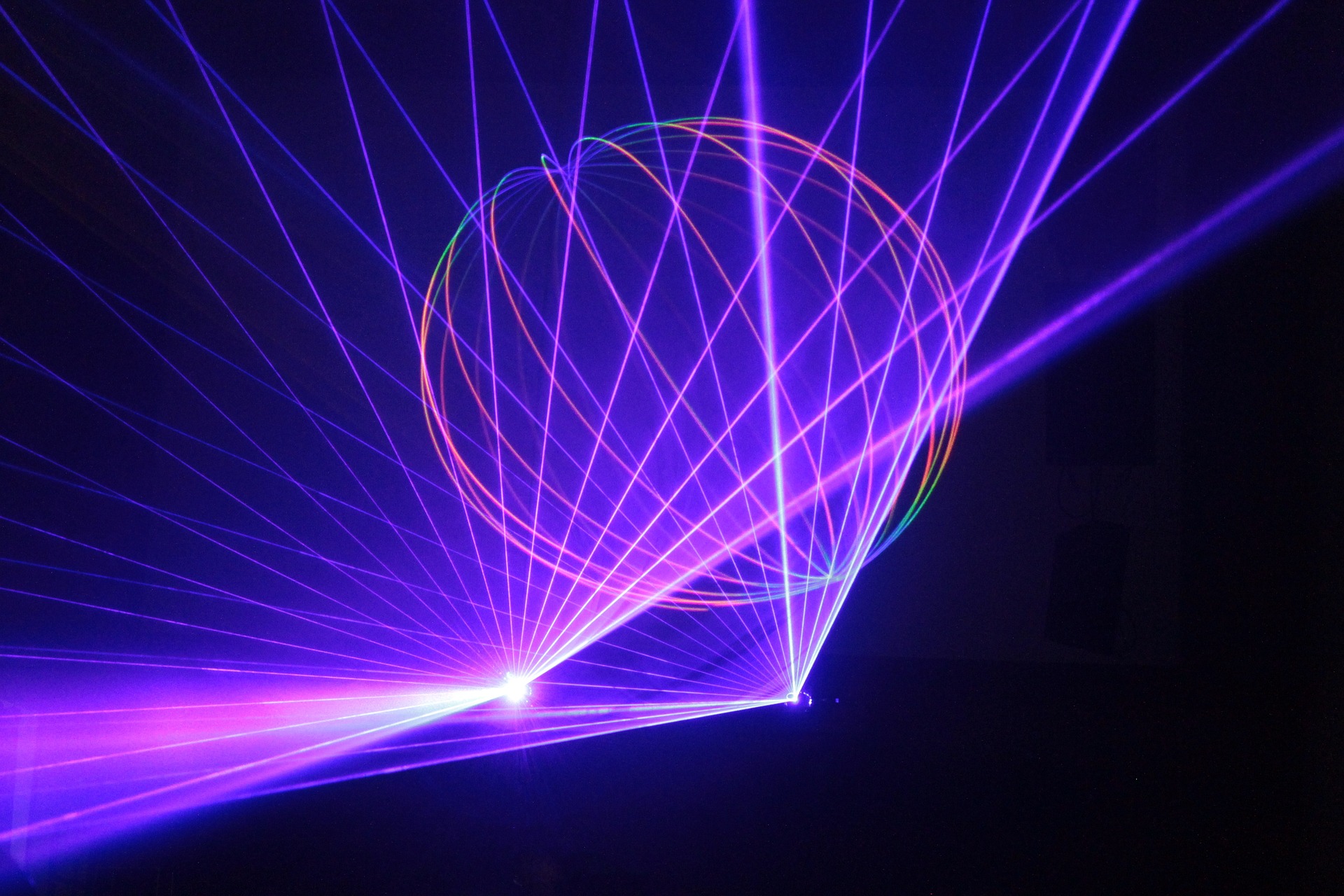
So how can we wrap up the year in an ethically responsible way? Light and laser shows offer similar effects to fireworks—maybe there’s a show like that near you for New Year’s Eve. Combined with music, these events are truly impressive and beautiful. On a smaller scale at home, confetti cannons can do the trick and fill the air with beautiful colors.
If you still want to see real fireworks, at least don't set them off yourself. It's best to attend a professional fireworks display put on by a company that produces its own fireworks. You can find out where fireworks displays are taking place on feuerwerk-forum.de
Professional fireworks are not only more beautiful, but they also help reduce the overall amount of fireworks in the air. Professional fireworks also generate less waste and plastic, since they use fireballs rather than rockets with a lot of packaging.
Plus, you won't burn your fingers, and you'll save money, too. If that isn't enough of a benefit!