Around the world, calls for societal change toward sustainability are growing louder. This shift is often referred to as“the great transformation.”What does this term mean? It means that this change is intended to enable a good and sustainable life on a healthy planet—for everyone around the world.
This means that our production-, consumption-, and throwaway-oriented society is shifting more toward a service-based economy. As a result, thanks to the circular economy and mindful consumption, we are using fewer resources and less energy overall.
This transformation is also accompanied by a shift in values. Some of the old “guiding principles” of our modern society—such as the pursuit of profit, a competitive mindset, and growth—are increasingly being replaced by new ones, such as health, social cohesion, resource conservation, slowing down, regionalization, and time-based well-being.
Most countries around the world are still far from achieving sustainability. To change this, the member states of the United Nations have set a common sustainability goal: the so-called“Sustainable Development Goals”(SDGs for short). Seventeen specific goals form the cornerstones of this path.
This plan aims to promote global environmental protection, prosperity, and peace. The timeline for implementation is ambitious: all SDGs are to be achieved by 2030.
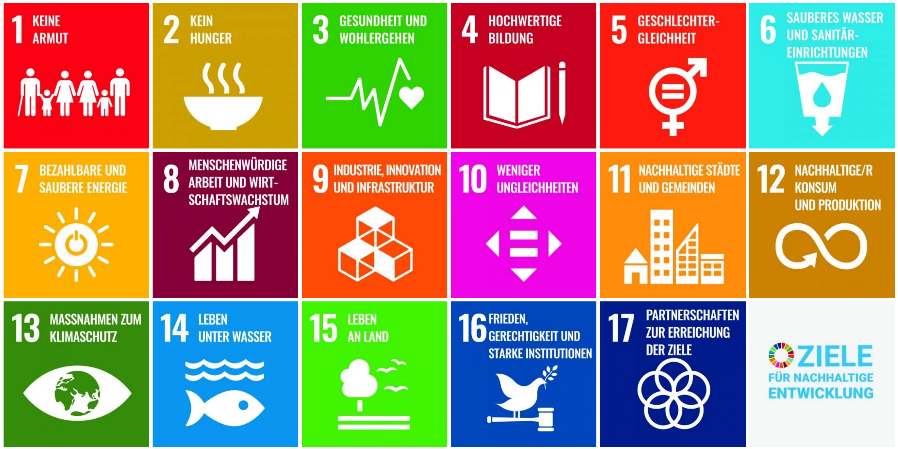
Across Europe, various NGOs and organizations have launched the "SDG Watch"platform to monitor progress on the SDGs.
Scientists emphasize that the transformation our world needs right now must take place on many levels simultaneously. Politics plays a crucial role. Laws and policies can either slow down or—as is urgently needed—accelerate change in the economy and society.
The business sector is also seen as a key player. Many environmental and climate issues are linked to how goods are produced and transported. Unlike politicians, companies can often make and implement sustainable decisions quickly and independently.
But the influence we wield—both as individuals and collectively as a society —should not be underestimated. Ultimately, change is also largely a matter of shifting attitudes and behaviors.
Surveys show that public awareness of environmental and climate issues is currently at an all-time high: 92% of people view climate change as a very serious problem. Nevertheless, studies show that awareness does not automatically lead to action. To make a difference, we also need viable alternatives that are neither too expensive nor too cumbersome.
What further accelerates this change: good role models. People in our circle who are a step ahead of us when it comes to sustainability often inspire us to follow their example. Where solar panels are installed in plain view, additional systems are installed in the neighborhood at a higher-than-average rate. This “bandwagon effect” arises because our decisions are significantly influenced by the behavior of others.
Social transformation will give rise to many new things and cause old ones to disappear (e.g., jobs in the fossil fuel industry). To ensure that everyone is included and no one is left behind, the EU has put together a package for a“justtransition.”
You can find interesting podcasts on the topic of the SDGs here.