
According to a recent GfK survey, two-thirds of Austrians eat meat every day. But what happens to the meat that doesn’t make it onto our plates? The sad truth is that it ends up in the trash, along with other food that is still edible. Initiatives in Austria are now working to put a stop to this senseless waste.
Every year, about one-third of the food produced worldwide is thrown away, even though it is still perfectly edible. In Austria, this amounts to approximately 760,000 tons per year[1]. Supermarkets alone account for over 13 percent of this waste. Austria is not alone in this, however: Losses across the entire food supply chain are roughly the same in most countries, though the distribution of these losses varies greatly. In industrialized countries, about half of all food is thrown away by end consumers, whereas in poorer countries, inefficient technologies or a lack of know-how in harvesting, storage, and processing lead to significant losses.
Innovative concepts from Austria address this issue and offer alternatives for combating food waste in a way that is both enjoyable and sustainable.
[av_heading heading='Jam with a Purpose' tag='h3' style=" size=" subheading_active=" subheading_size='15' padding='10' color=" custom_font=" admin_preview_bg="][/av_heading]
© Wiener Tafel
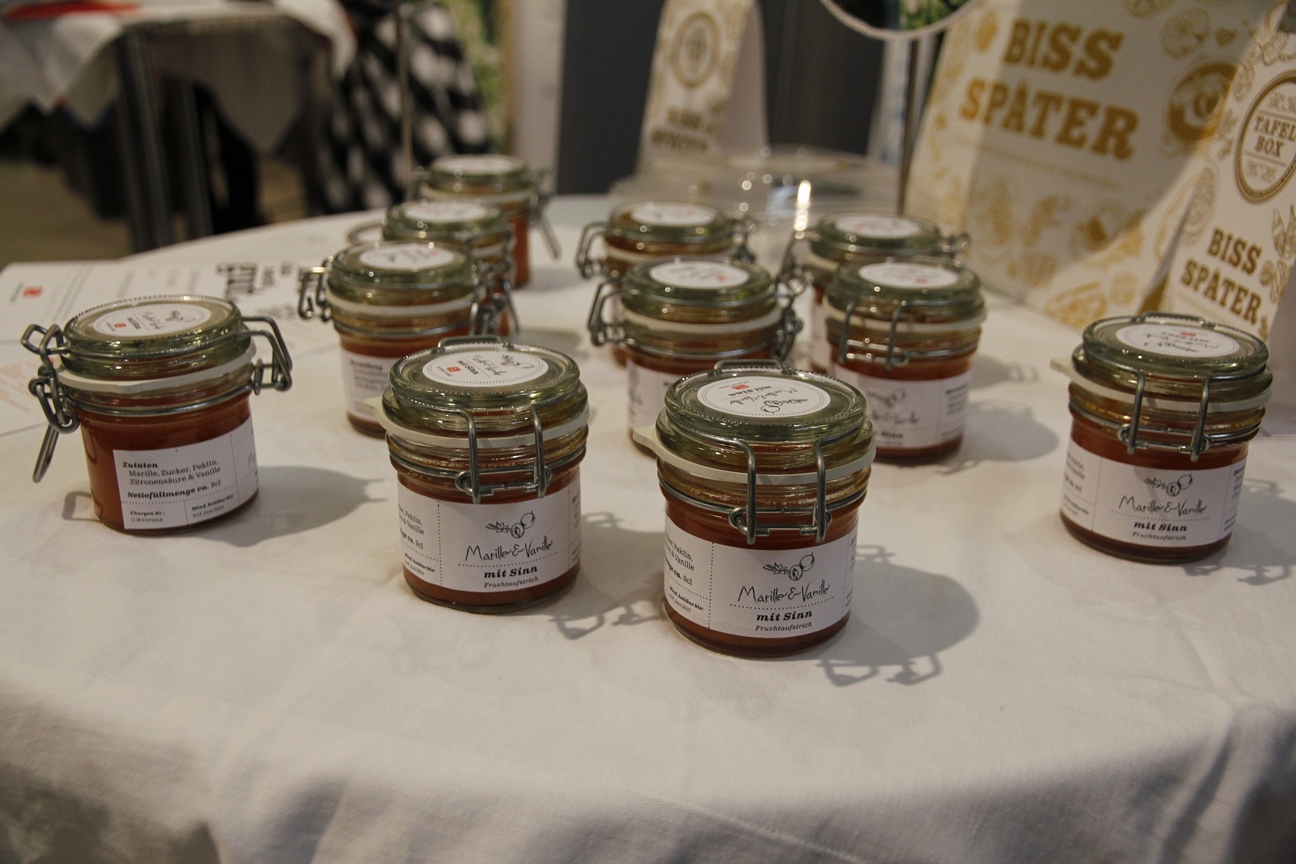
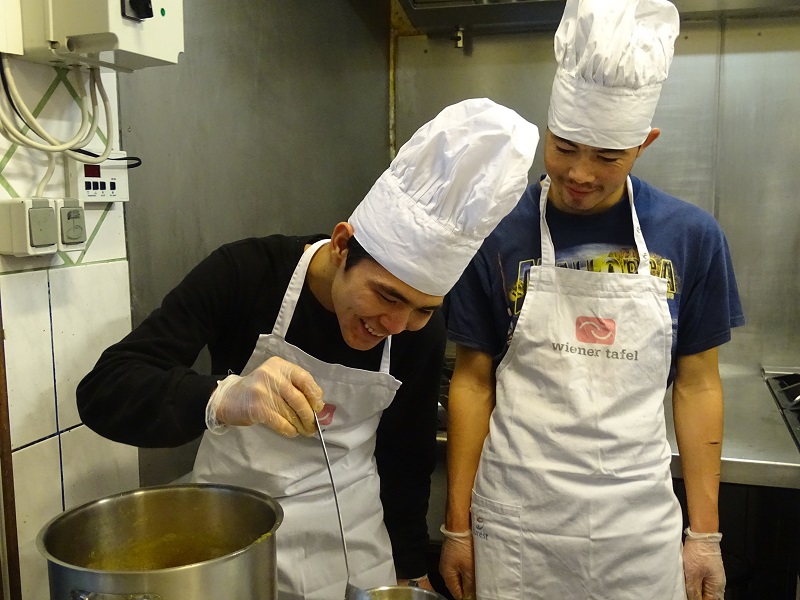
The“Marmelade mit Sinn”project focuses on saving food from being thrown away. Jam is made from so-called “waste” and surplus fruit, which is then sold. Chef Cornelia Diesenreiter founded “Marmelade mit Sinn.” Last year, the young entrepreneur collected 600 kilograms of fruit, processed it, and used it to produce around 3,000 jars of jam.
But that’s not all: “Marmelade mit Sinn” actively involves refugees in the production process. Together with volunteers from the Wiener Tafel, they can help turn the fruit into jam, improving their language skills and putting their abilities to good use in the process.
[av_heading heading='"TafelBox" made in Austria' tag='h3' style=" size=" subheading_active=" subheading_size='15' padding='10' color=" custom_font=" admin_preview_bg="][/av_heading]
Another project supported by Wiener Tafel is the “TafelBox,” which helps prevent food from being thrown away at events, in restaurants, hotels, and catering companies. Together with the Waldviertel-based company Kastner and the packaging company Pacovis, Wiener Tafel developed the “TafelBox”: a food storage container made of biodegradable material that can be tightly sealed. The innovative box is intended primarily for use at buffets: guests can use it to take leftover food home on their own and at their own discretion at the end of the event. For every box purchased, 20 cents are donated to Wiener Tafel, which can then use the funds to provide food to people affected by poverty.
[av_heading heading='Dumpster Diving in Austria' tag='h3' style="" size="" subheading_active="" subheading_size='15' padding='10' color="" custom_font="" admin_preview_bg=""][/av_heading]
Dumpster diving—this refers to the search for usable food waste. Dumpster divers are now increasingly active in Austria as well, sifting through the trash at supermarkets and wholesale markets in search of edible food. Many dumpster divers view dumpster diving as an act of compassion; the food they salvage is not for themselves, but for those in need. Furthermore, many dumpster divers aim to set an example for mindful food consumption and, in doing so, criticize today’s consumerist and throwaway society.
More and more supermarkets are also trying to avoid unnecessary environmental impact. A study by Greenpeace showsthat supermarket chains vary greatly in their efforts to combat food waste. Nevertheless, the majority—six out of nine supermarkets surveyed—received a “Good” rating, two received a “Satisfactory” rating, and one supermarket received only a “Passing” rating. But what is far more important is that the study shows that supermarket chains are also taking responsibility, and that a shift in thinking is slowly taking place here as well, one small step at a time.
[av_promobox button='no' label='Click me' link='manually,http://' link_target="" color='theme-color' custom_bg='#444444' custom_font='#ffffff’ size=’large’ icon_select=’no’ icon=’ue800’ font=’entypo-fontello’ box_color=“ box_custom_font=’#ffffff’ box_custom_bg=’#444444’ box_custom_border=’#333333’ admin_preview_bg=“]
Footnote
[av_notification title=" color='custom' border=" custom_bg='#e2e8ca' custom_font='#444444' size='normal' icon_select='yes' icon='ue837' font='entypo-fontello' admin_preview_bg="]
Editorial article
[/av_notification]