
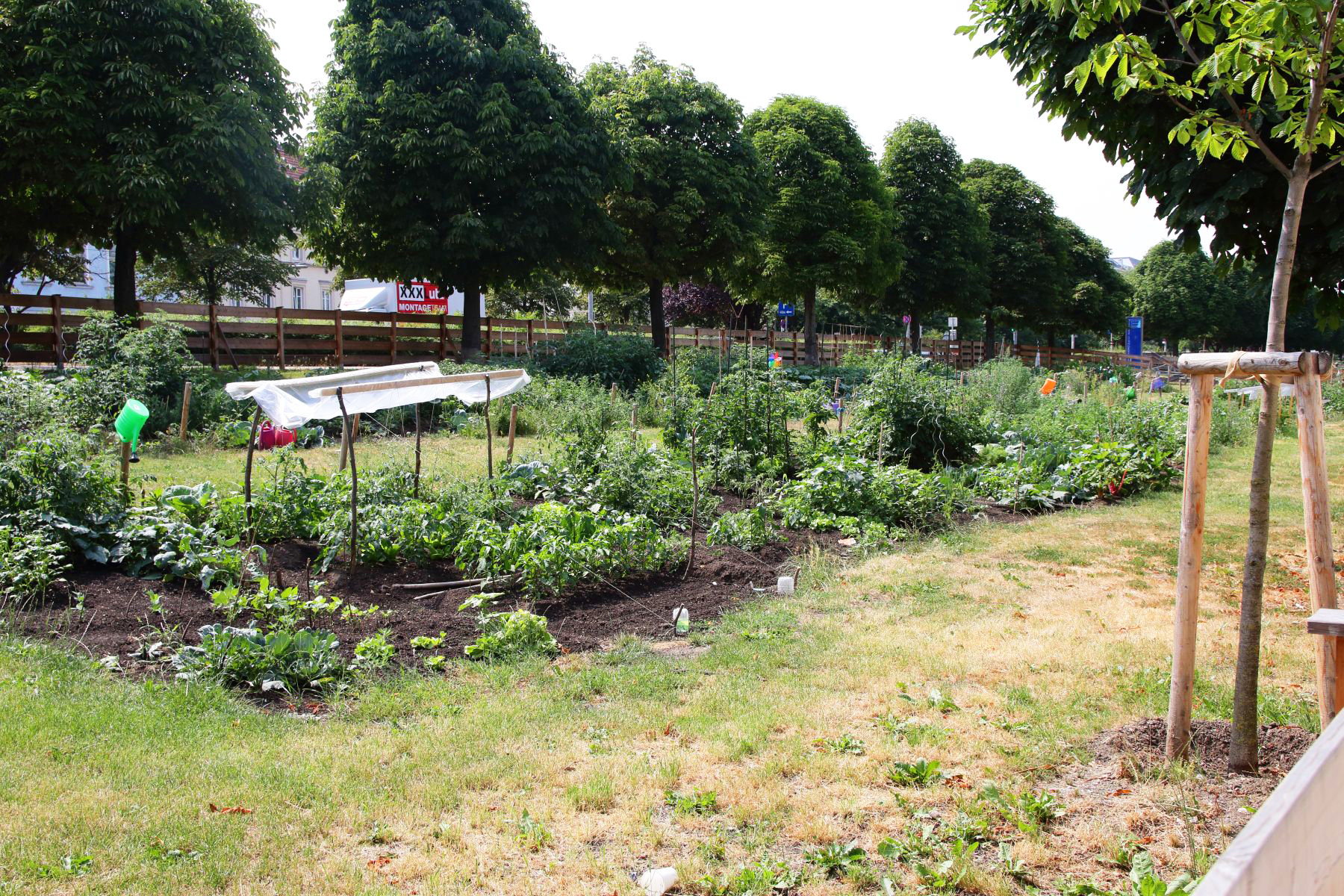
As an alternative to industrialized and centralized food production, more and more people—both in cities and in rural areas—are trying to increase their independence and self-sufficiency by growing their own food.
[av_heading heading='Why urban and home farming?' tag='h3' style=" size=" subheading_active=" subheading_size='15' padding='10' color=" custom_font=" admin_preview_bg="][/av_heading]
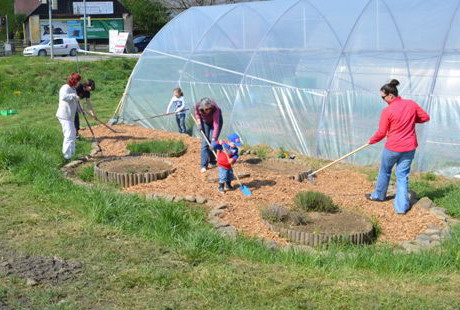 While in Russia, due to the so-called Summer cottages While a high degree of self-sufficiency is ensured, existing private and public green spaces in America and Europe are only gradually being converted to food production. The The wishes of the city's residents, but there are also several reasons why people with their own gardens choose to grow their own food. On the one hand, a garden a connection with nature on the one hand, it brings it back, and on the other hand, people are more convinced of the health benefits of homegrown food. Eco-friendly In any case, home-grown produce is optimal, because several studies have shown that organic farming and eating seasonal foods without heated greenhouses consume the least amount of energy (Source: 1,2). This is even more important than the regional origin of food. Your own garden doesn't have to be particularly large either. There are now many sophisticated systems...which allow even people without a garden to grow vegetables, herbs, and small fruits. A balcony or a terrace Or even just a large, bright window is enough to grow various vegetables or herbs. If the plants are also grown from seed, the energy required for cultivation is minimal. Moreover, experiencing growth and harvesting one’s own crops is especially important for children growing up in the city. Homegrown vegetables are always fresh and unpackaged. They are cooked immediately and therefore do not spoil, resulting in an incomparably positive energy balance.
[av_heading heading='The Potential for Greening the Food Supply' tag='h3' style="" size="" subheading_active="" subheading_size='15' padding='10' color="" custom_font="" admin_preview_bg=""][/av_heading]
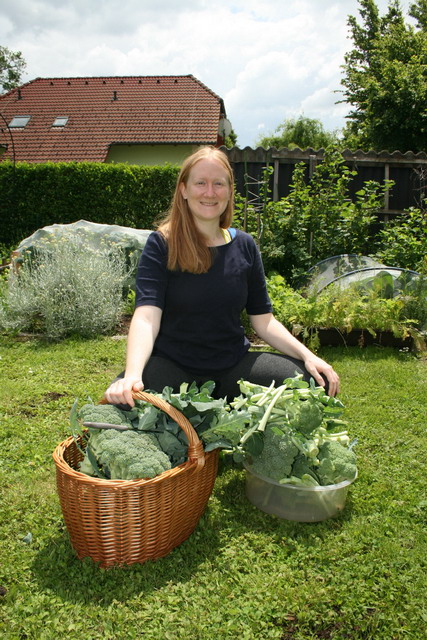 In Austria There are nearly 2 million single-family or two-family homes with enough space to provide a significant portion of the food needed by the families living there. But many European cities also have a large number of community gardens. Vienna alone has nearly 40,000 plots. Most of these are, of course, also suitable for growing food. While complete self-sufficiency is hardly possible, it is possible to grow An area of 100 to 200 square meters per person cover vegetables, herbs, and small fruits at least during the growing season from April to October/November. The increasingly mild winters in the Alpine region are also significantly extending the gardening season. Therefore, the organic gardening growing food within one’s own four walls is becoming increasingly popular. More and more municipalities are also making public green spaces and vacant lots available for growing food. As has been shown, with proper planning, such urban or community gardens can become meaningful projects that promote social and environmental sustainability.
[av_heading heading='Examples of home and urban farming' tag='h3' style=" size=" subheading_active=" subheading_size='15' padding='10' color=" custom_font=" admin_preview_bg="][/av_heading]
These are certainly among the most striking examples of self-sufficiency. The average size of a dacha garden is only about 600 square meters. In total, these gardens produce about 40% of all Russian food on just 6% of the available agricultural land. For certain types of vegetables and fruits, self-sufficiency exceeds 80%.
Following an economic crisis in the early 1990s, Havana had to quickly shift to food self-sufficiency to prevent the population from going hungry. Today, 34,000 hectares are cultivated through urban farming, and only about 16% of the total food supply is imported.
In the heart of Pasadena, California, a man has converted his 800-square-meter property into an urban farm. Today, an impressive 2–3 tons of fruits and vegetables are produced annually on an area of just 400 square meters.
Following the decline of its once-thriving industry, Detroit urgently needed solutions to prevent massive out-migration. As a result, many of those who stayed began creating subsistence gardens. The organization Earthworks, for example, runs several of these community gardens.7
In the Canadian city of Toronto, too, many people have come together to establish community gardens. There are now well over 100 community, school, and children’s gardens there.
Übelbach, near Graz, has made a name for itself as Austria’s first “edible community.” Food is now being grown in various public spaces there. People of all ages are participating in this project.
[av_heading heading='Why not give it a try yourself?' tag='h3' style=" size=" subheading_active=" subheading_size='15' padding='10' color=" custom_font=" admin_preview_bg="][/av_heading]
If you have little or no experience with gardening, reach out to gardeners, landscapers, or one of the many organizations that operate or manage community gardens, but take the plunge into (partial) self-sufficiency. You’ll meet many interesting and responsible people who are on the same journey.
[av_promobox button='no' label='Click me' link='manually,http://' link_target="" color='theme-color' custom_bg='#444444' custom_font='#ffffff’ size=’large’ icon_select=’no’ icon=’ue800’ font=’entypo-fontello’ box_color=“ box_custom_font=’#ffffff’ box_custom_bg=’#444444’ box_custom_border=’#333333’ admin_preview_bg=“]
 About the Author: Dr. Jürgen Herler
Dr. Jürgen Herler studied biology (zoology and ecology) in Graz and Vienna. After many years in marine biology research, he realized that overly large cycles, especially in food production, place far too much strain on our ecosystems. The loss of nitrogen and phosphorus in the soil and the overfertilization of waterways with these nutrients lead to enormous problems on both fronts. As an entrepreneur, he has therefore set himself the goal of creating more edible gardens. With his garden towers, he helps people who don’t have a garden at all and promotes food production in the smallest of spaces. He is particularly committed to the continuous development of his products and cooperation with regional partners: www.herbios.at.
[/av_promobox]