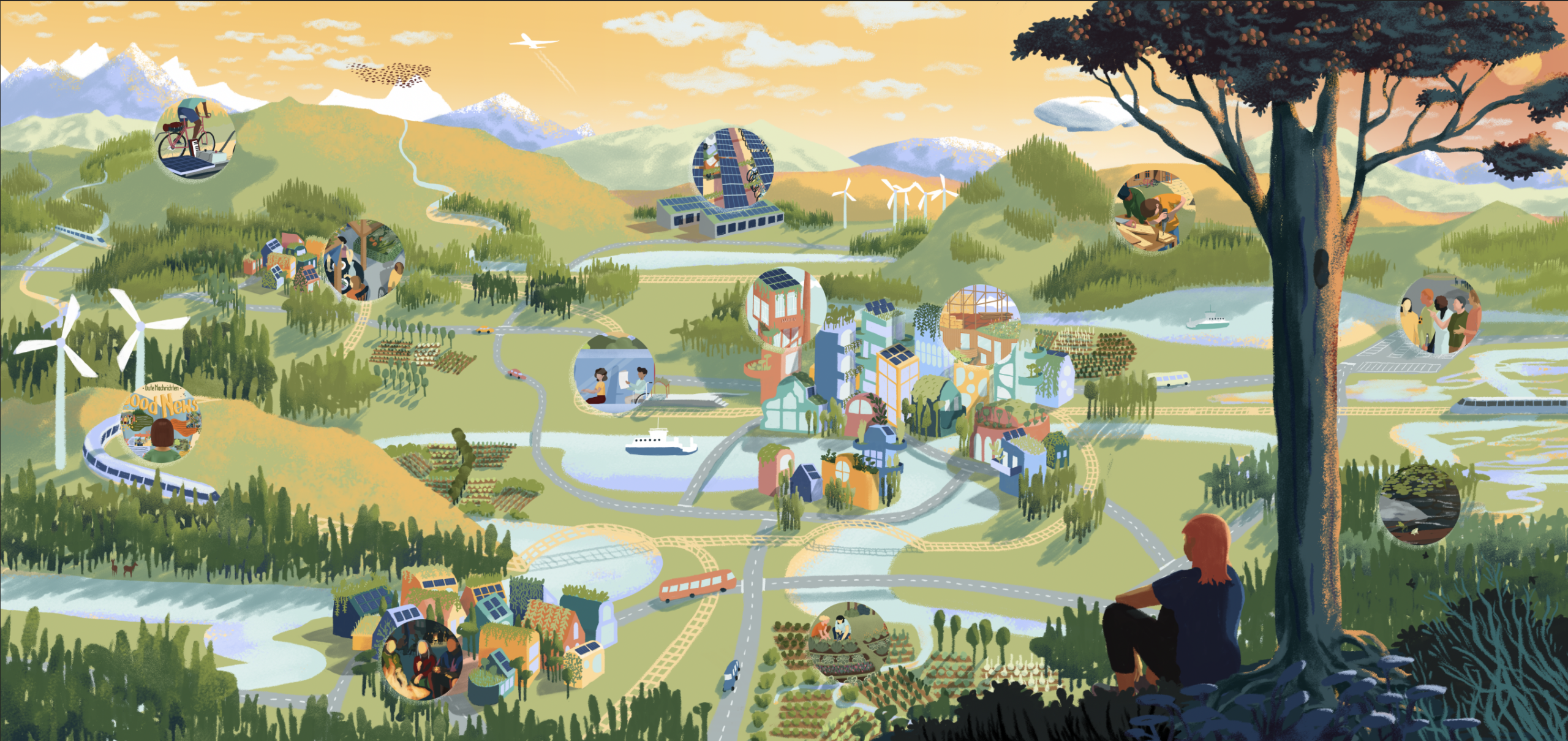
How vividly can you picture your ideal future? Is it hard? Do the same images always come to mind? Familiar scenes—or, worse yet, apocalyptic visions? Maybe we need a “change of scenery” to steer our imagination toward a BETTER future. That is exactly what scientists and graphic designers have now attempted to do together.
Isn't that right? We all have enough doomsday scenarios swirling around in our heads. We're practically yearning for an alternative vision, but we lack the imagination. What does the future we want to move toward look like? The good news: there's no shortage of answers. The bad news: they aren't always easy to find.
As a result, many of the things that could shape a bright future remain below the radar of public awareness. The “Zukunftstapete” project aims to change exactly that. It sees itself as a magnifying glass and amplifier for these “unheard-of” future solutions, translating them into images and stories. Because unlike abstract, mind-boggling numbers (like tens of thousands of tonsof CO2), images and stories are easy for our brains to process: we grasp them quickly and remember them.
To get good answers, we reached out to prominent Austrian climate scientists (such as Karl Steininger, Gottfried Kirchengast, and Helga Kromp-Kolb). But we also interviewed forward-thinking innovators with hands-on experience. For example, Philipp Wildberger from the composting toilet company Öklo, whose passion is a circular economy that includes a shift in sanitation practices. Or Matthias Katt, who is currently shaking up the green energy market with his company E-friends. Or Margit Mayr-Lamm, who has a crystal-clear vision of a self-sufficient, sustainable agriculture. Or Hildegard Kurt, who invites us to celebrate Earth Festivals. Or, or, or…because there are now many trailblazers.
In these conversations, open-ended questions became answers. Answers became stories. Stories became images. And these images come together to form the “Wallpaper of the Future.”
What has changed in this vision of the future? A lot, if you take a closer look. Everything here that brings joy, provides sustenance, or keeps us warm and dry has been disconnected from the fossil fuel industry. The future is 100 percent renewable or compostable. If not both, then at least recyclable. And it generates no waste, whether food or raw materials.
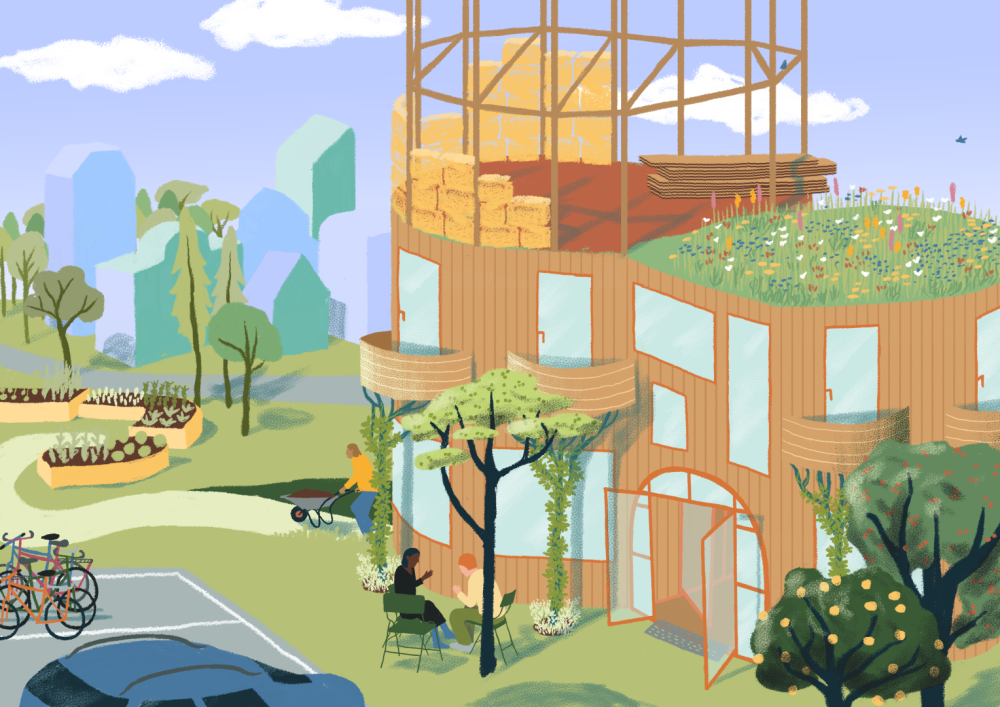
In many places, gray has given way to green—for example, on rooftops and facades, or through the removal of paving from former parking lots. The transportation and energy systems have been transformed to be more climate-friendly. Behind modern facades, wood, straw, and clay ensure the living comfort of the future.
People are cycling, strolling, and hiking much more these days. Those who used to be bothered by airplane and traffic noise are now enjoying the fact that it has become quieter.
Forests, gardens, and parks have become more colorful—and in many cases, even edible. Once again, the air is filled with the sounds of chirping, scurrying, and croaking. Flocks of birds take flight. Large-scale “landscape restoration” initiatives have reintroduced hedges, trees, marshes, and dry and wet meadows into the countryside. In many places, rivers have been freed from their concrete confines.
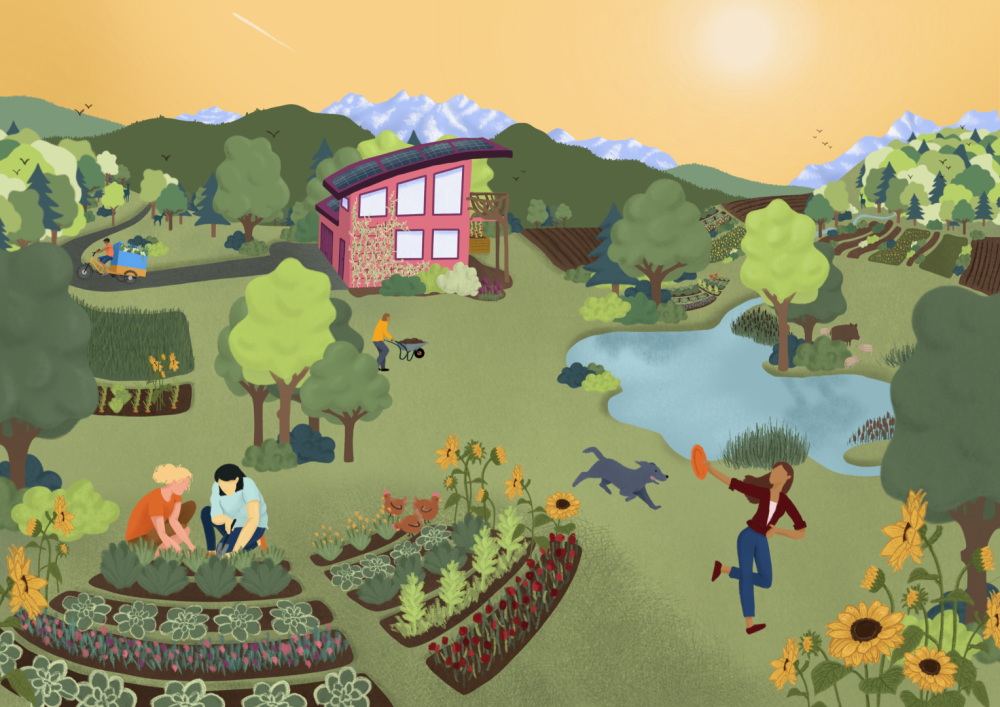
Farming is now regenerative, soil-friendly, and environmentally sustainable. Farmers build up humus, thereby offsetting the greenhouse gas emissions generated by livestock farming. Fewer animals are raised overall, but they are raised in a more sustainable way. Most of what ends up on our plates comes from the local area.
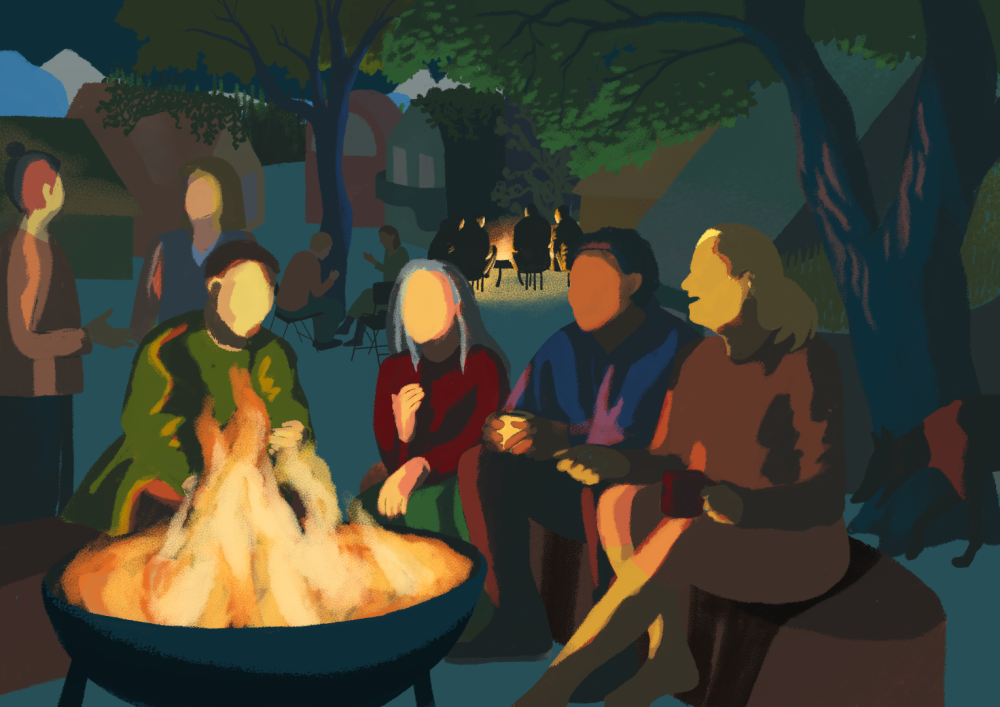
It is not only the political sphere that has undergone a sharp shift toward sustainability. Society, too, has experienced a broad shift in thinking, bringing new values to the fore. In “New Humanism,” people now see themselves not only as a global community but also as part of the natural cycle. Without overburdening the planet, people here live more consciously, with greater solidarity, more carefree, and significantly healthier lives. Overconsumption is a thing of the past: “Time over money” is the new motto.
The shift toward a slower pace is evident everywhere. Stress and hustle and bustle have given way to a “new slowness.” Serenity, mindfulness, and enjoyment define everyday life. We look out at a world full of sustainable solutions and healthy ideas. And we feel at home in the world.
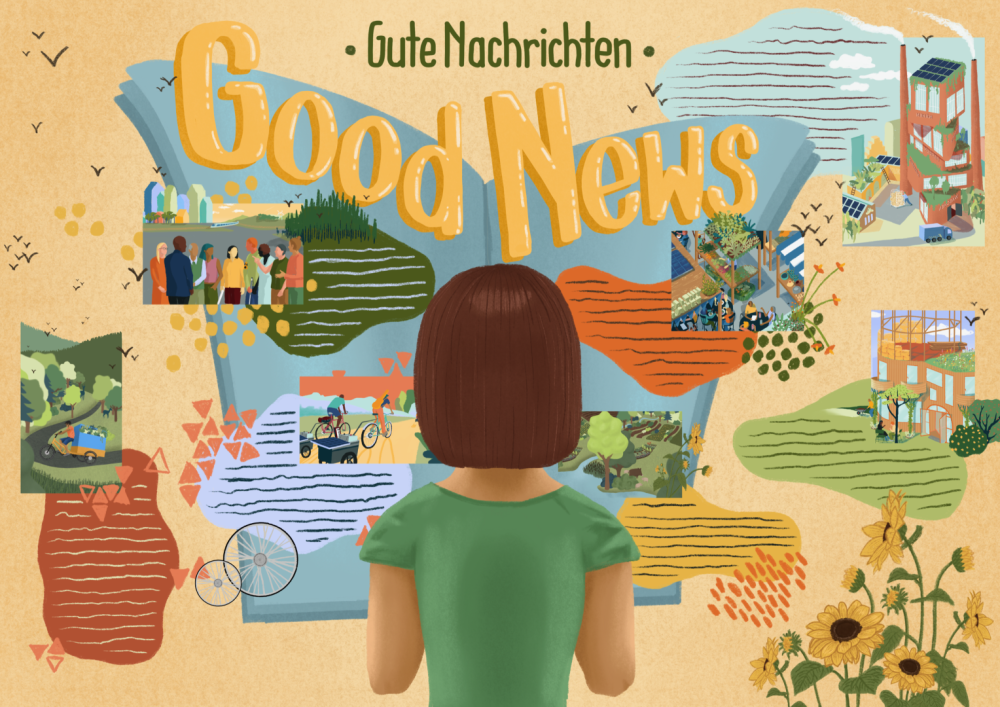
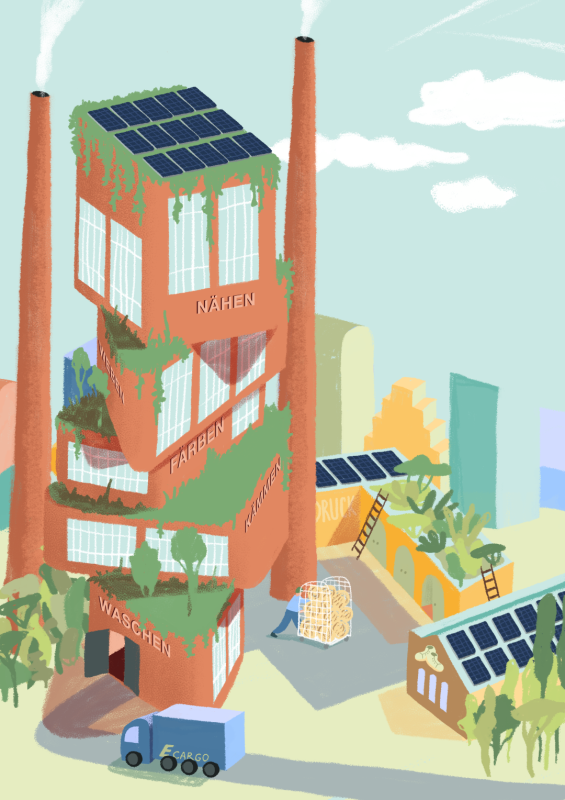
The “Future Wallpaper” is bubbling. If you zoom in, you can discover detailed scenes of the future, such as the vertical factory, the lively village square, or (heart-centered) education.
The text accompanying the wallpaper explains what “rest stops,” compostable 3D-printed sneaker soles, “grandmother’s advice,” and “frog festivals” are all about. It also explains why, on former airfields, you now hear the honking of geese, the clatter of skateboards, and concerts instead of the roar of aircraft. This text also includes all the links to the specific initiatives, projects, pioneers, etc., who are already putting these future solutions into practice today.
Lino Zeddies puts it this way: we live in an age devoid of vision. The “Future Wallpaper” invites us to turn the tables. It aims to inspire people to envision a desirable future in vivid detail and to discuss it with others.
The stronger our sense of this future is, the more vivid it becomes in our minds, and the easier it is for us to inspire others to shift their thinking toward sustainability. The Future Wallpaper is designed to be a tool. It can be used as a “conversation starter” for talks and discussions, helping to draw out people who lack a clear vision. It can be hung as an inspiring backdrop to accompany political discussions, conferences, and other events. Or it can be used for future workshops, workshops, and school classes. All possibilities are open to it: as a Creative Commons work, it is free to use. The files can be downloaded here. For those who want to delve deeper into the diverse voices behind the creation of these stories: click here for the “making-of” video of the wallpaper.
The Tapetenwechsel project was carried out by an interdisciplinary team of scientists and graphic designers and funded as part of the Startclim program: