
In our pandemic-stricken society, one question is burning in our minds: When will we get our freedom back? Let’s use our experience of “lack of freedom” as an opportunity to take our thinking a step further: what kind of freedom will we get back?
Will the freedoms we long for most right now withstand the crises that are already making themselves heard in the waiting room (the climate crisis and species extinction)? Do we even have to choose between freedom AND sustainability?
“If you reach a point where you have to choose between freedom and sustainability, I would always tend to side with freedom when in doubt,”says sustainability expert and economist Fred Luks in an interview. “Knowing that freedom will be worth very little if we fail to achieve the sustainability transition.” In his recently published book *Hope*, he therefore does not rule out miracles when we make calculations about our future. The impact of the “Fridays for Future” movement, for example, would amount to such a miracle. For 2021, he predicts: it could be the year of sustainability.
[av_heading heading='What lies ahead? Freedom, with guardrails' tag='h3' style=" size=" subheading_active=" subheading_size='15' padding='10' color=" custom_font=" admin_preview_bg="][/av_heading]
Does our freedom end where it threatens our future? Many of the habits that shape our daily lives today are deemed unsustainable. Because they benefit, at most, only a small (wealthy) segment of humanity.
And, aside from that, has already landed us in a hefty amount of overdraft interest. We consume 60% more resources than we have available annually. The mere thought that populous countries like China or India might be tempted to imitate our freedom of overconsumption makes our knees tremble. To enable eight billion people to live sustainable, good, and free lives on this planet in the near future, we’ll likely need an extra dose of creativity.
And people who are able to pave the way for alternatives to the “normal” of the past. Take Johan Rockström, for example, a climate scientist who has drawn up guidelines for the planet—pragmatic limits that must not be crossed. And, conveniently, he also provides the corresponding recipes in his new cookbook.
Or British economist Kate Raworth. She sees these guidelines as a challenge to be tackled head-on. And with her “Doughnut Economy,” she’s put forward a “rethink the economy” toolkit tailored to these guidelines. This toolkit is being used, for example, in Amsterdam as part of the city’s economic recovery from the pandemic. Read more about the new “framework conditions” here.
[av_heading heading='The Biggest Deal in Human History?' tag='h3' style=" size=" subheading_active=" subheading_size='15' padding='10' color=" custom_font=" admin_preview_bg="][/av_heading]
Many people are beginning to realize that we are at a turning point. And indeed, 2021 could see the emergence of a historic “deal”—perhaps the greatest in human history: the“Global Deal for Nature.” We can therefore look forward with anticipation to this year’s UN Biodiversity Summit in Kunming.
The “deal” would be that, over the next nine years, half of our planet would be placed under protection or designated as climate stabilization zones. In the article “Half the Earth Under Protection?”, we examine the ideas that have inspired this “deal” from a scientific perspective: the “Half Earth” project and the “Global Safety Net.”
[av_heading heading='Wilderness as the Lifeline of Our Civilization' tag='h3' style="" size="" subheading_active="" subheading_size='15' padding='10' color="" custom_font="" admin_preview_bg=""][/av_heading]
Christine Sonvilla isn’t afraid of losing our freedom if we allow nature to reclaim more wilderness. The biologist and author of the book *The Wild Heart of Europe* sums it up in an interview: “Wilderness is our life insurance.” Our civilization can only survive if wilderness survives as well. This does not mean a “return to the Stone Age.” Rather, it is about better intertwining wilderness and civilization. Her motto for our wild future: “The wilder we become in our hearts, the more readily we can accept the wild and the unplanned in the world around us.”
[av_heading heading='What kind of freedom does our future hold?' tag='h3' style=" size=" subheading_active=" subheading_size='15' padding='10' color=" custom_font=" admin_preview_bg="][/av_heading]
It will likely be quite some time before we’ve fully recovered from the aftermath of the COVID-19 pandemic. When will our lives feel free again in the traditional sense? That remains to be seen.
In any case, one thing seems relatively clear when it comes to the sustainability transition: appeals for sacrifice aren’t going to get anyone off the couch anytime soon.
To leave outdated, unsustainable patterns behind as quickly as possible—and ideally right along with the pandemic—we need one thing above all else: a taste of what’s to come. Concrete ideas about the new freedoms that lie ahead.
As a fitting reward for our willingness to do away with the habits of our fossil-fuel-dependent affluent society that are harmful to the future. In our article “New Freedoms to Look Forward To,” we set out to explore what might enrich a good, fulfilling life in the future—and we found what we were looking for.
And until then? Let’s nurture our imaginations. As Astrid Lindgren once said: “Everything great that has ever happened in the world first took place in the human imagination.”
[av_heading heading='If our featured topic has sparked your interest, feel free to explore these books further:' tag='h3' style=" size=" subheading_active=" subheading_size='15' padding='10' color=" custom_font=" admin_preview_bg="][/av_heading]
[av_promobox button='no' label='Click me' link='manually,http://' link_target="" color='theme-color' custom_bg='#444444' custom_font='#ffffff’ size=’large’ icon_select=’no’ icon=’ue800’ font=’entypo-fontello’ box_color=“ box_custom_font=’#ffffff’ box_custom_bg=’#444444’ box_custom_border=’#333333’ admin_preview_bg=“]
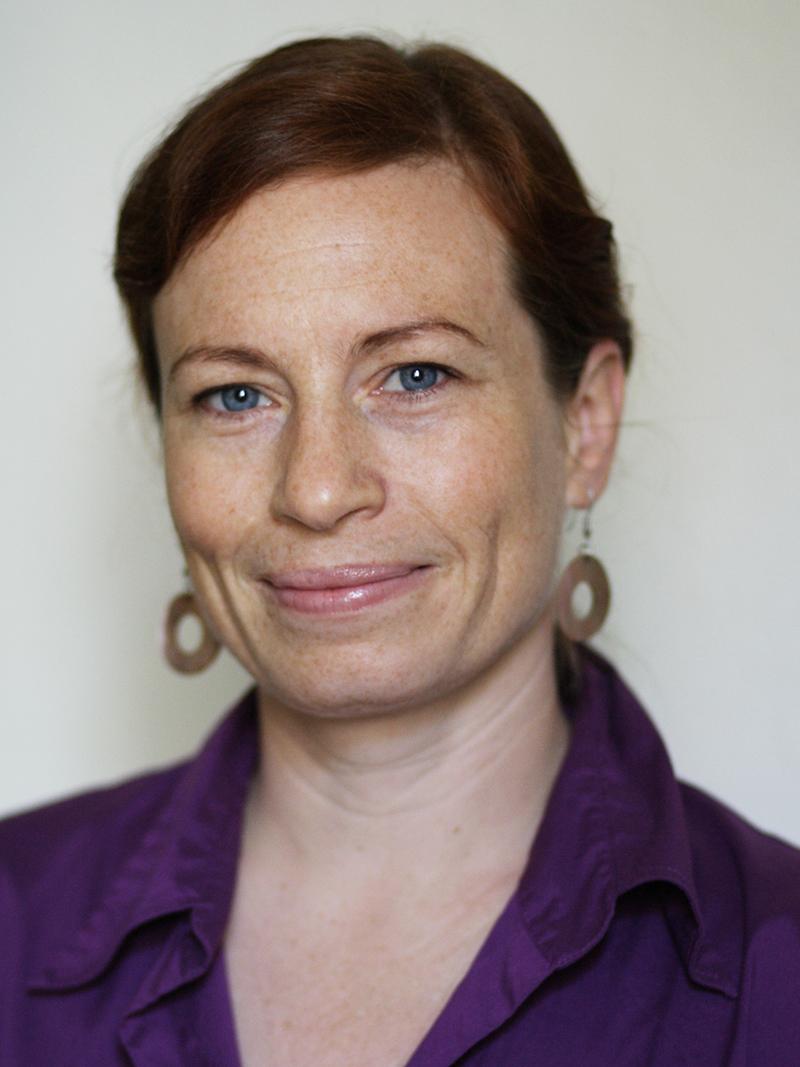 About the Author
Dr. Sybille Chiari is an expert on sustainability and climate change. At Werner Lampert GmbH, she is responsible for sustainability and climate communication and is a member of the editorial team for the online magazine “Nachhaltigkeit. Neu denken.” Previously, she coordinated several international research projects in this field. She is a member of the Scientists for Future movement and, in her private capacity, serves as chairwoman of the Bele Co-Housing association, which operates a climate-friendly communal living project with organic, regenerative agriculture in Upper Austria (www.belehof.at).
[/av_promobox]