
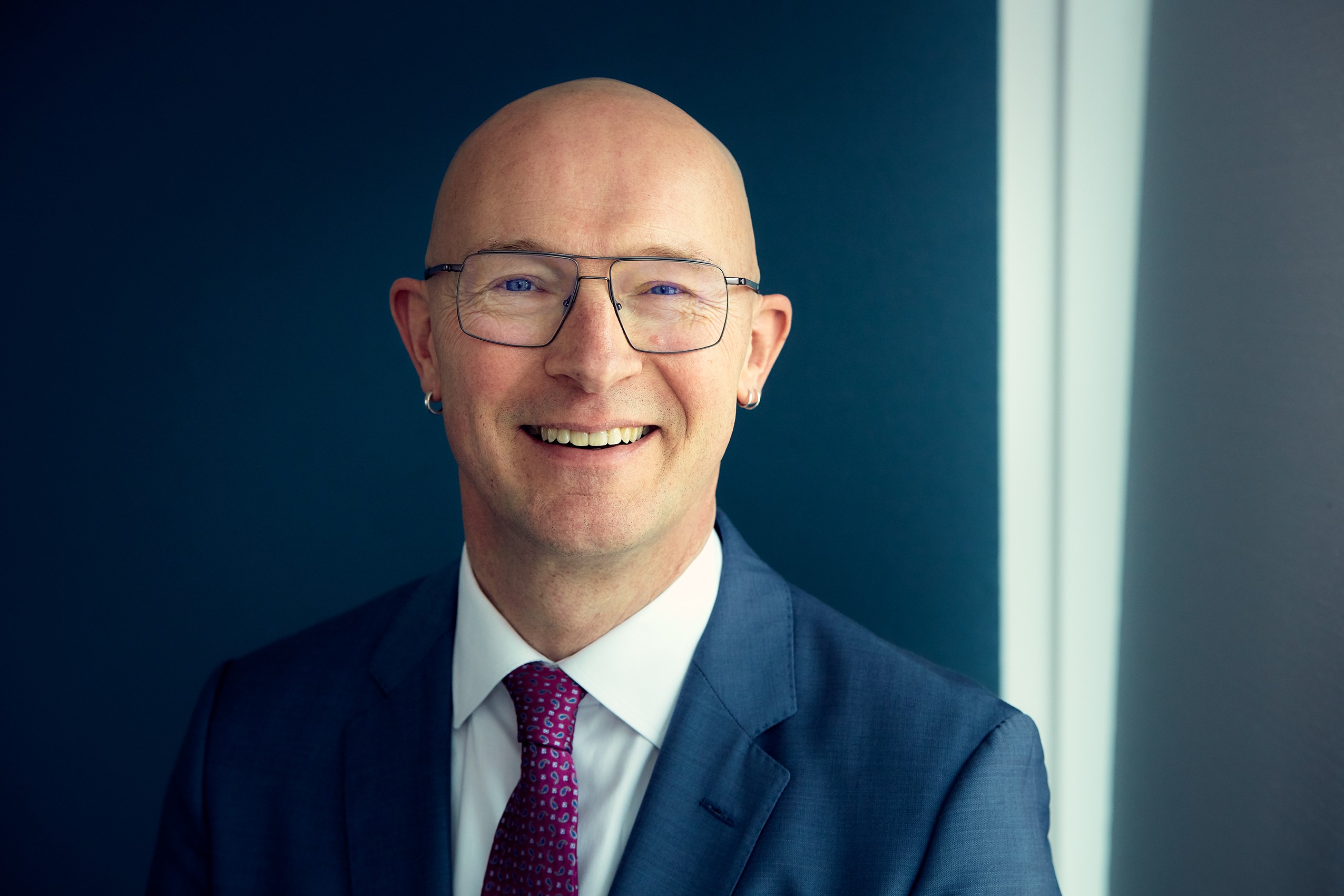
Sustainability researcher and author Fred Luks is known for his hopeful outlook on the future. We invited him for an interview and began it with a brief virtual tour. To set the tone for our conversation, we looked at which images on social media are associated with the hashtag #Freiheitsgefühl.
Unsurprisingly, images related to mobility feature prominently—for example, motorcycles, RVs, and cars. The idea that you can be wherever you want. I found it funny to see on Facebook that someone got their driver’s license at age 37 and said, “Now the freedom begins.” The second theme: consumption and wealth as expressions of freedom. You can go on vacation, buy yourself something. This expansive mindset is deeply ingrained in Western history.
But what is also striking is that nature appears quite often in the images—as a sort of counterpoint to consumerism, wealth, and cars. So nature also has something to do with freedom.
In the sustainability community, there is sometimes a slightly condescending attitude toward those who aren’t part of the sustainability movement and don’t understand why one shouldn’t fly to Mallorca by private jet or drive around in a car. There’s a lot of conflict there. And it takes a willingness to understand that perspective as well (see article). After all, you can’t change what you don’t understand.
At the same time, people who assemble internal combustion engines are right to feel anxious about losing their jobs. Regions that depend on coal mining or automobile manufacturing naturally face incredible challenges. A key concept that is currently emerging in the discussion and at the EU level is the creation of a just transition is emerging as a central concept. I think it’s a better strategy to actively shape the process than to say, “Tough luck—the climate is dictating what we have to do.”
On making sacrifices: I think it’s pretty clear that everyone in wealthy countries needs to cut back on their consumption. But we won’t convince anyone of the importance of sustainability by talking about making sacrifices. It’s a matter of “framing”—how do we frame these concepts?
Sacrifice is also a matter of perspective. And of course, there is a lower limit beyond which sacrifice becomes brutal. But I believe that very often, when we talk about sacrifice, it is largely a matter of interpretation. And of learning.
The sustainability movement has been a bit naive in its approach to the concept of doing without. And in doing so, it has made it easy for people who don’t really want to participate. They have said—in some cases, not without reason—that we’ve lost our sense of fun. Overcoming this negative attitude is a key challenge. It’s also about seeing abundance, not just scarcity.
Much of the issue of freedom would be resolved if we framework conditions under which we live, consume, and work. That would already solve a significant part of this freedom problem. There is, after all, that wonderful saying by Ernst Ulrich von Weizäcker: “Prices must reflect ecological reality.” Things that harm the environment would then become more expensive. I think that if this were pursued seriously, it would be far less restrictive of freedom than a policy that relies on bans.
That said, there are certain things you really have to think about how to get rid of. Drugs and guns are also extremely restricted, because people have realized that it’s a social problem when people take drugs or walk around with guns, like in America.
If I implement an environmental tax reform, it is democratically legitimate because it was achieved through a democratic process. And there is absolutely nothing moral about it. For the sake of public discourse, it is good to be able to say: This is an economic and political reality. We have this problem. We have the Paris Climate Agreement and the 1.5°C target. To achieve that, we must do this and that.
In his book *The End of the Illusion*, German sustainability researcher Armin Grundwald warns against the “privatization of sustainability.” The illusion, he argues, is that the responsibility for saving the world rests on the shoulders of individuals.
Taking a moralistic approach to individual actions does not solve the problem. As a society, we need a new model of prosperity. Even if it sounds paradoxical: I do not want to live in a society where people are not allowed to do irrational things. I believe it is essential not to try to drive irrationality out of people. I would like to see incentives and changed framework conditions give rise to great examples. And I hope that, through positive examples, modeling new approaches, and talking about them, we can initiate a learning process that fosters a cultural shift toward sustainability—where people say, “Actually, it’s pretty cool anyway.”
I always become very cautious and vigilant when it comes to restricting freedom. If we reach a point where we have to choose between freedom and sustainability, I would always tend to side with freedom when in doubt. Knowing full well that freedom will be worth very little if we fail to achieve the sustainability transition. What good are our current freedoms if, in 100 years, people are living under catastrophic conditions where eco-dictators rule the world?
Hans Jonas describes this “ambiguity” of freedom very well. And sociologist Ingolfur Blühdorn also believes that unsustainability is so incredibly entrenched precisely because we defend our freedom, our lifestyle, and our values. This is also evident in polarized America: people are defending their way of life (referring to newspaper articles). To put it bluntly: the rednecks in New Mexico with their guns in the back of their pickup trucks. Of course, you can smile at that. But I always say: sustainability is cultural work. It’s really important to want to understand this cultural aspect.
I often sum it up this way: The Greta Generation is just around the corner. Two years ago, we were all complaining that young people were so apolitical and weren’t doing anything. And suddenly, hundreds of thousands of them are doing something that many adults don’t: they’re using their political freedom and freedom of speech to change the world.
Everyone interested in sustainability must be incredibly grateful to them for what they’ve set in motion. And my book is, after all, about miracles. To me, this is a political miracle. Young people are setting the agenda. They’re exercising their freedom.
This is making it dawn on the older generation, too: things can’t go on like this. The pandemic has only intensified that feeling. There’s a certain momentum building in a direction that could be very good for sustainability—not by restricting freedom, but by a new generation stepping up and saying, “Is this how you want to live? That’s not going to work.”
For many people, the pandemic has been economically devastating, but of course there has also been a moment of realization. For many, the crisis’s forced slowdown has given them pause for thought and shown that we can actually get by with less.
Nevertheless, there is a significant risk that people in the climate movement will say: “Politicians can listen to the science, and the restrictions are working.” I think that would be disastrous. I find the restrictions—despite their necessity—horrible.
To conclude from this that we can impose such massive restrictions in response to the climate crisis is, in my view, a recipe for disaster. The COVID-19 crisis will be over in the foreseeable future. The climate crisis is a long-term challenge. And who, pray tell, wants to make the restrictions we’re currently facing permanent? No one can really want that. And I think it’s important that the sustainability community isn’t naive about this.
My impression is that this COVID-19 crisis was a disruption, but not a lasting one. The pandemic has further reinforced the sense that something is wrong with our—as Ulrich Brand calls it—imperial way of life. We have also seen how fragile our community is. How quickly things can suddenly go wrong.
And we’re talking about a situation that will go down in the history books. Whatever people end up calling this year, this is a turning point. This sensitivity, this focus on resilience. A movement has emerged that could have a positive impact on sustainability.
I clearly see that sustainability has become more important this year in the corporate sector, as well as in banking, insurance, and other industries. Many are trying to leverage sustainability for economic gain. Despite the risk of greenwashing, this is, of course, good for the cause. It’s part of a positive trend.
I said the other day: 2021 will be the year of sustainability. There is a glimmer of hope that sustainability—and climate protection in particular—will once again be at the top of the agenda.
[av_promobox button='no' label='Click me' link='manually,http://' link_target="" color='theme-color' custom_bg='#444444' custom_font='#ffffff’ size=’large’ icon_select=’no’ icon=’ue800’ font=’entypo-fontello’ box_color=“ box_custom_font=’#ffffff’ box_custom_bg=’#444444’ box_custom_border=’#333333’ admin_preview_bg=“]
About Fred Luks
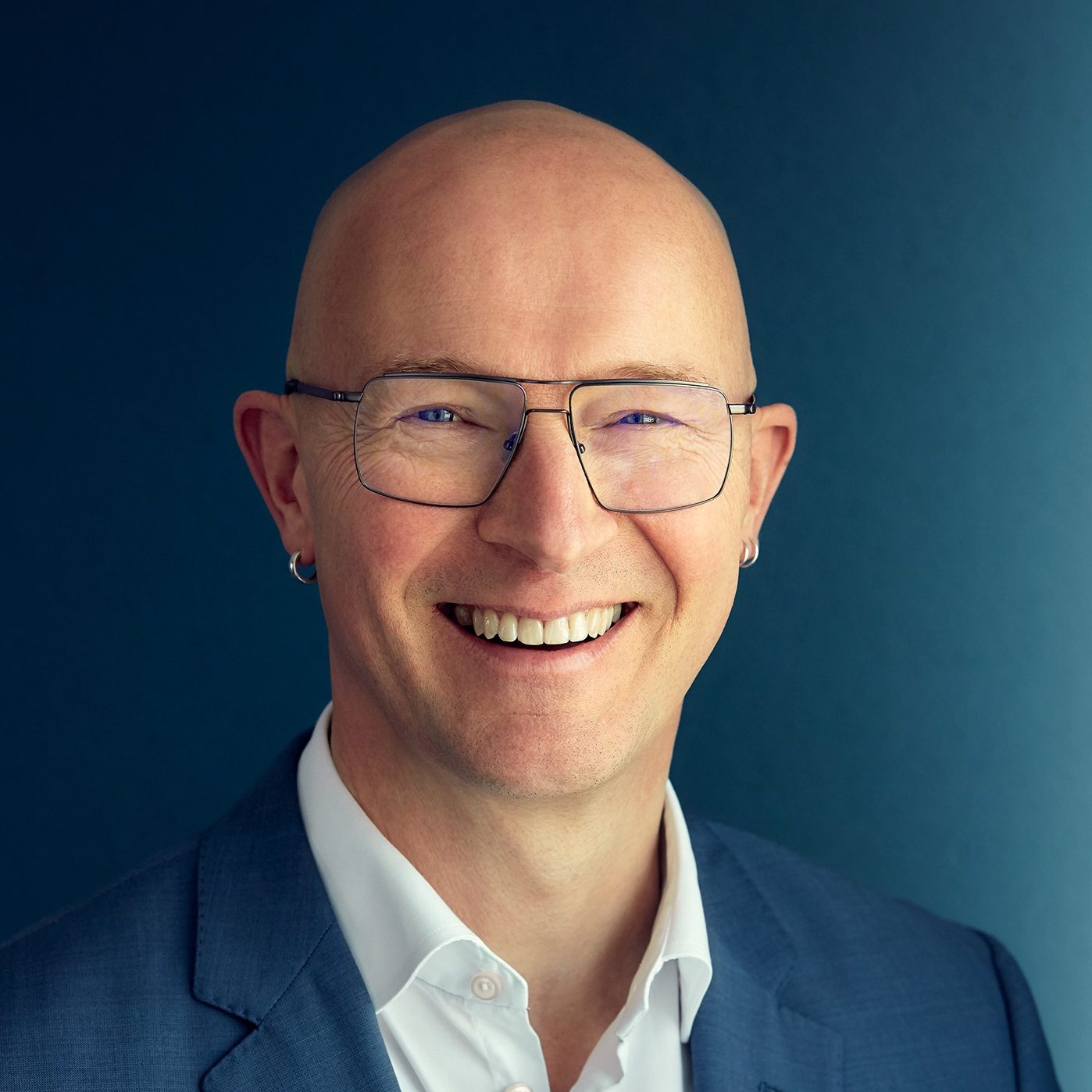
FredL uks ©Christina Haeusler
Fred Luks is a researcher, writer, speaker, and moderator. He has long been involved in research, teaching, and management related to future-oriented issues. His professional experience includes leading a research project, serving as a visiting professor at the University of Hamburg, working as a sustainability manager, and heading the Center of Excellence for Sustainability at the Vienna University of Economics and Business.
Fred Luks: Hope – On Change, Knowledge, and Political Miracles, Metropolis Verlag, 2020
[/av_promobox]
[av_notification title=" color='silver' border=" custom_bg='#444444' custom_font='#ffffff' size='normal' icon_select='yes' icon='ue80b' font='entypo-fontello' admin_preview_bg="]
Source: Interview with Fred Luks on November 11, 2020
[/av_notification]
[av_notification title=" color='green' border=" custom_bg='#444444' custom_font='#ffffff' size='normal' icon_select='yes' icon='ue837' font='entypo-fontello' admin_preview_bg="]
Editorial article
[/av_notification]