
Humans are a success story. Starting with just a few great apes in Africa, they have conquered the entire world. There are hardly any places left on this planet where they haven’t been, where they haven’t found a way to survive and thrive. At the same time, they have displaced many animals and plants, forced the wilderness into a straitjacket, and established human structures. Today we speak with biologist Christine Sonvilla, who still knows true wilderness and, together with Marc Graf, has dedicated an entire book to the subject.
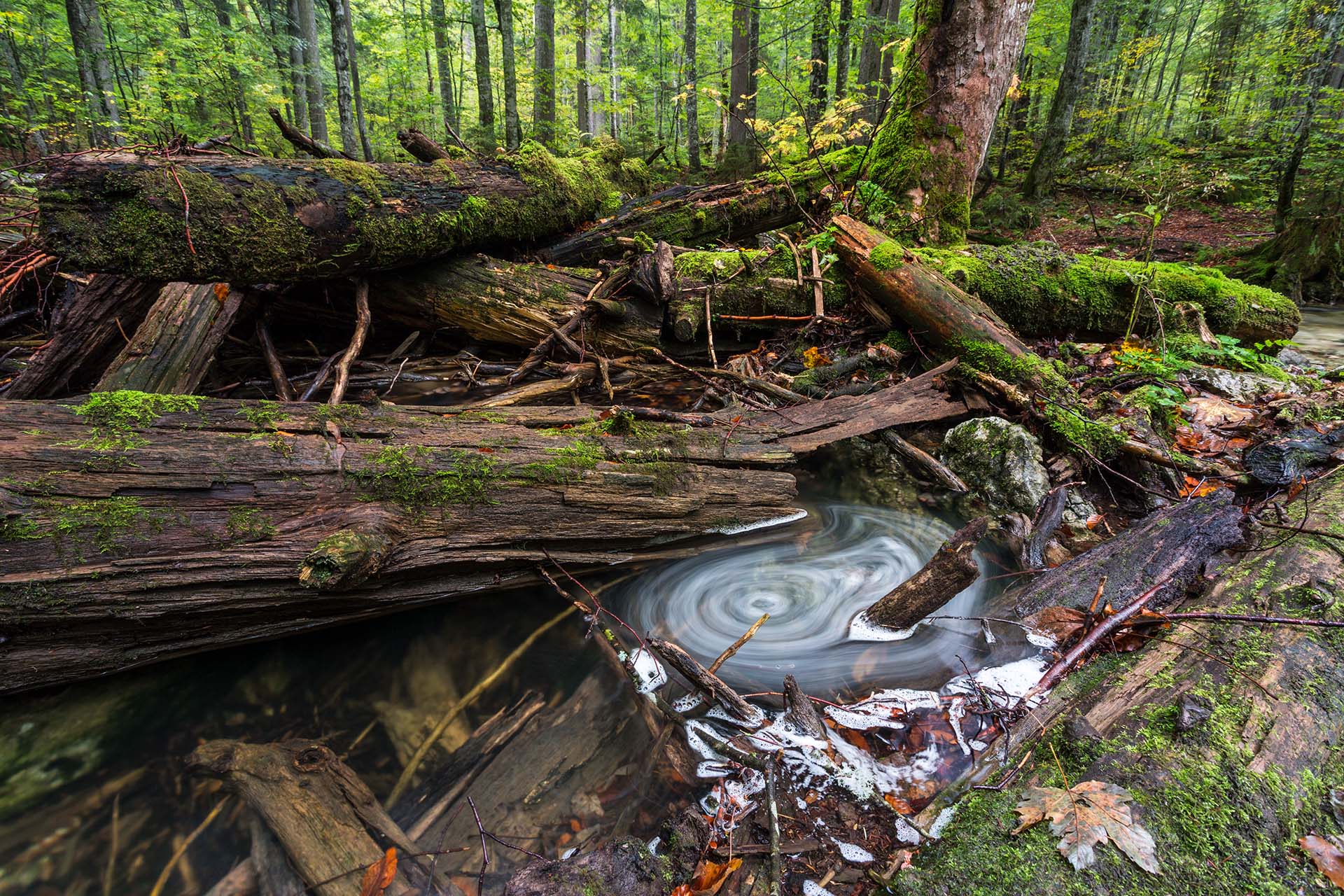
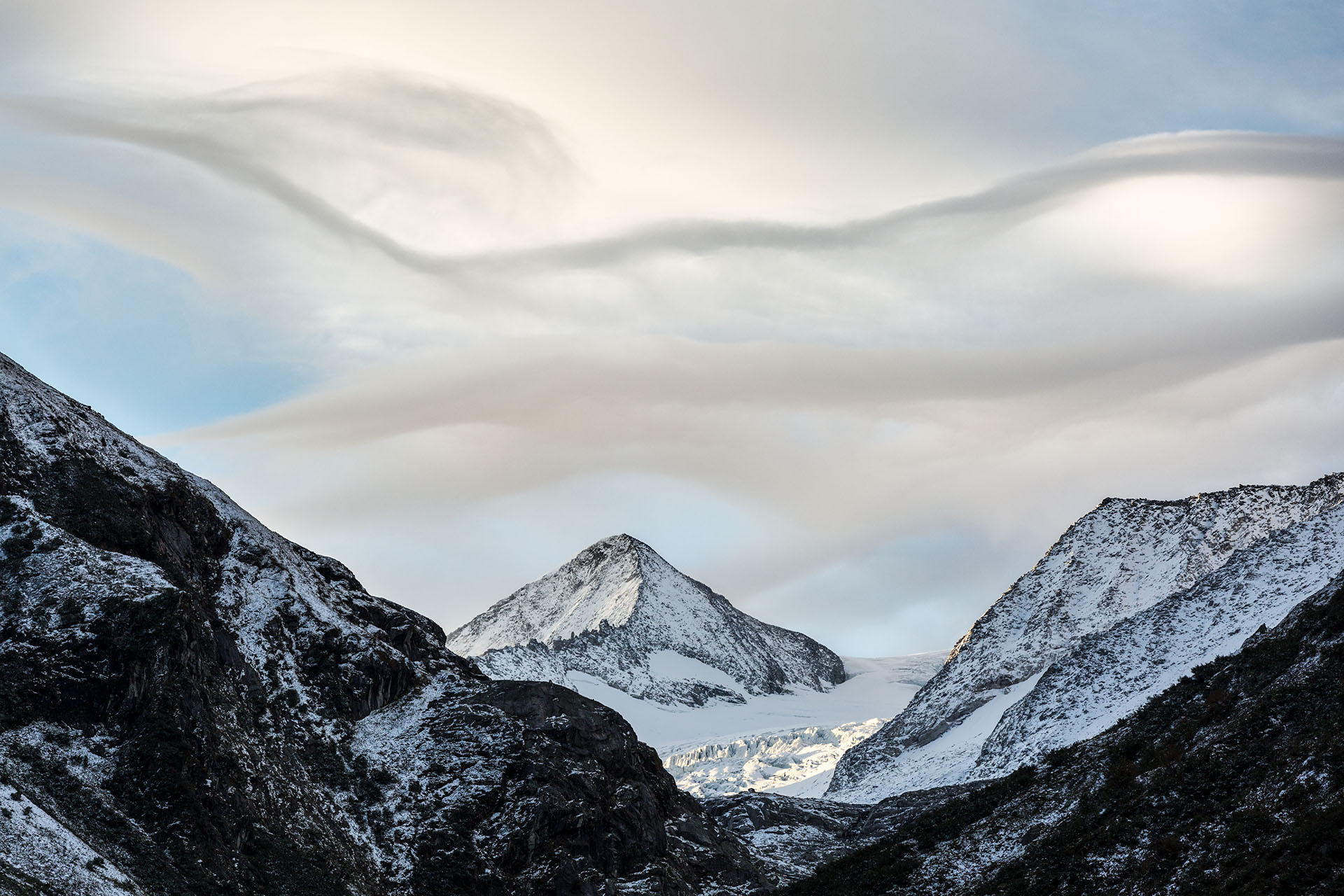
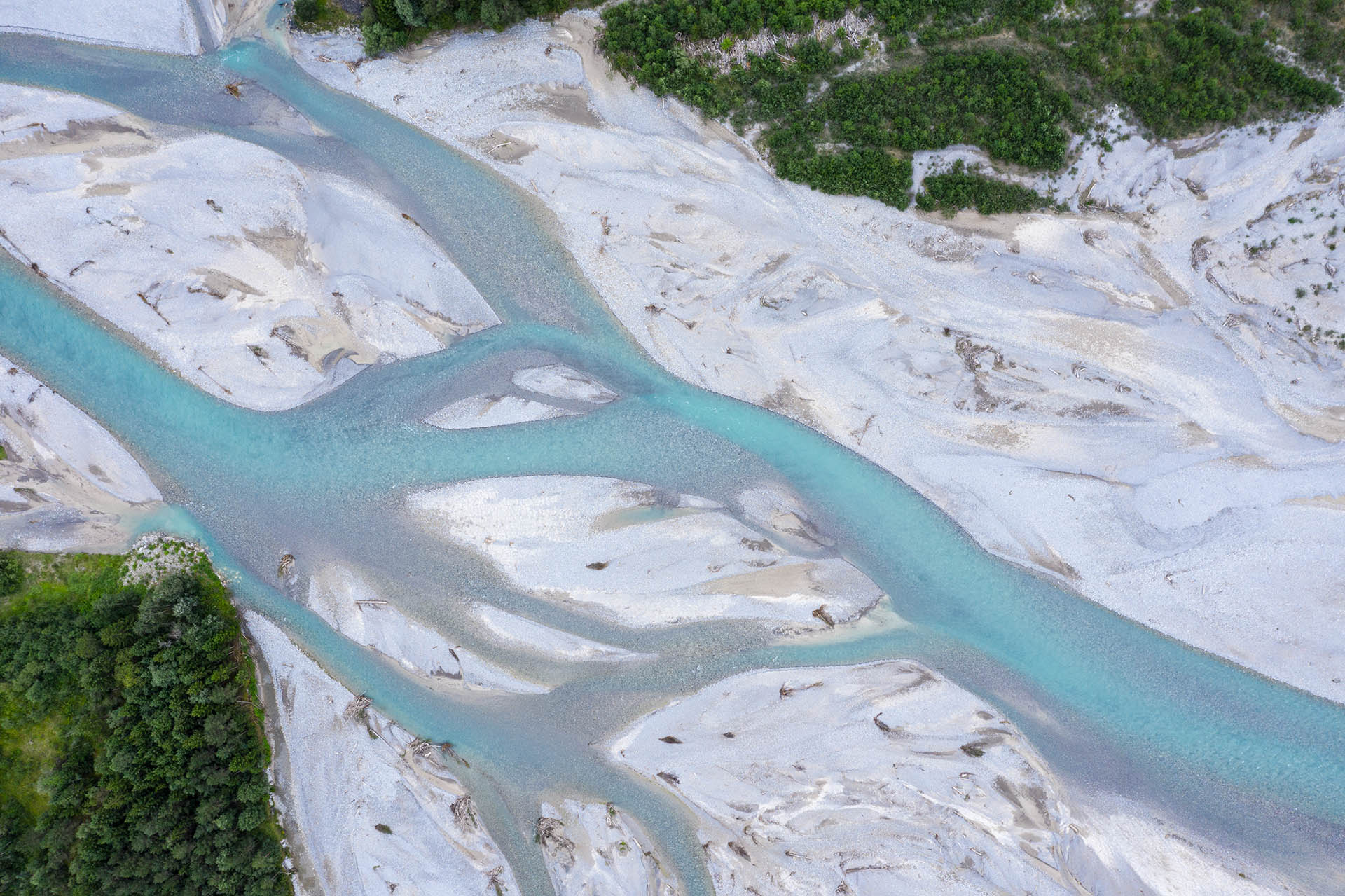
To me, wilderness means a part of nature that is largely left to its own devices. It is a place where trees are allowed to outlive their “maturity” and grow old, where deadwood is not viewed as a threat to forestry, where rivers are allowed to meander freely through the landscape, piling up and shifting gravel banks, where mountains are not developed for ski tourism down to the very furthest corners, but are left to the chamois, ibex, edelweiss, and the like.
Most of the Earth’s wilderness today is found in places where humans have barely ventured, simply because the landscape is too barren, too cold, too inhospitable, or too hot, too dangerous, or too impassable. This is true, for example, of vast swaths of Canada, Scandinavia, and the Arctic, as well as the tropical rainforests of the Amazon, Equatorial Africa, and Southeast Asia. And even there, as we know, humans are pushing deeper and deeper in, clearing ancient forests that—in human generations—will be irretrievably lost, or tearing up tundra soils to squeeze every last drop of oil out of our planet. The wilderness—or what remains of it—is shrinking rapidly.
Looking at Europe, particularly Central Europe, many would probably claim that there is no such thing as “true wilderness” anymore. That may be largely true, but if you look more closely, you’ll discover small, wild pockets even in densely populated Central Europe, such as the Rothwald in the Dürrenstein Wilderness Area, the last major remnant of primeval forest in the Alpine arc, or the Sulzbachtäler Wilderness Area in the Hohe Tauern National Park. The last truly extensive primeval forests closest to us are found in Romania, but they are currently under massive threat from illegal logging.
In the Alpine region, most of the wilderness potential lies dormant in the mountains, especially where valleys are “re-wilding” because the population has moved to the cities. This is not pristine wilderness, but these are areas that at least hold the potential to become wilder again.
“Rewilding” essentially means “making something wild again” or is comparable to the German term “renaturieren,” but ultimately goes beyond that. Until 2010, this term—coined by the organization Rewilding Europe—did not even exist in Europe. Rewilding aims to restore wilderness and wilderness-associated processes. To achieve this, humans provide initial impetus, such as creating natural floodplains around rivers or reintroducing herbivores like grazing cattle and horses. After that, however, humans largely step back and allow nature to develop as independently as possible. This is a major departure from the nature conservation practices that have been standard in Europe until now, which primarily had a “preservationist” focus—that is, they prioritized maintaining the status quo. Rewilding provides the initial impetus but then lets things take their course, and in this respect aligns more closely with the concept of process protection as practiced in wilderness areas.
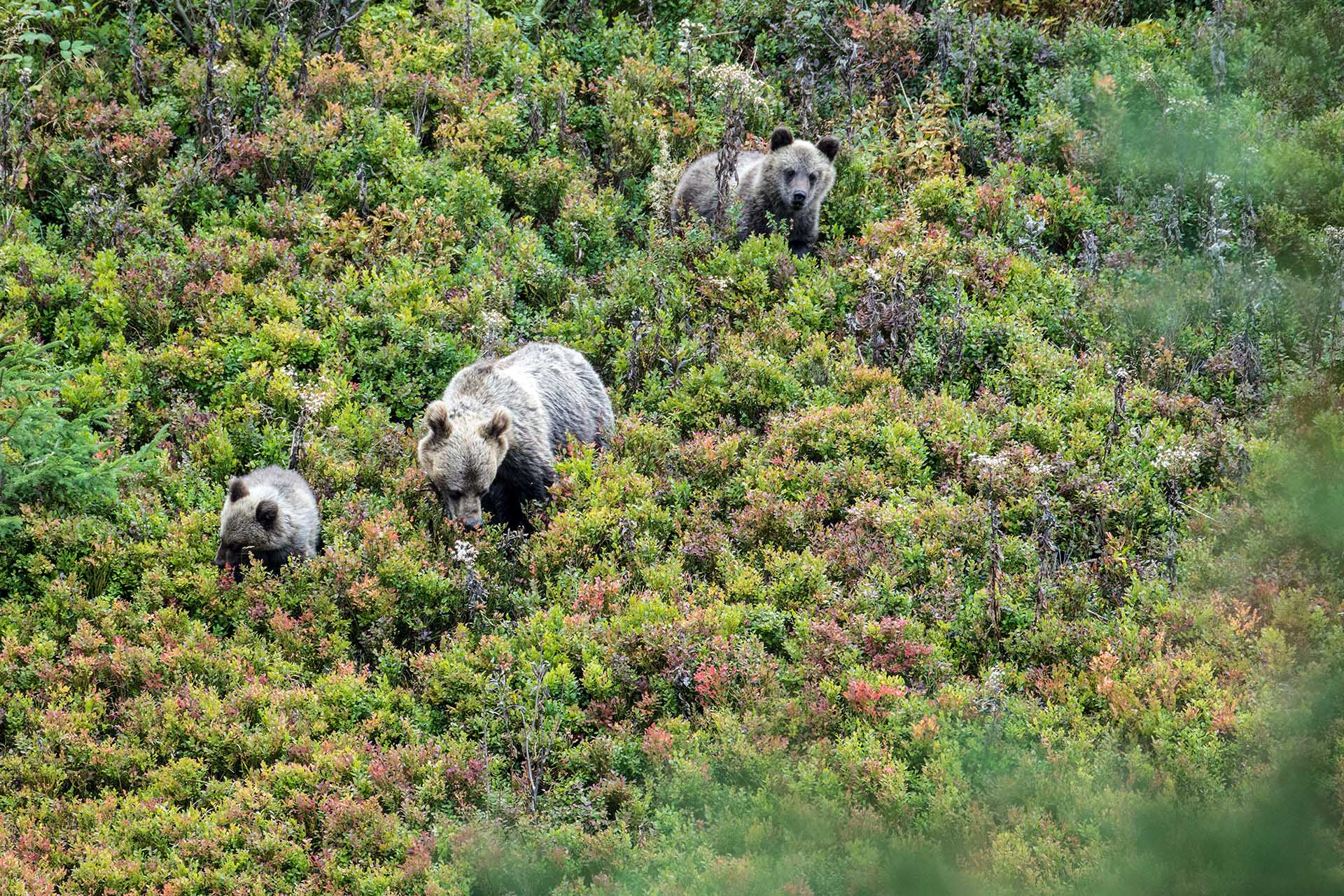
More wilderness does not mean less freedom. Many people believe that they will no longer be able to go into the forest once wolves or bears have made it their home. I have been spending time for many years in areas where large predators live, sometimes in high numbers. But I have never been in danger, for one simple reason: I am aware of the presence of these animals and behave accordingly. I avoid blindly pushing my way through thickets where a bear might have its den. Startling a large predator is never a good idea, because you don’t know how the animal will react in that stressful situation. Aside from potential direct encounters with “wild elements,” it’s important to mention that large predators, which are increasingly returning to Europe, have a massive impact on our ecosystems—and in a positive way. Bears, for example, act as “gardeners,” planting the bushes and trees of tomorrow. Wolves control herbivore populations, to name just two aspects. And ultimately, if we humans become a little more creative, we can even benefit economically from their presence. Ecotourism involving wildlife viewing or hikes in the footsteps of large predators can provide a significant boost, particularly for economically disadvantaged regions. This does not restrict our freedoms but opens up new possibilities. Large predators and the potential for more wilderness that comes with them are not our enemies—they are our opportunity!
At first glance, wilderness may seem like the very embodiment of freedom, but I now see things in a more nuanced way. I myself enjoy being in untouched, wild areas because they are good for the soul, because they make us feel that we, too, emerged from this “primordial wild,” and because they are of central importance to the health of our planet. At the same time, I am aware that—unlike Stone Age hunters and gatherers—I would have virtually no chance today of surviving on my own in true wilderness. Nor do I in any way long to live in a cave and warm my stiff limbs by a laboriously kindled campfire. I am, in fact, very grateful for the achievements of civilization that allow us to sit in a heated room, pursue various creative endeavors, and potentially reach a ripe old age. But: We cannot continue down the path of civilization through thoughtless exploitation of nature. We cannot keep growing forever, neither in terms of human population nor the economy. For the simple reason that we are destroying our own livelihood—and that of countless other species along with it. If we want to survive and live well, then wilderness must continue to exist alongside civilization to a certain extent—or even grow in scope again!
What fascinates me about the wilderness is its unpredictability, its uncontrollability. Life is just as unpredictable, even though we like to “hedge our bets” in every conceivable way and “plan and control” our routines. The wilder we become in our hearts, the more readily we can accept the wild and the unplanned in the world around us.
My favorite European animals are constantly changing. It’s usually the animal I’m currently focusing on most intensely. I’m currently working on a non-fiction book about the European wildcat and am completely fascinated by this distinctive, mysterious creature. At the same time, together with my partner Marc, I managed to spot and photograph wolves for the first time during the turbulent year of 2020. That left a deep impression on me. The lynx is just as fascinating, and the bear is and always will be simply the “coolest.” Since I’ve been so deeply immersed in large predators over the past few years, they’re the ones that stand out most to me, but at the same time, I’m also fascinated by those animals that most people don’t like or simply overlook. The common toad is one of my favorites.
I can relate to that, and I believe it is absolutely essential that we see ourselves as part of nature again. However, I don’t think that each of us has to set out for the most remote, wildest areas to do so (let alone that we would want to); even a forest close to nature or the stream behind the house can give us that feeling. What matters is that we find moments when we can find peace in nature, so that we no longer see the forest, meadow, mountain, and river—and all the animals within them—merely as a pleasant backdrop, but as an extension of ourselves. This is the foundation for making the protection of nature and its diverse animal and plant species a concern for all of us—not just in the distant Arctic or the rainforest, but right here, on our doorstep, in our midst. And the good news is: there are concepts, means, and ways for us humans to earn a living not by destroying nature, but by preserving it.
Wilderness is our life insurance. Within the span of a few human generations, we cannot restore a deforested primeval forest, watch a peat layer grow, or revive a blasted-away mountain. Erich Weigand, a scientist specializing in biodiversity who conducts research in Austria’s Kalkalpen National Park, once put it this way: “Where else is biodiversity supposed to come from, if not from the wilderness?” You couldn’t put it better. We must preserve the wilderness that still exists—there can be no room for compromise here—and we must allow those habitats that are still largely untouched by humans to become candidates for the wilderness of tomorrow—for a time when we are long gone, but perhaps our distant descendants remain. But we can only achieve this if we recognize that life is not a marathon of self-enrichment with the disciplines of “Higher,” “Faster,” and “Further,” but rather a fascinating journey that we can help shape during our brief time on Earth: destructively or constructively. For my part, I find the latter option more appealing.
We could adopt the following guiding principle: intervene where we can—and must—give biodiversity a helping hand (a constricted river won’t start meandering on its own), and otherwise practice doing less, that is, gradually granting nature more freedom. Step by step.
[av_promobox button='yes' label='Go to the book' link='manually,https://www.knesebeck-verlag.de/das_wilde_herz_europas/t-1/891' link_target='_blank' color='theme-color' custom_bg='#444444' custom_font='#ffffff’ size=’medium’ icon_select=’no’ icon=’ue800’ font=’entypo-fontello’ box_color=“ box_custom_font=’#ffffff’ box_custom_bg=’#444444’ box_custom_border=’#333333’ admin_preview_bg=“]
Coming soon: The Wild Heart of Europe
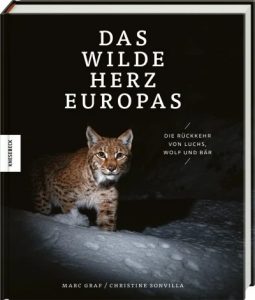 Wilderness and Central Europe—hardly anyone thinks of them together. In this stunning photo book, Christine Sonvilla and Marc Graf set out on a photographic quest to uncover the wilderness potential of our region. They discover “real” forests, explore the last untamed rivers, and reveal just how wild the mountain world truly is. Through previously unseen photographs, the two photographers document the return of the three great predators: the wolf, the bear, and the lynx. Together with numerous experts, they shed light on the tension between nature conservation and economic interests. They recount their personal adventures and experiences, point out ways to coexist, and conclude that the wild heart of Europe is still beating.
The book was published on February 24, 2021.
[/av_promobox]
[av_promobox button='yes' label='View Book' link='manually,https://www.residenzverlag.com/buch/europas-kleine-tiger' link_target='_blank' color='theme-color' custom_bg='#444444' custom_font='#ffffff’ size=’medium’ icon_select=’no’ icon=’ue800’ font=’entypo-fontello’ box_color=“ box_custom_font=’#ffffff’ box_custom_bg=’#444444’ box_custom_border=’#333333’ admin_preview_bg=“]
Coming soon: Europe’s Little Tigers
 The European wildcat is spreading, even though most people have never encountered this shy animal. That’s because real wildcats have nothing in common with our domestic cats. From the Scottish Highlands to the Black Sea, they roam the countryside, loved by some and ignored by others. Researchers are using sophisticated CSI-style methods to learn more about their mysterious lives, which apparently aren’t quite as solitary and forest-bound as long assumed. Christine Sonvilla sets out on the trail of these distinctive animals and offers us a glimpse into the hidden lives of Europe’s little tigers.
The book was published on May 4, 2021.
[/av_promobox]
[av_promobox button='no' label='Click me' link='manually,http://' link_target="" color='theme-color' custom_bg='#444444' custom_font='#ffffff’ size=’large’ icon_select=’no’ icon=’ue800’ font=’entypo-fontello’ box_color=“ box_custom_font=’#ffffff’ box_custom_bg=’#444444’ box_custom_border=’#333333’ admin_preview_bg=“]
About Christine Sonvilla
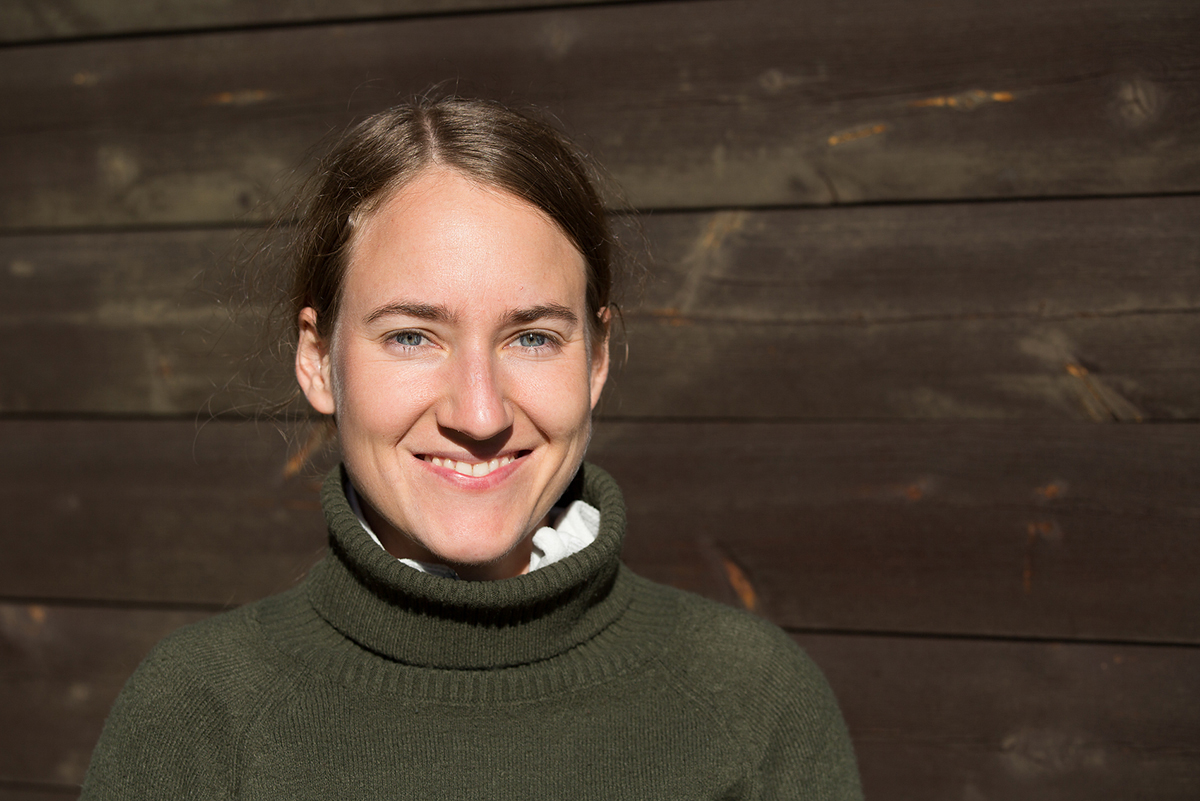 After studying German language and literature and biology, Christine Sonvilla launched her own career as a photographer, filmmaker, and author, focusing on nature and wildlife conservation. In recent years, she has focused primarily on the large predators of Central Europe: bears, lynx, and wolves. Speaking up for those who cannot speak for themselves is a cause close to her heart. Her work has received numerous international awards and has been featured in publications such as National Geographic magazine.
[/av_promobox]
[av_notification title=" color='silver' border=" custom_bg='#444444' custom_font='#ffffff' size='normal' icon_select='yes' icon='ue80b' font='entypo-fontello' admin_preview_bg="]
Source: Interview with Christine Sonvilla on January 15, 2021
[/av_notification]
[av_notification title=" color='green' border=" custom_bg='#444444' custom_font='#ffffff' size='normal' icon_select='yes' icon='ue837' font='entypo-fontello' admin_preview_bg="]
Editorial article
[/av_notification]