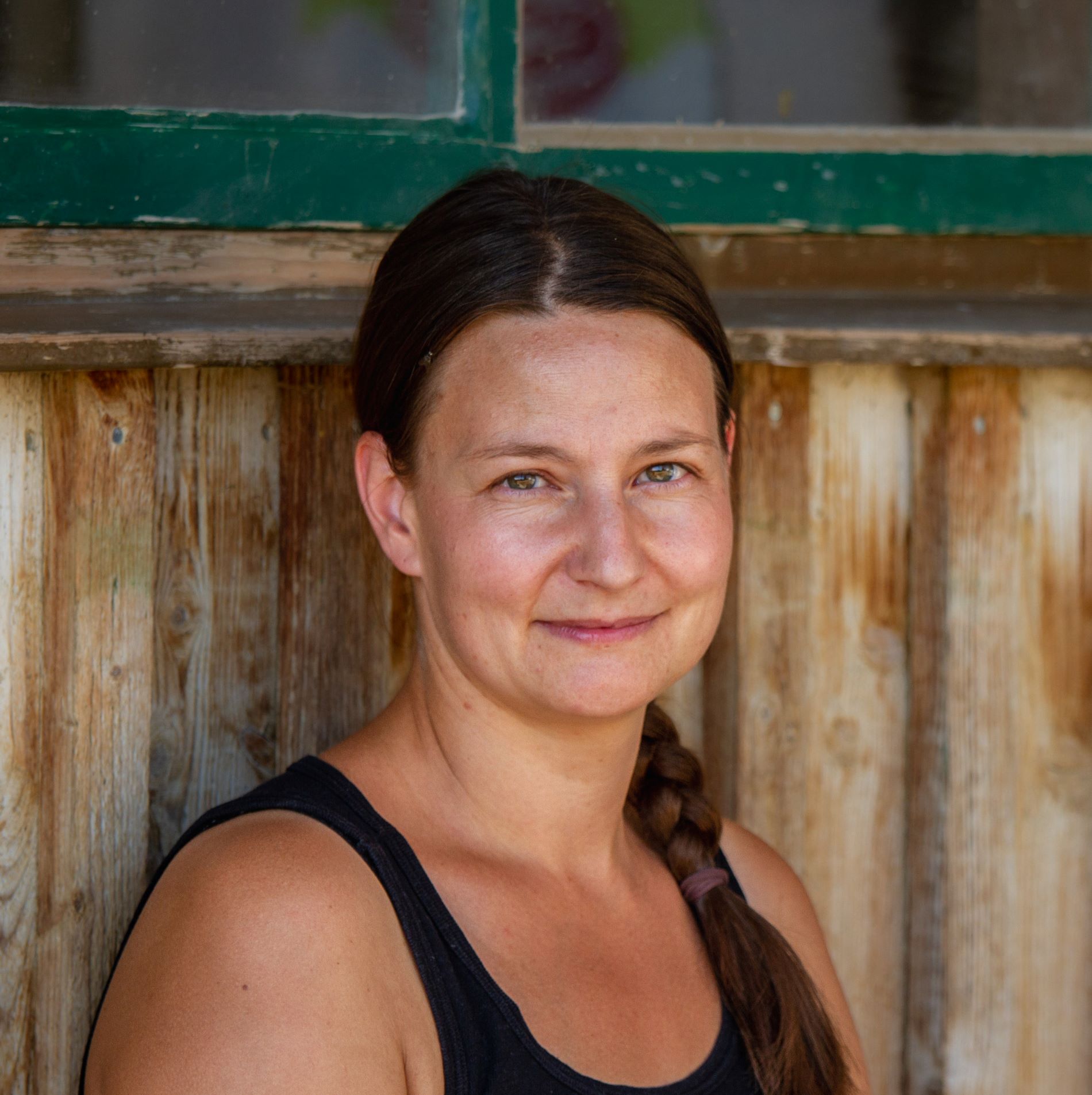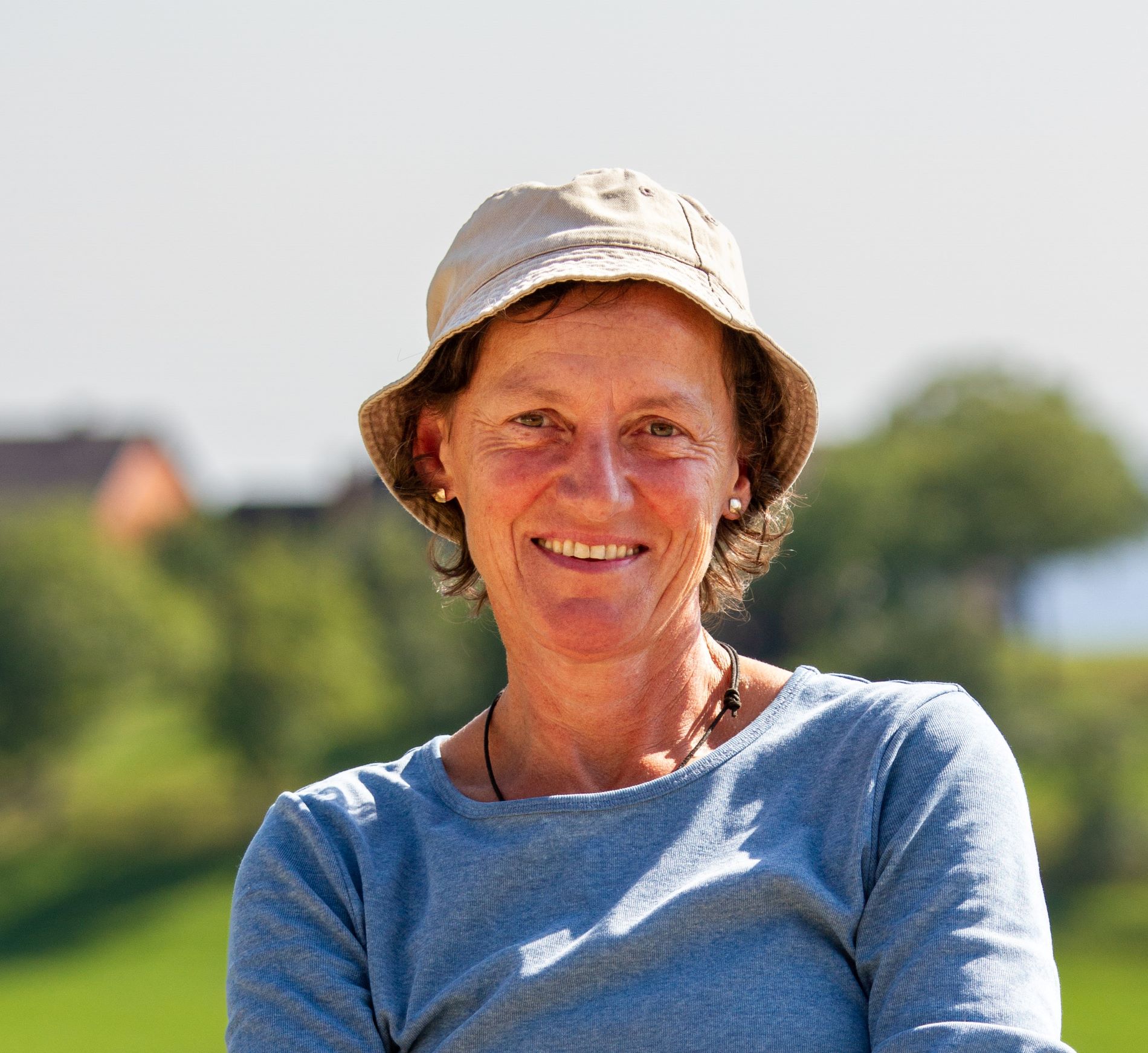
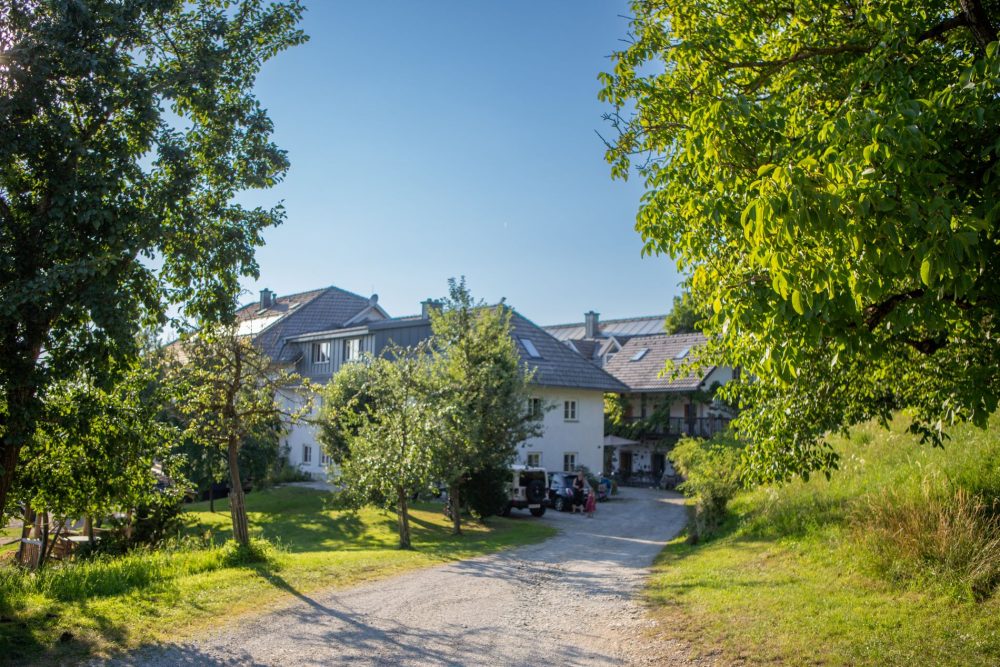
Tanja Leibing and Elisabeth Pichler work with great enthusiasm on the Loidholdhof, an inclusive farm community in the Mühlviertel region of Upper Austria. A total of 65 people, both with and without disabilities, live and work there together. Interns, apprentices, and volunteers are also active on the farm.
Sitting on the bench in the courtyard, the two of them answer our questions about the present and future of agriculture. The chickens cluck merrily nearby.
What kind of farming is practiced at the Loidholdhof?
Elisabeth Pichler (EP): From the very beginning, the Loidholdhof was conceived as a facility for people with disabilities and a Demeter-certified farm. It is a farm modeled after traditional farms of the past, where almost everything is produced on-site and the focus is on self-sufficiency.
Tanja Leibing (TL): We practice a circular economy based on biodynamic agriculture. We don’t buy any additional fertilizer; we compost our own manure. We grow our own seeds whenever possible. We have dairy cows and our own offspring. The soil is “rejuvenated” with our animals’ manure. The basic principle of Demeter is: If we have healthy soil, we also have healthy animals and plants, and people have a healthy environment.
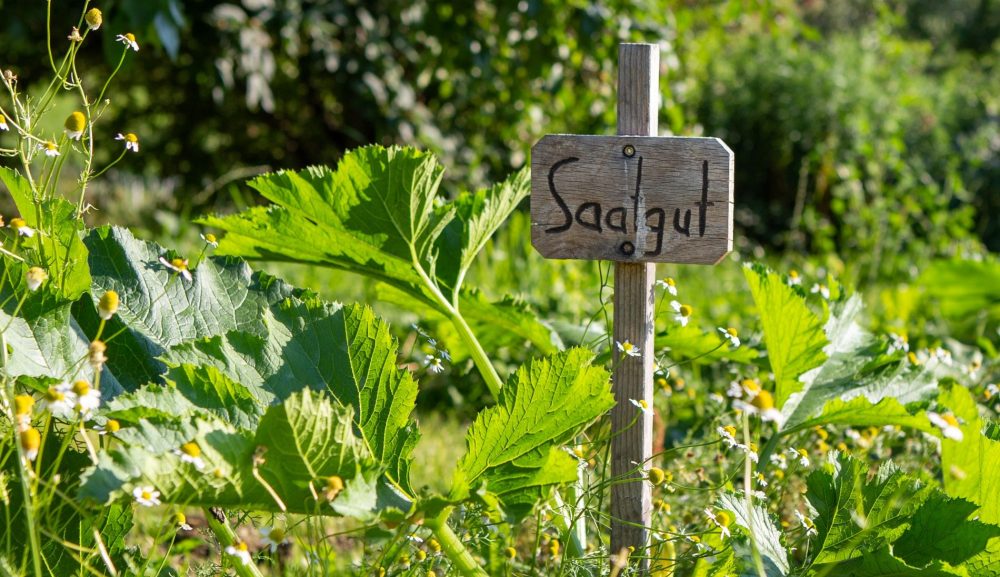
We grow grains—including heirloom varieties—potatoes, tomatoes, peppers, and much more. We use the milk to make dairy products. In our woodshop and weaving workshop, we make furniture and rugs for the farm store and for our own use. The farm store provides all residents, neighbors, and friends with everything they need for daily life.
Have you noticed any effects of the war in Ukraine and its impact on agriculture?
TL: At the farm, grain sales had been steadily increasing for a long time. Since the pandemic, they’ve stagnated. People are cutting back on food expenses. We’re seeing that in our direct sales. Still, we don’t expect any major changes. We’ll just be selling more or less the same amount.
EP: Also, if you put positive energy out into the world, support will always follow. For example, people came to us on their own and asked if we’d like to lease their land. There’s one person who doesn’t charge anything for the lease. They simply want the land to be managed well and honestly. That’s wonderful and truly special, especially given the challenges facing the agricultural sector right now. In return, we do our best to produce high-quality food.
How would you describe the additional social responsibilities of agriculture, using your farm as an example?
TL: We can provide food for the surrounding region and have the opportunity to take people in as well. They can help out, stay with us, and “find themselves” during difficult times. Right now, we have a few children visiting. They come along to the barn and the fields and can just spend time here. Everyone is welcome. That’s what makes this place special.
What can your farm and your farming methods achieve in times of crisis that conventional farms cannot?
EP: As a conventional farmer, you rely on synthetic fertilizers. In times of crisis, when these become more expensive, you are at the mercy of corporations and other countries. You might feel desperate if you suddenly have to cultivate a grain field without pesticides and synthetic fertilizers.
Organic farmers, however, know how to work with nature and the earth so that it provides us with a sufficient harvest. Because we have (re)learned how to do this. Of course, this also requires that we be willing to connect with nature and “give back” enough to it. If you own fields and forest, a diversified farm also has the advantage that in times of crisis you can be relatively self-sufficient, with your own wood and your own food, and in the best case, you can help feed others as well.
Do you see any connections between agriculture and what’s happening “in the world”?
EP: In agriculture and all over the world, people ask the same questions: How can I get more out of it so I can earn more and outdo my neighbor? This leads to a cycle of endless work and mass production, but the substance is missing.
The world doesn't end at my property line. If pesticides are constantly being sprayed on the land next to mine, it affects me and my property as well.
What are your hopes for the future of agriculture and for your farm?
TL: That this very type of agriculture is recognized and supported. That people continue to have confidence in it. That it is valued and respected, so that we can continue to thrive in the future.
EP: What I can’t understand is why we even have to give organic farming a special name, when it’s actually the “natural” way of doing things. That spraying pesticides in conventional farming is considered “normal .” People so often say, “Oh, they’re on another organic kick.” I can’t understand why things are portrayed this way. I get the impression that many people are losing their connection to one another and to plants and animals.
In Demeter agriculture and anthroposophy, we believe that “connecting” with plants, animals, and meadows has a positive impact on nature. When I view the cow as a living being and feel a sense of responsibility toward her, I can tell when something is wrong. It’s like with a child. If a person isn’t “seen,” they wither away. They get sick. If nature isn’t “seen”—because everything is industrialized and “processed”—then it, too, becomes sick.
I hope that we will once again “see,” observe, and smell nature, plants, and animals.
______________________________________________________