
Christian Felber: The Economy for the Common Good is an alternative economic system to the major historical models of capitalism and communism, one that seeks to be in harmony with the values of life. That was the driving force behind a dozen entrepreneurs in Austria. We are now three years young. Since October 6, 2010, 1,400 companies from 27 countries have joined, and 400 are pioneering the creation of a Common Good Balance Sheet. We already have 1,000 volunteers in German-speaking countries who creatively and independently define their own roles.
Werner Lampert: When you look at the world today—exploitation is on the rise, slavery is on the rise—it’s quite clear that a different model is needed. Even the U.S. president is aware of this.
I studied anarchism extensively in my youth, and I see many of those ideas reflected in your Economy for the Common Good.
Felber: I only see these similarities to a limited extent. Anarchism rejects both the state and the market and advocates for the self-organization of a free population. I deeply believe in the fundamental value of self-determination and the freedom that comes with it.
In fact, we live in nation-states that are becoming less and less democratic. That is why we propose a democratic process in which several communities predefine the basic features of an economic order, and an economic constitution is developed through a synthesis process.
[av_video src='https://youtu.be/LdugnVvvQtc' format='16-9' width='16' height='9']
Lampert: In the Economy for the Common Good, there is a principle that states there should be no private ownership of land.
Felber: The goal is the common good, which is already enshrined in many constitutions. In contrast to this is the practice of the real economy, which has money and its accumulation as its ultimate goal. To me, this is clearly unconstitutional. Unfortunately, there are currently no legal avenues for challenging this.
Among the 20 model building blocks of the Economy for the Common Good is the idea that there should be no private ownership of nature. Nature created us! After all, we cannot claim ownership of our parents either. Albert Schweitzer’s reverence for life is a recognized ecological ethic; one consequence of this is that we do not own nature.
Lampert: In the late 1960s, an anthroposophical bank was founded in Bochum; it would only lend money to farmers if the land was transferred to a community. Is that what you mean?
Felber: What you’re referring to is a commons; I would make that voluntary. If a farmer wants to continue farming his land as a family business, he can do so. The only difference is that it would no longer be private property; instead, he would have a right of use.
Lampert: And can he even pass it on to his children?
Felber: Yes! Otherwise, the land reverts to Mother Earth. In recent Latin American constitutions, such as those of Ecuador and Bolivia, constitutional rights are granted to nature. It would be great if more people would read through Ecuador’s constitution.
Lampert: That, of course, stems from indigenous traditions.
Unfortunately, in reality, I see the exact opposite. I see industrialization and hardly any regional agriculture left. The willingness to exploit land and animals has become the norm. We, as a society, are on the verge of destroying the very things we depend on for our livelihood. Something has to be done!
Felber: In the Economy for the Common Good, usage rights are granted only to meet specific needs, such as housing, agricultural use, etc., and agricultural use is subject to sustainability criteria. This would simply be fulfilling the constitutional mandate. A reduction in value is prohibited.
In the GDR, there were large-scale pig farms with 50,000 pigs; that was, of course, terrible. Now, Dutch agricultural conglomerates are building pig barns housing 100,000 pigs, using particularly favorable loans, tax incentives, and EU agricultural subsidies! This is exactly the opposite of what we are proposing.
If the public were allowed to decide, surely 90% would be against this approach.
Lampert: You mentioned Ecuador. There’s the wonderful constitution, and then there’s the reality that oil is being extracted in a nature reserve.
Felber: The new constitution is still in its infancy. The main positive development was that Ecuador and Bolivia withdrew from the ICSID international investment protection agreement. The power of corporate globalization is so strong that it takes time to extricate oneself from it.
[av_video src='https://youtu.be/qzyK5Cfy7ww' format='16-9' width='16' height='9']
Lampert: As we transition from a self-centered society—where greed is the driving force—to an economy for the common good, there will inevitably be setbacks along the way.
Felber: In Germany and Austria, there are resources available to file a constitutional complaint; hopefully, this will also be possible in Ecuador.
Lampert: You propose a “public good balance sheet”—what exactly does that entail?
Felber: The Public Good Index measures the extent to which a company upholds five core values found in nearly all constitutions: human dignity, justice, sustainability, solidarity, and democracy. For each product, a traffic-light system would then indicate how well the company performs, enabling quick purchasing decisions. Detailed background information is available via smartphone or the internet.
Additionally: The better the Common Good Balance, the greater the legal advantages—from taxes and customs duties to loans. This makes ethical products cheaper than junk.
Lampert: I’ve been looking into the Economy for the Common Good, and I noticed that it doesn’t include a basic income.
Felber: That’s not necessary either. If companies were to refocus their efforts on promoting the common good, this would mean prioritizing giving over taking—and that would lead to abundance. It’s like a picnic, where everyone brings something and there’s always more food than anyone can eat.
Lampert: But there are two groups in society that are not included in the workforce and would benefit enormously from a basic income: single parents and the elderly.
Felber: The following solutions are available: There would be a government-guaranteed minimum pension for older people. Caregiving—whether for children or the elderly—would be recognized as a public good and well compensated. Valuable services, such as those provided by teachers, doctors, mothers, etc., would be well compensated. Managing a hedge fund, on the other hand, should be paid less, as it has less social value—or even a negative social value.
Lampert: So mothers are paid by society, similar to a basic wage?
Felber: Yes, but that is tied to performance, whereas a basic income is not! However, we propose a paid sabbatical every ten years so that everyone can broaden their horizons.
Lampert: One group in our society has seized control of the common good and is playing the most terrible games with it—and that is our education system. Thanks to the unions, it is a democratic system!
Felber: I see it differently. In the education system, teachers, students, parents, and others are the ones affected, so they should be the ones making the laws. Right now, the only people who aren’t affected are the ones running the education system—namely, the civil servants at the ministry. Not everyone affected has an equal say, so it’s not a democratic system.
[av_video src='https://youtu.be/vScKLiMLxb8' format='16-9' width='16' height='9']
Lampert: How long will it be before we reach those glorious times?
Felber: The world is going to end no matter when we save it, so we’re not stressing about it. I can’t run any faster just because the world is going to end tomorrow! I work every day for the Economy for the Common Good Bank, but I don’t let myself get rushed; I try to enjoy every book, every conversation, and every action.
Lampert: I found it really fascinating! Unfortunately, our children are taught to be highly competitive, and then it takes years of therapy for them to find themselves.
Felber: We know from psychology that competition is the worst way to build self-esteem; it’s an extrinsic motivator. In contrast, when I know myself and give my life meaning, that nurtures my self-esteem. Then I can cooperate and contribute to the community. Cooperation means shared success.
Lampert: It was wonderful spending time with you! Why don't we all start working for the common good right away?
[av_promobox button='no' label='Click me' link='manually,http://' link_target="" color='theme-color' custom_bg='#444444' custom_font='#ffffff’ size=’large’ icon_select=’no’ icon=’ue800’ font=’entypo-fontello’ box_color=“ box_custom_font=’#ffffff’ box_custom_bg=’#444444’ box_custom_border=’#333333’ admin_preview_bg=“]
Christian Felber is a freelance author and journalist who co-founded and built up ATTAC Austria in 2000. He is a co-initiator of the Democratic Bank and the Economy for the Common Good —an economic model for the future—and most recently authored a book on the subject in 2012. Over 1,000 individuals, politicians, initiatives, and companies have already embraced the idea and developed a strategy for the next five years. Felber is a lecturer at the Vienna University of Economics and Business. He is a sought-after speaker, commentator, and interview subject.
[/av_promobox]
[av_promobox button='no' label='Click me' link='manually,http://' link_target="" color='theme-color' custom_bg='#444444' custom_font='#ffffff’ size=’large’ icon_select=’no’ icon=’ue800’ font=’entypo-fontello’ box_color=“ box_custom_font=’#ffffff’ box_custom_bg=’#444444’ box_custom_border=’#333333’ admin_preview_bg=“]
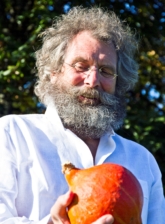 Werner Lampert (born in 1946 in Vorarlberg, Austria) is considered one of the pioneers in the field of sustainable products and their development in Europe. This organic pioneer has been deeply involved in organic farming since the 1970s. With Back to the beginning (HOFER), back to basics (ALDI SUISSE) and Ja! Natürlich, he developed three of the most successful organic brands in the German-speaking world.
[/av_promobox]
[av_notification title=" color='silver' border=" custom_bg='#444444' custom_font='#ffffff' size='normal' icon_select='yes' icon='ue80b' font='entypo-fontello' admin_preview_bg="]
Source: This text is an abridged version of a conversation between Werner Lampert and Christian Felber in October 2013.
[/av_notification]
[av_notification title=" color='custom' border=" custom_bg='#e2e8ca' custom_font='#444444' size='normal' icon_select='yes' icon='ue837' font='entypo-fontello' admin_preview_bg="]
Editorial article
[/av_notification]