
Resilience. RE-SI-LI-ENCE. This word seems even more unwieldy than the word “sustainability.” But if you take a closer look at the term, it becomes clear that it will become a staple of our vocabulary in the future. And not just because it’s cropping up more and more often in connection with the UN’s Sustainable Development Goals.
As is so often the case, the term “resilience” comes from Latin, specifically from “resilire,” and can be translated as “to spring back, to bounce off, or to not stick to someone.” The term first found its way into psychology, where it was used to describe people who possessed the psychological resilience and ability to weather difficult life situations without lasting impairment. It remains very much in use today in biology, where the term was largely coined by Crawford S. Holling, a Canadian ecologist who is now nearly 90 years old. In this field, resilience used to describe systems that could return to their initial state after disturbances. “In recent years, this has been replaced by a dynamic interpretation that emphasizes the capacity to learn. Resilience is the ability of a system (e.g., a human being, an ecosystem) to learn from crises and changes and to restore a functional state after disturbances,” explains Claudia Pahl-Wostl, professor of resource management.
[av_promobox button='no' label='Click me' link='manually,http://' link_target="" color='theme-color' custom_bg='#444444' custom_font='#ffffff’ size=’large’ icon_select=’no’ icon=’ue800’ font=’entypo-fontello’ box_color=“ box_custom_font=’#ffffff’ box_custom_bg=’#444444’ box_custom_border=’#333333’ admin_preview_bg=“]
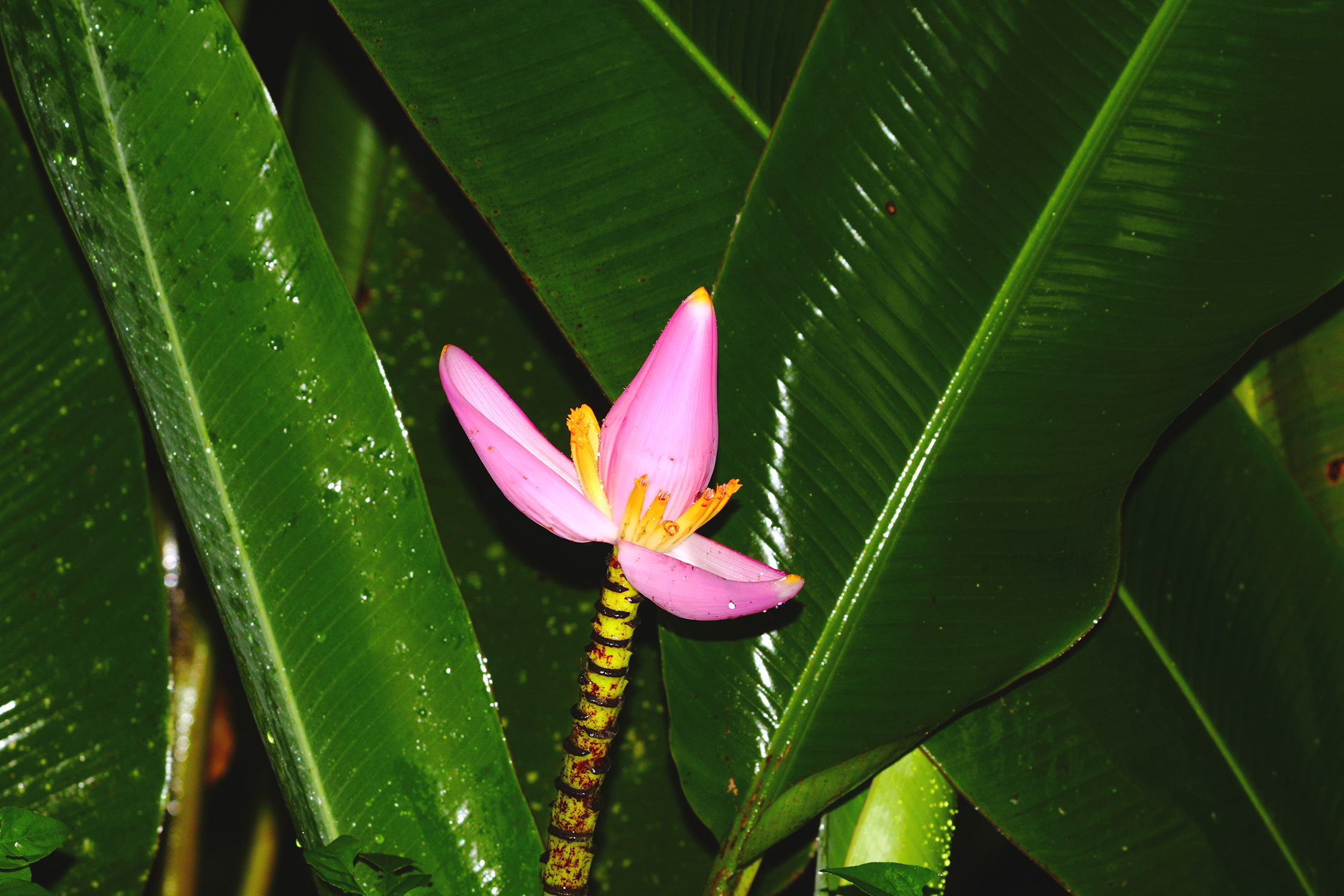
 95% of the bananas sold worldwide belong to a variety called Cavendish. Strictly speaking, it’s even more absurd: not only are they all the same variety, but they are all genetically identical! This is because banana plants are grown from suckers rather than through sexual reproduction.
Unfortunately, this very banana plant, which is grown all over the world, is being attacked by a fungus. If one plantation is affected, all nearby plantations are also at risk, because the same banana variety is grown there as well. This is a completely disrupted ecosystem where resilience has fallen by the wayside.
[/av_promobox]
[av_heading heading='What is a resilient system?' tag='h3' style=" size=" subheading_active=" subheading_size='15' padding='10' color=" custom_font=" admin_preview_bg="][/av_heading]

In the example just mentioned, the solution is clear to everyone. Monotony is the end; diversity is the key.
Diversity is essential for a resilient system to mitigate negative impacts. If people were to grow many different types of bananas, another species or variety could step in and prevent a total crop failure.
Sustainability is only possible through a system’s adaptability and ability to transform, as well as its resilience to crises and shocks. This also makes it clear that only resilient systems can be sustainable.
Given the rapid changes and the fast pace of transformation in our world, resilience must be discussed in conjunction with sustainability. Resilience enables us to address the complexity, dynamism, and unpredictability of the world.
In the food sector, this means an end to industrial agriculture, as it is extremely dependent on external inputs and services and is therefore highly vulnerable to crises. To improve the system’s resilience, we must move in the exact opposite direction—toward diverse, small-scale, organic agriculture.
[av_heading heading='How Can You Build Greater Resilience?' tag='h3' style=" size=" subheading_active=" subheading_size='15' padding='10' color=" custom_font=" admin_preview_bg="][/av_heading]

The goal must be to improve resilience across all areas of life. Ethicist Angela Kalhoff sees the greatest strength in “crowding in,” as she explained at the Langenlois II Sustainability Forum: “Many people working toward a common goal join forces, alliances are forged, and synergies develop. The beauty of it is that everyone can do something different. It could be a technical revolution, a grassroots group, or a scientist—that’s what makes this model so attractive.”

The German sociologist Harald Welzer studies the positive aspects of the past in order to identify mechanisms that have worked in the past. He points to boycotts and other forms of resistance and proposes the establishment of an international environmental court.

Claudia Pahl-Wostl believes there is a need for greater awareness of the options available in various areas of life and for a broader societal dialogue. Furthermore, we should recognize that reducing resource consumption by cutting back on purchases is by no means a restriction but rather a liberation from constraints, as she aptly describes in an interview with us.
[av_heading heading='Why We Need Resilience' tag='h3' style=" size=" subheading_active=" subheading_size='15' padding='10' color=" custom_font=" admin_preview_bg="][/av_heading]

Resilience is a cumbersome foreign word, yet its essence is of inestimable value to our ability to thrive in the future. The physician Henning Elsner put it beautifully: “Resilience is the life force, the power to thrive, that enables life to unfold or carry on despite adverse circumstances.”