[av_heading heading='An attempt to overcome the looming barbarism.' tag='h3' style=" size=" subheading_active=" subheading_size='15' padding='10' color=" custom_font=" admin_preview_bg="][/av_heading]
Every year, we drive thousands upon thousands of species to extinction. Many of these species, whose very existence we are unaware of, are wiped out before we even begin the process of describing and documenting them.
The ILO estimates that human trafficking generates $150 billion in profits. It is the third-largest source of criminal revenue, after the drug and arms trades. It is projected that by 2050, around 350 million people will be forced to leave their homes due to human-induced climate change. Their homes will become uninhabitable, rendered unfit for human habitation.
Is the destruction of life part of our humanity?
[av_heading heading='On Disappearance: Hope and Longing' tag='h3' style=" size=" subheading_active=" subheading_size='15' padding='10' color=" custom_font=" admin_preview_bg="][/av_heading]
What is meant by "disappearance"? Where does a disappearance lead?
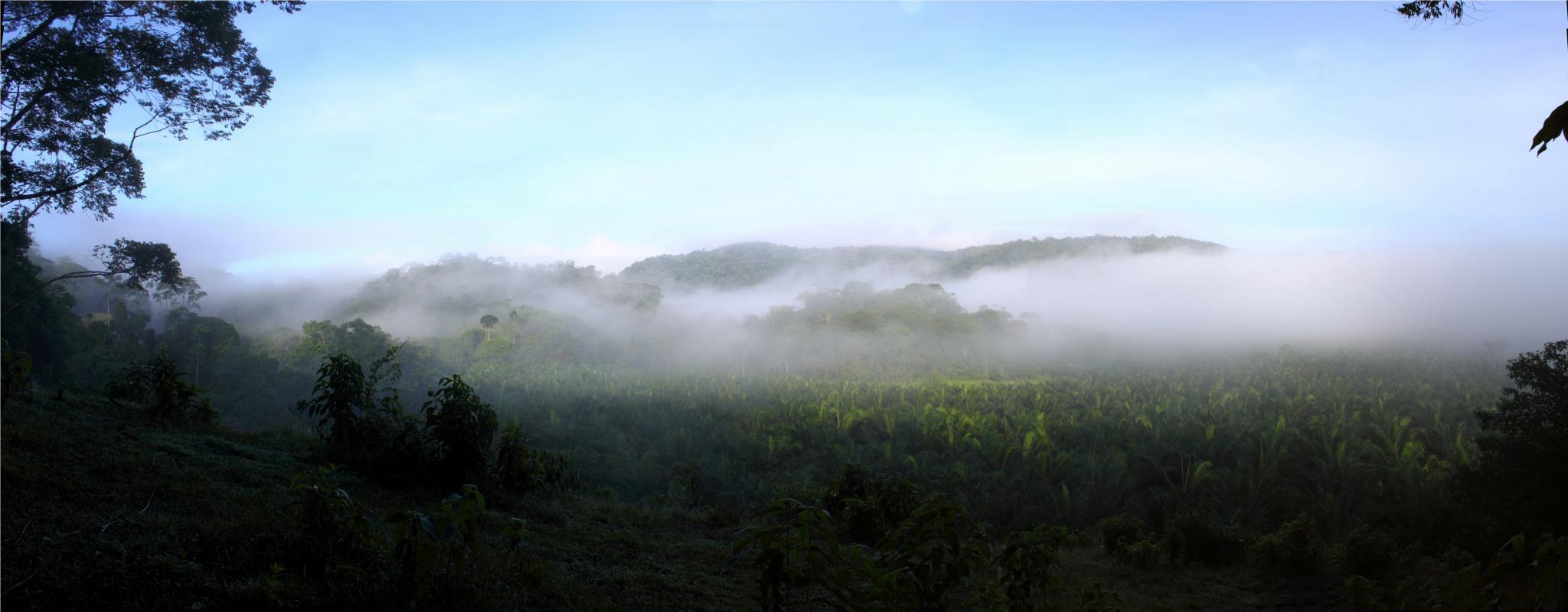
In our case, this destruction results in a barren wasteland, a devastated landscape. The surroundings become a place of disappearance, of withering away, and of decline. A place like so many others on our planet—and a place that could be anywhere. Everywhere, irreversible interventions are being made in nature; not even the last remaining biotopes—those places teeming with life—are spared.
The driving force behind this action is our mercantile addiction, our hubris—an act of unbearable detachment from reality: We humans are trying to endure it, but nature can no longer withstand our pressure; it is disappearing. We violently tear something from its natural existence, from its natural habitat. We overwhelm the living world that is our salvation; we ravage and destroy. We do not shy away from destroying our own money, our economic power, democracy, the social fabric, welfare, and our responsibility for ourselves and others—for the other that has been entrusted to us.
We no longer need anything from “out there”; we produce everything ourselves. The impoverishment of the world is taking place through the disappearance of life, of nature, of human affection and warmth, of compassion, and of the sense of care for others and for the world entrusted to us.
Animals, plants, and ocean creatures are gradually disappearing. Wild species are struggling to survive in their own habitats—to reproduce, raise their young, and find enough food. We are restricting them everywhere—in open meadows, in their forests, on the steppes, on the ice, in the air, and in freshwater.
Nowhere do we leave them any room to live. We hunt, kill, build over, exploit, burn down, pollute, poison, and dry out. And yet we stand by helplessly as nature falls apart!
Knowledge, skills, experience, craftsmanship, languages, ethnicities, and religions are also disappearing. The universality of humanity and nature is being called into question. We sacrifice whatever stands in our way and eliminate whatever is not recognized as ours, as an essential part of our existence. We are slowly but surely dismantling creation—everything that has been entrusted to us.
Added to this are the massive changes in land use and climate change—including the global warming we have caused, which will be accompanied by severe weather extremes—as well as nitrogen pollution of soils and waterways from synthetic fertilizers and sewage. Neophytes—non-native plant species—are spreading, and we do not know what the consequences will be.
And last but not least, we must also mention the rise in atmosphericCO2 concentrations—agriculture is one of the main sources of these emissions.
Some things disappear. Some things come our way, whether we want them to or not.
They say that loss—even the loss of others—is always a loss of one’s own as well.
If we fail to use and integrate these ecological, emotional, social, and spiritual resources in our daily lives in a way that nurtures them and preserves their vitality, we will become poorer and poorer and more and more coarse. The ongoing destruction of the resources that sustain our lives is an act of self-denial that ultimately leads to our self-destruction.
We can only change our behavior patterns if we understand their consequences—that is, if they are clear, comprehensible, and manageable to us.
For most people, given their current circumstances, the full impact of global warming and the catastrophic loss of biodiversity—which threatens our very existence—is impossible to grasp. It is beyond the imagination of many people.
But in the end, one thing is certain: apocalyptic prophecies won’t win anyone over or convince anyone.
And adaptation models only lead to the optimization of exploitation.
[av_heading heading='What should I do?' tag='h3' style=" size=" subheading_active=" subheading_size='15' padding='10' color=" custom_font=" admin_preview_bg="][/av_heading]
We need ways to achieve a form of responsibility that is bearable—one that does not oppress us, that is not a yoke, but rather restores our moral freedom to shape our own lives.
And, most importantly, the tools for a new social contract—one based on solidarity, a new commitment to the common good, and the expansion of opportunities for life and development.
“Sustainable development can only take place when ecosystems, society, and the individual are interconnected.”
Gregory Bateson
[av_promobox button='no' label='Click me' link='manually,http://' link_target="" color='theme-color' custom_bg='#444444' custom_font='#ffffff’ size=’large’ icon_select=’no’ icon=’ue800’ font=’entypo-fontello’ box_color=“ box_custom_font=’#ffffff’ box_custom_bg=’#444444’ box_custom_border=’#333333’ admin_preview_bg=“]
About the Author
Werner Lampert (born in 1946 in Vorarlberg, Austria) is considered one of the pioneers in the field of sustainable products and their development in Europe. This organic pioneer has been deeply involved in organic farming since the 1970s. With Back to the Roots (Hofer) and Ja! Natürlich, he developed two of the most successful organic brands in the German-speaking world.
[/av_promobox]