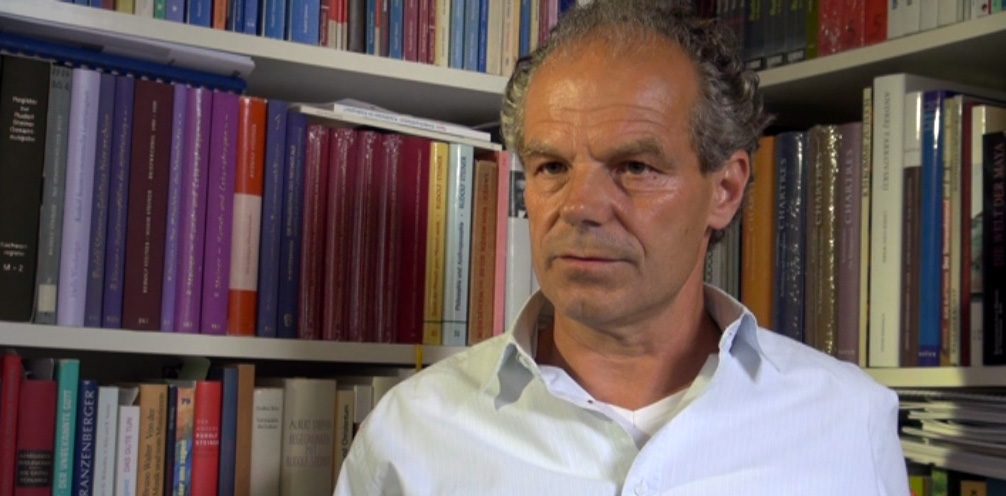
In this interview, art philosopher Wolfgang Zumdick explains the connection between poetry and a sense of community. We learn why a “poetic” attitude is contagious, how to produce “social honey,” and why the ideas pioneered by ecological visionaries such as Rudolf Steiner and Joseph Beuys are more relevant than ever.
To me, poetry means more than just writing poems. A friend of mine once said, “Poetry means being at one with things.” It means being connected, with all your strength and soul.
In addition to our sensory perceptions, we also have other modes of perception. We feel something when we encounter this world. We possess the will to change it. We can imagine things. We can take in situations with full intensity and remember them—smells, moods, associations. It is from this interplay of sensory and mental perception that the poetic emerges.
I think it has to be that way; otherwise, we’ll end up feeling isolated. Sometimes I feel like we’re running away from the very forces that bring us to life. In the spring, for example, we’re surrounded by an incredible energy. And we’re like emperors or kings who have everything around them but can no longer appreciate anything. When we lose touch with these forces, we become lonely.
The most revolutionary form of commerce today is when we connect with the creative forces that surround us everywhere. We can develop different types of schools and different ways of interacting with one another. Perhaps we can also slow down a bit to focus more intently on the things that define us as human beings.
We could learn to love the Earth we live on a little more again—and ourselves. That is the great opportunity hidden within all this misery.
This attitude is self-reinforcing and contagious. This is especially important for children. They should find joy in the things around them and in experiencing the world. It’s about intensity and connection. Children need a safe space where they can develop this love for the world. The attitude comes naturally.
Beuys repeatedly emphasized: “We need free schools.” As a teacher, he never interfered with his students’ intuition. He let them become their true selves and guided them on their path to artistic freedom. Johannes Stüttgen, a student of Beuys, once said: “We don’t actually realize just how amazing we are.” Every individual possesses incredible strengths that vary, complement one another, and form a network. We depend on one another and should not belittle ourselves.
Poetry has been a vital catalyst in all cultures. People sang and danced everywhere. It is a human need. It is in our DNA. In that sense, everyone is a poet. I believe poetry has a great deal of momentum of its own.
Poetry is the natural vehicle for the human experience. Our existence is also a rhythmic one. Of course, this is lost in our current, mechanized way of life.
With honey, bees produce a substance that sustains them and gets them through the winter—one of the most precious substances there is. Shelley Sachs says, “We can also produce this ‘social honey,’ but it’s not that simple. We can hurt people, fail to acknowledge them. We can cause social harm—to ourselves, to children, and to others.”
In the “Frametalks” process, people were invited to talk through a wooden frame about one of the five “realities” (love, nature, the future, freedom, humanity). The aim was to foster a genuine exchange that delved into the very essence of these realities. It involved imaginative thinking, but also active listening, free from prejudice. Shelley Sachs called these encounters “producing social honey.”
The frame was also set up in various locations (in Kassel), revealing a specific slice of reality. A slice of the world that is part of the whole, evoking something within and bringing it to life. It has led to the most amazing results when people simply shared their perceptions.
There’s a parallel here: Amanda Gorman is the poetic counterpart to Greta Thunberg. I believe these are two women who have recognized exactly that—that things can’t go on like this. And they have this deep intuition and wisdom to say: People, wake up. And both have succeeded in shaking people out of the mindset of “Things aren’t going well, but they’re still going on,” thereby awakening the feeling: if not now, then when?
There are billions of people who could have done the same thing. But these two possess a very particular charisma and a very particular wisdom that made this happen. They are remarkable figures. You can see how paradigms can shift through the slightest shifts in mindset.
This is about the German performance artist Joseph Beuys, the poetic dimension, and the idea of transformation. It is about the forces needed today to get back on our feet, to give transformation—from an artistic perspective—a power that is not found, for example, in political discourse.
Beuys would have turned 100 this year. He was one of the first to say that we have reached a point where we can no longer continue as we are.“C’est la fin de la fin de latin”(We have reached the end of the end of Latin).
He wanted to stir things up, to shake people awake with the craziest actions—for example, by explaining art to a dead hare, etc.—and all of this to rekindle a romantic spirit. In that sense, he was a great romantic and poet. He sees every person as an artist and creator of social and ecological contexts.
Rudolf Steiner is a truly pivotal figure. He was not content to explain everything “merely” through the tools of the intellect. He asked himself:“What is imagination? What is inspiration? What is thinking, feeling, and willing?” He described what happens on the emotional level, the volitional level, the intellectual level, and so on. Once you understand his impulse, you see: he was on the right track. He explained many things well, making the world—and oneself—more transparent.
His Waldorf educational philosophy is based on the idea that children are immersed in a sensory world and that pure sensory experience is the starting point. To avoid overwhelming them, specific stages of development must be taken into account, as the intellect does not truly come into play until after puberty. He was a keen observer and, during his time as a private tutor, observed what children of different ages need. Steiner never lost touch with this connection. He sensed something and recognized that it needed to come to the surface and be communicated.
When I first read Steiner’s writings, I thought: what kind of language is this? Fortunately, Beuys was there, who was so wonderfully modern. Dieter Koepplin put it this way: Beuys brings Steiner up to date. Presumably, there are also people at Alanus University—an anthroposophical, state-recognized university in Germany—who can translate Steiner’s somewhat baroque spirit. My daughter, for example, studied “Rethinking Economics” there, a program that combines art, philosophy, and economics.
At the end of the day, though, Steiner’s work can sometimes be a bit of a challenge. In some places, I reach a point where I can no longer follow it. But that’s not such a bad thing. I feel the same way about Einstein. I can see, however, that behind what I can grasp lies a clever idea, a clever insight, or a clever experience.
Rudolf Steiner’s comprehensive body of work has been compiled into a complete edition, which is also available online.
Joseph Beuys would have turned 100 this year. Wolfgang Zumdick’s essays and books invite readers to delve even deeper into the world surrounding Beuys’s (and Steiner’s) work and legacy. Rüdiger Sünner summarizes Beuys’s artistic life in his documentary“Zeige Deine Wunde” (Show Your Wound).
[av_promobox button='no' label='Click me' link='manually,http://' link_target="" color='theme-color' custom_bg='#444444' custom_font='#ffffff’ size=’large’ icon_select=’no’ icon=’ue800’ font=’entypo-fontello’ box_color=“ box_custom_font=’#ffffff’ box_custom_bg=’#444444’ box_custom_border=’#333333’ admin_preview_bg=“]
About Wolfgang Zumdick
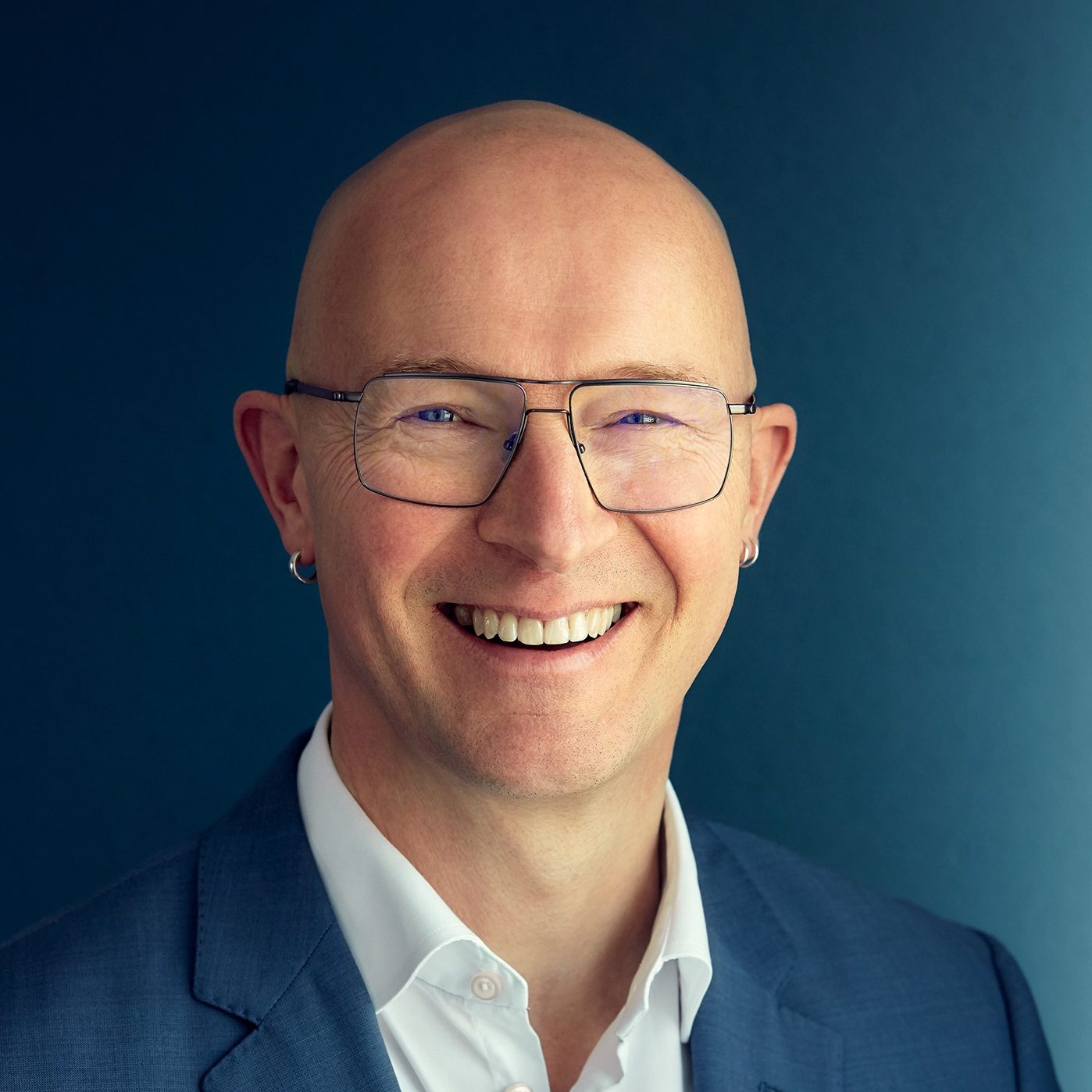
Dr. Wolfgang Zumdick is an art philosopher, curator, and author. He is currently helping to establish the Beuys Café in Melbourne. He is the guest curator of the exhibition “Intuition,” which focuses on Beuys’s early work and was on view at the Museum des Kurhauses Kleve starting June 19, 2021.
His latest book was written in collaboration with Volker Harlan:*Thinking Evolution with Beuys*. Recent lectures are also available online (“Death Keeps Me Awake”at the Waldfrieden Sculpture Park,“I hereby resign from art – Joseph Beuys”at the Goethe-Institut in Warsaw)
[/av_promobox]
[av_notification title=" color='silver' border=" custom_bg='#444444' custom_font='#ffffff' size='normal' icon_select='yes' icon='ue80b' font='entypo-fontello' admin_preview_bg="]
Source: Interview with Wolfgang Zumdick on April 23, 2021
[/av_notification]
[av_notification title=" color='green' border=" custom_bg='#444444' custom_font='#ffffff' size='normal' icon_select='yes' icon='ue837' font='entypo-fontello' admin_preview_bg="]
Editorial article
[/av_notification]