
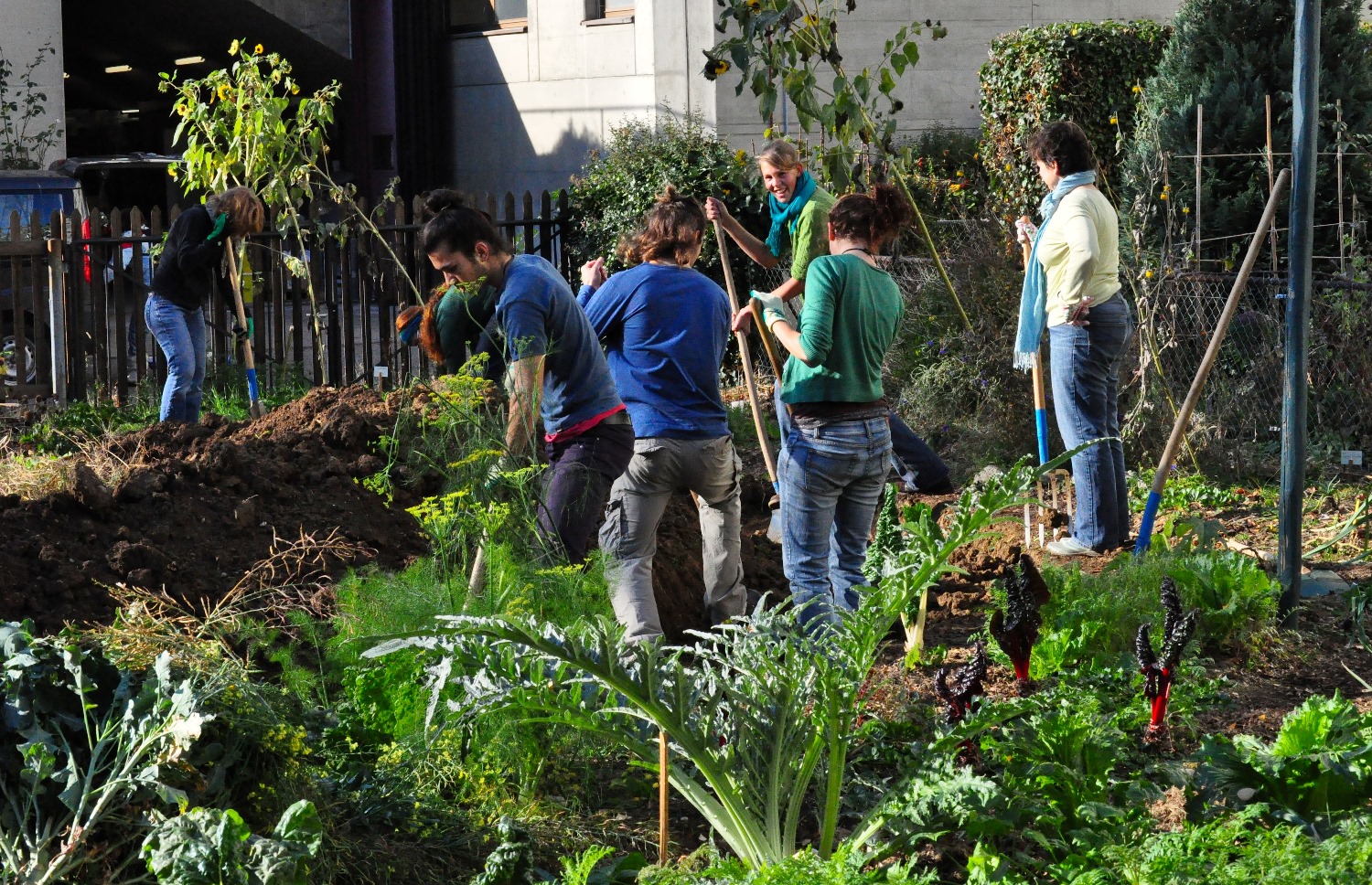
Whether it’s food, flowers, or crops, the Urban Agriculture Network Basel (UANB) ensures that this city of around 170,000 residents in Switzerland remains lush and green. The network brings together approximately 60 projects, all of which are committed to local, social, and environmental sustainability. The goal? To preserve nature, biodiversity, and people.
An interview with co-founder and Vice President Bastiaan Frich on dedicated members, vibrant ecosystems, and internal transformation.
Bastiaan Frich: We see ourselves as a breeding ground that helps a wide variety of sustainability projects flourish. From growing the plants to distributing them, refining them, and enjoying them together, all the way through to recycling, these projects cover a very broad spectrum. No single area is more important or valuable than another. However, when we sense that a particular topic is generating significant interest, we focus on it more intensively during certain phases.
[av_hr class='custom' height='50' shadow='no-shadow' position='center' custom_border='av-border-thin' custom_width='100%' custom_border_color=" custom_margin_top='1px' custom_margin_bottom='20px' icon_select='no' custom_icon_color=" icon='ue808' font='entypo-fontello' admin_preview_bg="]
Frich: Looking back, working with the authorities was probably our biggest challenge. Nonprofit organizations are often looked down upon; no one really wants to have anything to do with them. As a result, collaborating with them wasn’t as easy as we’d initially thought. But aside from the bureaucratic hurdles, we got the network up and running quickly. We were a very dedicated team from the start and had a lot of fun.
[av_hr class='custom' height='50' shadow='no-shadow' position='center' custom_border='av-border-thin' custom_width='100%' custom_border_color=" custom_margin_top='1px' custom_margin_bottom='20px' icon_select='no' custom_icon_color=" icon='ue808' font='entypo-fontello' admin_preview_bg="]
Frich: In my opinion, what’s important is a sustainable and integrated organizational structure. You can think of it as a living ecosystem. We rely on a dynamic, natural hierarchy. Everyone is on equal footing, and anyone can take on a leadership role within this network—from students to professors, depending on their knowledge and enthusiasm.
[av_hr class='custom' height='50' shadow='no-shadow' position='center' custom_border='av-border-thin' custom_width='100%' custom_border_color=" custom_margin_top='1px' custom_margin_bottom='20px' icon_select='no' custom_icon_color=" icon='ue808' font='entypo-fontello' admin_preview_bg="]
Frich: That’s actually a very important point. In an organization that relies primarily on volunteer work, appreciation plays a huge role. It’s our most important currency. Otherwise, at some point, no one will want to get involved anymore. But that requires an inner transformation first. Only then is external change possible. Peace work begins within each of us.
[av_hr class='custom' height='50' shadow='no-shadow' position='center' custom_border='av-border-thin' custom_width='100%' custom_border_color=" custom_margin_top='1px' custom_margin_bottom='20px' icon_select='no' custom_icon_color=" icon='ue808' font='entypo-fontello' admin_preview_bg="]
Lampert: The Urban Agriculture Network Basel stands in stark contrast to the Basel region itself: it has the highest purchasing power in the world and is home to numerous large multinational corporations. Companies such as Roche, Novartis, and Bell have their headquarters here. In the 1980s and 1990s, there were several environmental disasters. That is why environmental movements resonate so strongly with the public. However, the power of these corporations also presents us with challenges: negotiations often end in their favor—because they hold the capital.
[av_hr class='custom' height='50' shadow='no-shadow' position='center' custom_border='av-border-thin' custom_width='100%' custom_border_color=" custom_margin_top='1px' custom_margin_bottom='20px' icon_select='no' custom_icon_color=" icon='ue808' font='entypo-fontello' admin_preview_bg="]
Frich: Ultimately, I think a lot of it comes down to our damn good team. So it’s hard to say whether the Urban Agriculture Network Basel would be just as successful elsewhere. Here, though, we’re on the right track and still have thousands of ideas. There’s no end in sight.
[av_hr class='custom' height='50' shadow='no-shadow' position='center' custom_border='av-border-thin' custom_width='100%' custom_border_color=" custom_margin_top='1px' custom_margin_bottom='20px' icon_select='no' custom_icon_color=" icon='ue808' font='entypo-fontello' admin_preview_bg="]
Frich: Carrying on as usual is not an option, because life never stands still. What does that mean in practice? Our next step is to revise and coordinate our educational offerings. We’ve received a great many requests from schools—for which we’ve so far only had ad hoc solutions. We’re also working on an important milestone: developing a food policy for the region. That will take a lot of time. And new projects are never far behind.
[av_promobox button='yes' label='More about this person' link='manually,http://urbanagriculturebasel.ch/team-member/bastiaan-frich/' link_target='_blank' color='theme-color' custom_bg='#444444' custom_font='#ffffff’ size=’small’ icon_select=’no’ icon=’ue800’ font=’entypo-fontello’ box_color=“ box_custom_font=’#ffffff’ box_custom_bg=’#444444’ box_custom_border=’#333333’ admin_preview_bg=“]
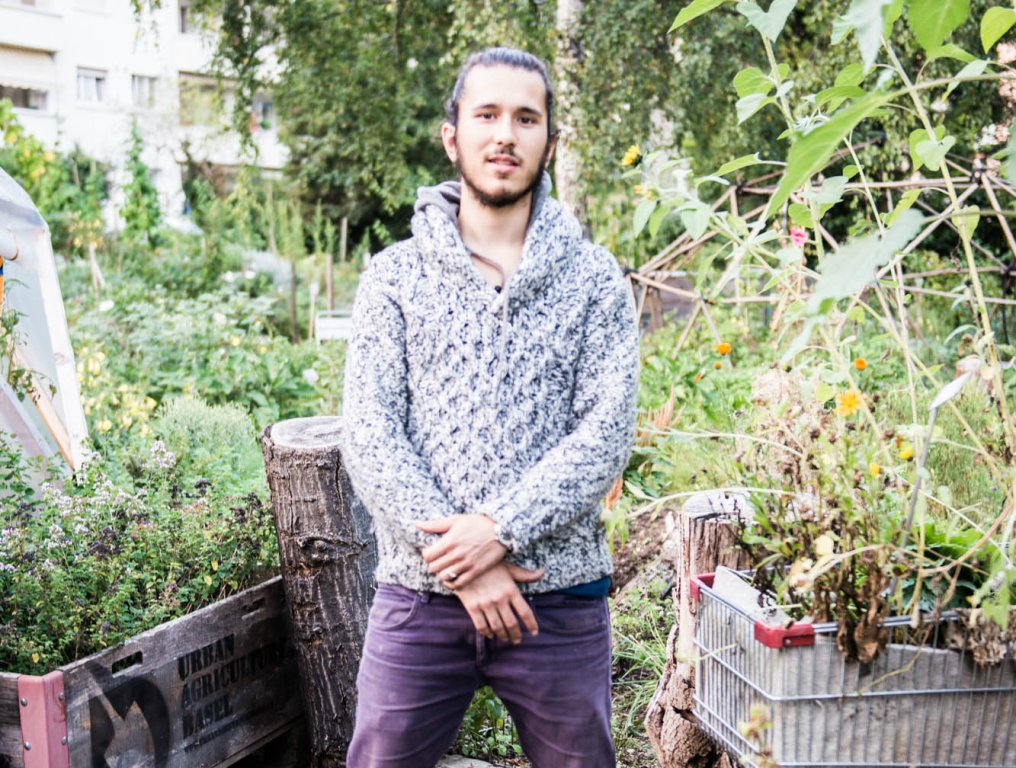
©Noelle Guideon | SRF Virus
About Bastiaan Frich
Bastiaan Frich is a co-founder and vice president of the Urban Agriculture Network Basel. He studied Nonviolent Communication, permaculture, and biology. As a thought leader and pioneer, he has already launched numerous national and international sustainability projects.
[/av_promobox]
[av_notification title=" color='silver' border=" custom_bg='#444444' custom_font='#ffffff' size='normal' icon_select='yes' icon='ue80b' font='entypo-fontello' admin_preview_bg="]
Source: Interview with Bastiaan Frich on August 21.
[/av_notification]
[av_notification title=" color='green' border=" custom_bg='#444444' custom_font='#ffffff' size='normal' icon_select='yes' icon='ue837' font='entypo-fontello' admin_preview_bg="]
Editorial article
[/av_notification]