
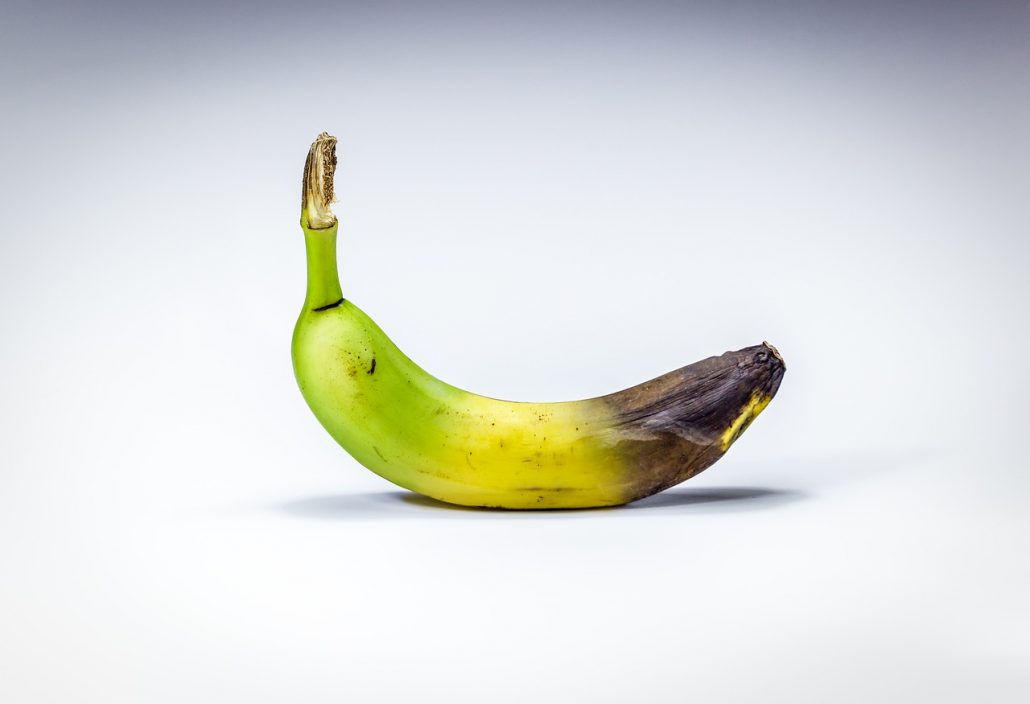
No one wants to throw food away. And yet, one in three food items doesn't end up where it's supposed to—in our stomachs—but in the trash.
Food waste is a problem across all social classes. From just about every refrigerator, food that is more or less spoiled is regularly found and thrown away in the trash.
There are many reasons for this: the hustle and bustle of everyday life, impulse buying, the appeal of special offers and bulk packs…
Suppose there were a fictional country where all the food that is produced but never eaten—because it isn’t good enough to sell, spoils during transport, or ends up uneaten in the trash—is grown.
This country would be roughly the same size as Russia [2]. If we wanted to hike across it on foot, it would take us a year. This country would consume four times as much water as the United States: 250 km³ [2]. And it would rank third among the world’s largest greenhouse gas emitters, after the United States and China [2].
This food, which is produced for free, could feed approximately 2 billion people—twice as many as are currently undernourished.
Let’s take a brief look back at our everyday reality to see how we might contribute to this effort. In the EU alone, 80 percent—or 47 million tons—of household food waste could be prevented [3].
Households account for the lion's share of food waste. Each person in the EU throws away 123 kg of purchased food annually [3]. There is, however, a city-rural divide: urban households throw away far more food than rural households [4].Younger people are significantly more wasteful with food than older generations.
Bread and baked goods top the list of food items most frequently thrown away, followed by vegetables and fruit. Dairy products and eggs come in third place. Meat and fish follow [4].
But food served outside the home—such as leftovers from buffets and plates in restaurants or uneaten meals in commercial kitchens—also accounts for a significant portion of food waste. In the EU, it makes up 12 percent of the 88 million tons of food waste [5].
Food waste in the retail sector accounts for 5 percent of the total. When it comes to donating food to social welfare organizations, there is room for improvement: in Austria, for example, 6 percent is currently donated [3].
But significant losses occur right at the start of the value chain as well. In Central European fields, one in three carrots is left behind because it does not meet aesthetic standards. Just how incomplete the chain of full utilization is is also demonstrated by a Swiss study, which found that out of every 100 potatoes harvested, only 34 (!) are actually eaten.
And to top it all off: let’s imagine for a moment a herd of 230,000 cattle. This enormous herd is slaughtered every year (!) in Germany for no good reason, only to end up as food waste.
We cannot afford to be indifferent to food waste—neither ethically, environmentally, nor socially. Reducing this waste is a key lever in climate protection. But last but not least, we are also harming ourselves economically. Every Austrian household throws €300 a year straight into the trash—in the form of food that is bought but never eaten.
Many initiatives are now dedicated to combating waste. Here are a few examples:
[1] https://www.muttererde.at/fakten/
[2] https://www.planet-wissen.de/video-wie-saehe-die-welt-ohne-lebensmittel-verschwendung-aus-100.html
[3] https://ec.europa.eu/jrc/en/news/average-eu-consumer-wastes-16-food-most-which-could-be-avoided
[4] Schneider, F. (2012): Secondary Study on Food Waste in Austria, commissioned by the BMLFUW [5] https://www.europarl.europa.eu/news/de/headlines/society/20170505STO73528/lebensmittelverschwendung-in-der-eu-infografik