It’s amazing to think of everything cocoa beans go through before they end up in our cups. In this interview, we talk with pastry chef Lara Jaeger about her journey to the bean’s origins, indigenous cocoa ceremonies, and mindful snacking.
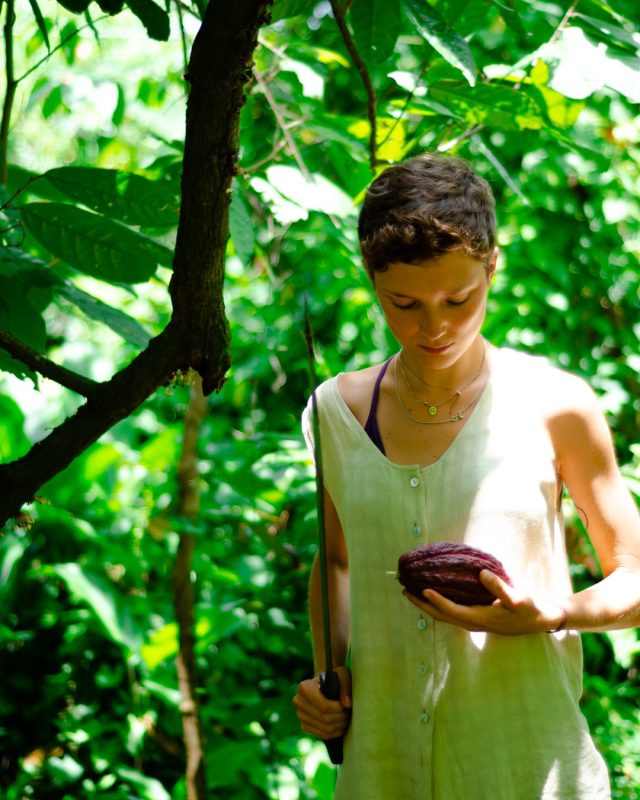
As a pastry chef, I’ve always wanted to work “on-site” with the raw ingredients I use in my profession: cocoa, vanilla, cashews, coconuts, and so on. That’s why my first stop was the cocoa bar at the Pachamama eco-village in Costa Rica. There, I learned how to make truly healthy chocolate. After a while, I was even able to create my own chocolate.
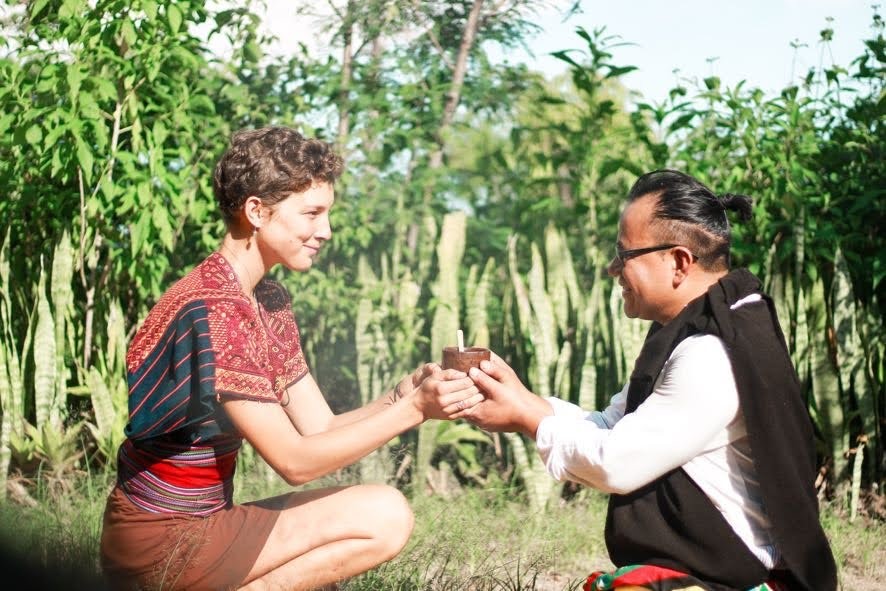
I had the opportunity to participate in a cacao ceremony in Guatemala. I was amazed by the positive effects that ceremonially prepared cacao has on the body, mind, and soul. It’s hard to imagine if you’re only familiar with “European” cacao.
Cacao is a remedy that dates back over 3,000 years. It had a very powerful effect on my body. It sparked a desire in me to connect even more deeply with the plant, on the one hand, and to bring these cacao ceremonies to Europe, on the other.
My profession, pastry making, was what inspired this trip to Central America. I was also fascinated by the fact that cacao has a spiritual side.
I wanted to learn everything I possibly could—the production process, fermentation, and so on. That’s why I got involved in a community-based cocoa project in the Lanquín region. The Tuqtuqilal farm is currently run by three women, which is quite unusual in Guatemala. Some of the cocoa is grown there, but most of it is purchased from other farmers at a fair price and then processed.
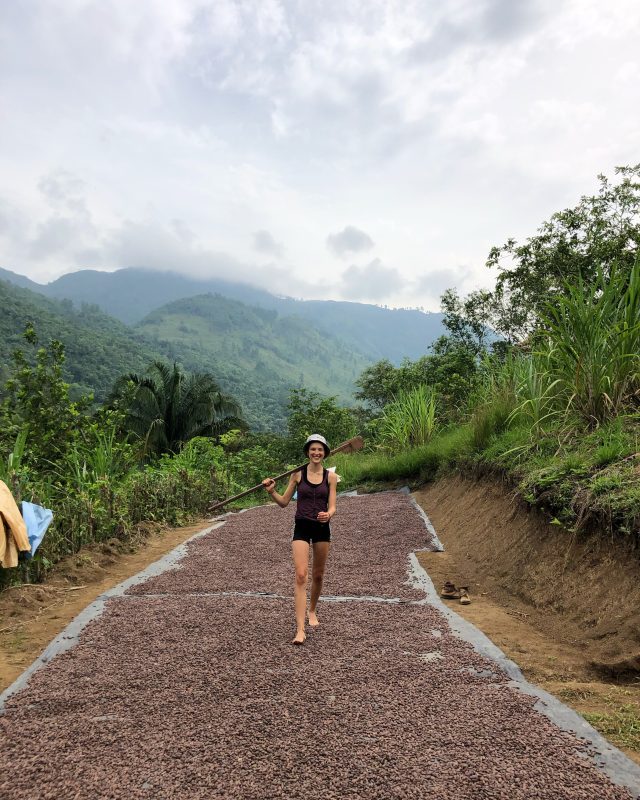
The process is incredibly labor-intensive. After harvesting, the beans are fermented in wooden boxes for 7 days. They must be stirred every day to allow oxygen to circulate. This produces a strong vinegar smell.
And then comes the most exhausting part of the work: the cacao is dried in the sun for 7 days. To do this, it has to be emptied from the sacks in the morning and packed back into them in the evening, so that it can dry in the sun during the day and doesn’t get wet from the rain at night. In between, it is turned with a rake for hours on end to prevent it from overheating. Carrying these heavy sacks back and forth is incredibly hard work.
It was clear that this type of production was a labor of love for the workers. They want to create a truly high-quality product. And they were all very grateful for their jobs.
I am very grateful for these experiences. They have changed and strengthened my connection to cacao. Many things surprised and amazed me.
Throughout Guatemala, Mayan ceremonies—such as those for the deceased—are still held. However, cocoa is used less and less for these purposes. In everyday life, too, Guatemalans tend to drink coffee.
But it was important to me to explore the ceremonial use of cacao. And by chance, I came into contact with Izaias, a cacao ceremony master. He offered to teach me the ropes, so to speak. He taught me how to read the Mayan calendar, how to build a ceremonial fire, and how to lead cacao ceremonies. I am so grateful to him for that. This experience has truly turned my life upside down.
No, I use “ceremonial cacao.” This cacao is produced with particular care and a specific intention. Almost the entire process is done by hand. Only the grinding of the beans is done by machine. In the production of ceremonial cacao, people must not be paid unfairly or exploited in any other way. The cacao I source from Guatemala is also packaged without plastic and transported by ship (lavalove cacao).
Ceremonial cocoa is processed in block form rather than as a powder. This means it still contains the whole cocoa butter. This is important for its effects, as it preserves nutrients such as zinc, magnesium, and protein.
The fact that high-quality cocoa has also been shown to make people happy is partly due to the tryptophan it contains, which is converted into serotonin in the body. The theobromine in cocoa also has a subtly stimulating, very gentle psychoactive effect—comparable to a kiss. This makes you feel particularly present.
Participants in cacao ceremonies often tell me that the “uplifting” effect of drinking cacao lasts all day. I like to take advantage of this effect when I write or make music.
The ceremony lasts one to one and a half hours. Participants bring a cup with them. I prepare the cacao for everyone and pour it into the cups. Then the ceremony begins. Everyone closes their eyes and connects with the cacao, which is then sipped slowly.
For each ceremony, I choose a specific theme. Traditionally, this theme is derived from the Mayan calendar. I have great respect for this tradition, but I try to stay true to myself. Since I am not Mayan, I also draw on themes that are meaningful to me personally or that resonate collectively.
During the ceremony, we drink cacao and meditate, but I also sing and play the ukulele. Afterward, we share our experiences. So far, I’ve received a lot of positive feedback. I now hold a ceremony once a month.
Drinking cacao is always a special experience for me. That’s why I try not to do it too often. I drink cocoa when I’m preparing for a ceremony. It sets the stage for the ceremony and the opening topics. I’ve also made chocolates from ceremonial cocoa, which I call “Bliss balls.” For very mindful, personal use.
My attitude toward store-bought chocolate has changed. Personally, I don’t buy cheap chocolate and I look for the Fair Trade seal. It would be great if more people did the same—and also thought about what’s behind it. This doesn’t just apply to chocolate.
Unfortunately, we’re too far removed from the food to understand the supply chains. The “Journey to Cocoa” really brought that home to me.
______________________________________________________