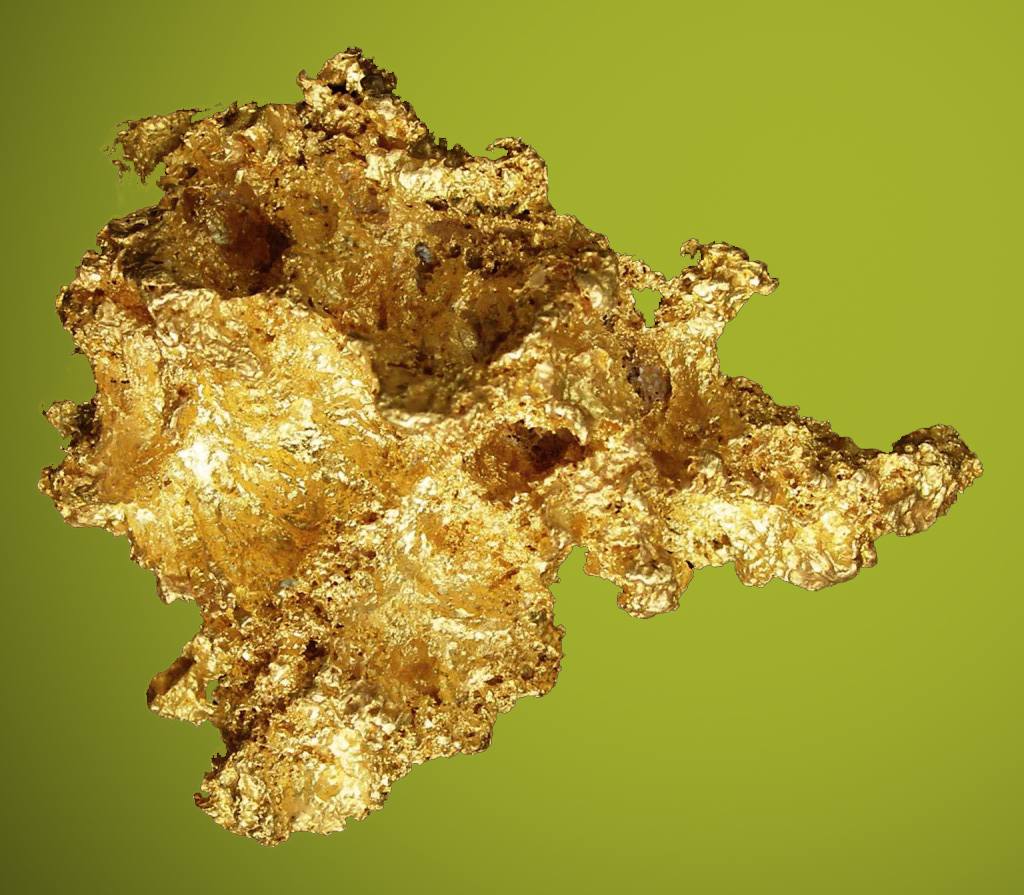
Gold? – Who among us ordinary folks has much to do with it?! It seems more like something for kings, potentates, and banks. But we all have more to do with gold than we think: Gold isn’t just found in bars, but also in cell phones, computers, TV remotes…—and, of course, in teeth, rings, watches, and jewelry in general.
Gold has several unique properties, which is why it is used in dentistry and electrical engineering. However, this accounts for only about 10% of its use. Most gold goes into jewelry—about 60%—and, especially since the euro crisis, increasingly into investment gold—about 20%. This is actually understandable when people are talking about the insolvency of entire banks and even countries.
Gold is, in and of itself, an unproblematic (precious) metal. What is problematic, however, is the way gold is mined. And one might also ask why gold mining is necessary at all.
[av_heading heading='One by one – using Peru as an example:' tag='h3' style=" size=" subheading_active=" subheading_size='15' padding='10' color=" custom_font=" admin_preview_bg="][/av_heading]
In large-scale industrial mining, for reasons of cost and profit, operations are conducted in open-pit mines using cyanide.
The result: huge craters are created, some hundreds of meters deep and kilometers long, which are virtually impossible to backfill or restore to their natural state. Even if it were possible, this would pose a problem for groundwater due to multi-toxic reactions. And agriculture or other land use is permanently out of the question.
Cyanide solution, made from hydrocyanic acid, extracts even the tiniest gold particles from the crushed rock. At the Yanacocha mine in Peru, the largest gold mine in Latin America, ore is therefore mined down to a grade of 0.5 grams of gold per ton of rock. Huge quantities of drinking water are thus turned into highly toxic wastewater. People, animals, and nature suffer as a result. They are poisoned or driven away by pressure or circumstances.
In so-called small-scale mining—often carried out illegally in the Amazon region, for example—sand is washed out from beneath trees along riverbanks using high-pressure hoses, sifted, mixed with mercury, heated in bowls, and then the mercury evaporates, leaving behind the gold. At least this final step is simple and straightforward. However, the mercury vapors in particular are highly toxic. The consequences only become apparent later: neurological disorders, miscarriages, birth defects, skin rashes… Mercury residues are also absorbed through the water and fish. Forests, even within Indigenous and nature reserves, are destroyed.
[av_gallery ids='4238,4237' style='thumbnails' preview_size='portfolio' crop_big_preview_thumbnail='avia-gallery-big-crop-thumb' thumb_size='portfolio' columns='2' imagelink='lightbox' lazyload='avia_lazyload' admin_preview_bg="]
[av_heading heading='What does this have to do with us? Or: What can we do?' tag='h3' style=" size=" subheading_active=" subheading_size='15' padding='10' color=" custom_font=" admin_preview_bg="][/av_heading]
Initially, our demand for gold also drives the price, which is, however, set by five banks at the London Gold Fixing; so far, these have included Deutsche Bank and Paribas (U.S. authorities, incidentally, accuse the former of manipulating the price). Due to high gold prices and “cost-effective” production, mining remains profitable even with low gold content. While Yanacocha averages 0.8 g of gold per ton of rock, the Alps yield up to 30 g/t. Mining does not take place here. We are effectively shifting the ecological and other risks and costs to Peru, China, the Congo, etc.
German private individuals own 8,000 tons of gold, which is 5% of the world’s gold reserves and more than twice as much as the Bundesbank’s gold reserves—the second-largest state holder of gold after the U.S. No one actually needs gold in a safe or in jewelry to survive. But my gold wedding ring alone, mined today in Yanacocha, would account for more than 14 tons (!) of toxic waste. A cell phone—solely for its small gold content of about 0.03 g—results in 140 to 200 kg of toxic waste.
[av_gallery ids='4240,4239,4233’ style=’thumbnails’ preview_size=’portfolio’ crop_big_preview_thumbnail=’avia-gallery-big-crop-thumb’ thumb_size=’portfolio’ columns=’3’ imagelink=’lightbox’ lazyload=’avia_lazyload’ admin_preview_bg=“]
[av_heading heading='In short:' tag='h3' style=" size=" subheading_active=" subheading_size='15' padding='10' color=" custom_font=" admin_preview_bg="][/av_heading]
It’s worth considering recycling or alternatives to gold and reflecting on the “uselessness” of investment gold—and taking action. Even if the trade balance of the mining countries no longer shines quite so brightly: people and nature in those countries—and ultimately, we too—will benefit from it.
[av_promobox button='no' label='Click me' link='manually,http://' link_target="" color='theme-color' custom_bg='#444444' custom_font='#ffffff’ size=’large’ icon_select=’no’ icon=’ue800’ font=’entypo-fontello’ box_color=“ box_custom_font=’#ffffff’ box_custom_bg=’#444444’ box_custom_border=’#333333’ admin_preview_bg=“]
About the Author
Dr. phil., Lic. theol., Dipl.-Päd. Hartmut Heidenreich, most recently Director of the Educational Institute of the Diocese of Mainz; volunteer coordinator for the Bergwerk Peru campaign
[/av_promobox]