
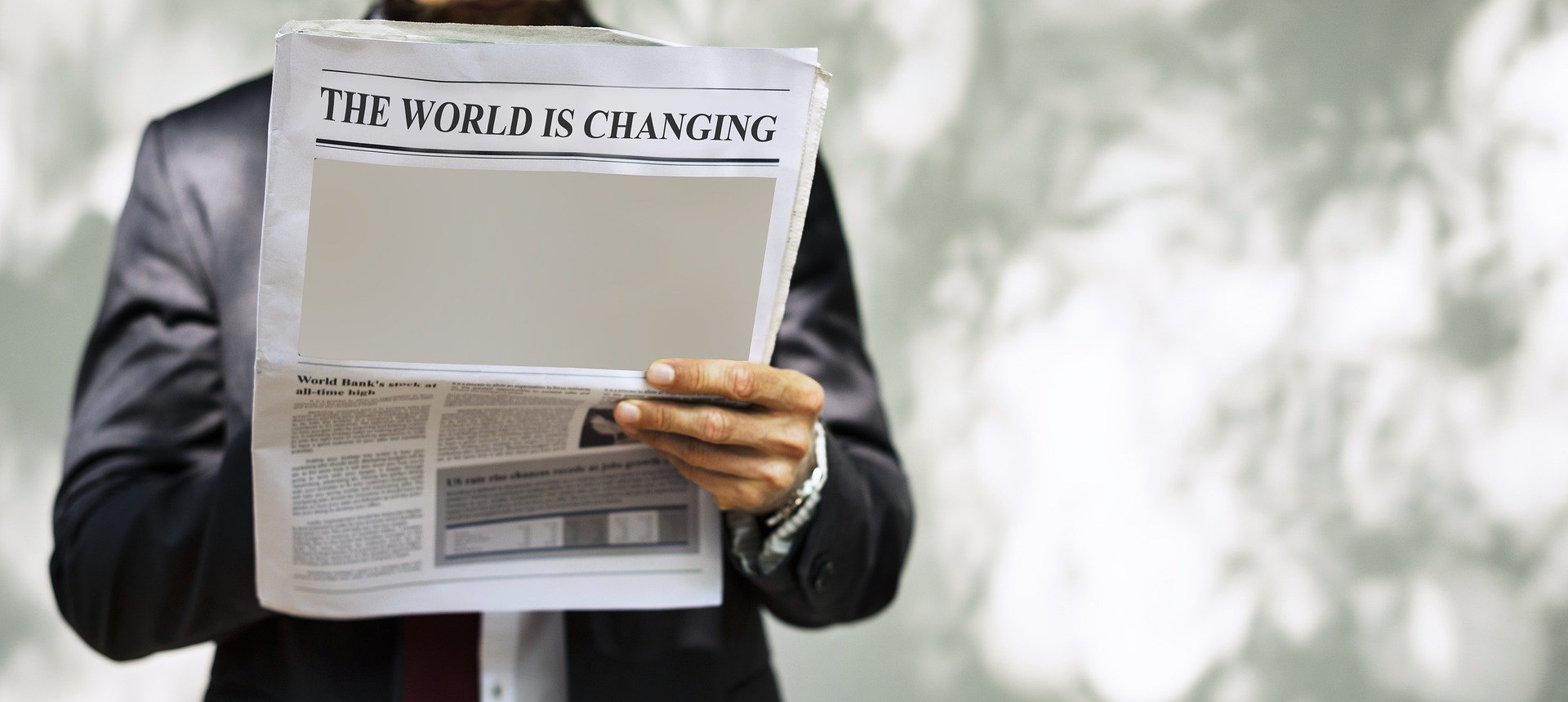
The coronavirus crisis has us firmly in its grip, and the media is full of news about the virus. Reliable and credible information is undoubtedly necessary, but the coverage is often very one-sided. This raises the question: Is it really necessary to report the number of new infections and deaths every day? Does it make sense to devote pages upon pages daily to developments in other countries—while leaving out other important news?
In its information sheet titled “How to Cope Well with Home Isolation and Quarantine,” the Austrian Psychological Association writes: “Be mindful of your media consumption regarding COVID-19 and limit it. Being constantly confronted with certain images and descriptions—even when conveyed by reputable media outlets—is not helpful, but rather stressful.”
[av_heading heading='Learned Helplessness' tag='h3' style=" size=" subheading_active=" subheading_size='15' padding='10' color=" custom_font=" admin_preview_bg="][/av_heading]
“Only bad news is good news” is one of the guiding principles of journalism. One explanation for this is that, over the course of evolution, we have been programmed to place greater weight on negative information than on positive, because that ensured our survival. However, it is no longer the case that a saber-toothed tiger lurks around every corner. On the contrary—our world is safer than ever, even if some politicians and media outlets like to portray it otherwise. Bad news desensitizes us, leads to resignation, and—even worse—to fear and helplessness.
“If we are constantly bombarded with news of what’s going wrong in our world, it not only leads to an overly negative view of the world and potentially chronic stress that can make us sick. It also leaves us feeling helpless,” writes neuroscientist Maren Urner in her book *Schluss mit dem täglichen Weltuntergang* (No More Daily Doomsday). And: “A well-known psychological phenomenon plays a role here: so-called learned helplessness.” Those who give up and feel helpless no longer believe they can bring about positive change. And in times of growing challenges like the climate crisis, that’s rather counterproductive.
[av_heading heading='Identifying Possible Solutions' tag='h3' style=" size=" subheading_active=" subheading_size='15' padding='10' color=" custom_font=" admin_preview_bg="][/av_heading]
A survey conducted by the polling firm forsa on behalf of the TV network RTL found that nearly half of those surveyed find the daily news too negative: 45 percent of respondents felt that TV news was “too problem-oriented,” 35 percent admitted that TV news made them anxious, and 80 percent wanted to see solutions presented. In a survey by the BBC World Service, about two-thirds of those under 35 said they “want news that offers solutions to problems; not just news that informs them about certain topics.”
This is where constructive or solution-oriented journalism comes in—a term coined by Ulrik Haagerup. As the former head of news at Danish Broadcasting Corporation, he deliberately sought out constructive angles in the news that would give people hope. He wanted to portray the full picture of reality, rather than just reporting the day’s bad news. This concept paid off: viewership ratings for news programs rose during his tenure. “Do we see the world with both eyes, or only with the eye that wants to create the best story?” the media professional asks in his book *Constructive News*. Constructive journalism does not mean seeing the world through rose-colored glasses or focusing exclusively on positive news. It’s about thinking beyond problems and challenges and pointing out possible solutions. This type of reporting aims to encourage personal responsibility and inspire courage.
[av_heading heading='Environmental awareness protects against disease' tag='h3' style=" size=" subheading_active=" subheading_size='15' padding='10' color=" custom_font=" admin_preview_bg="][/av_heading]
Back to the COVID-19 crisis: This one-sided coverage also means that other issues are being severely neglected; the climate crisis and species extinction—and potential solutions—seem to have vanished from the public eye. Only sporadically in recent weeks have news reports addressed, for example, the World Meteorological Organization’s latest climate report or UNESCO’s World Water Report. The latter states that climate change leads to reduced water availability and poorer water quality. Conversely, effective water management contributes to climate protection.
It is already clear that the coronavirus crisis will bring about many changes and may have a positive impact on how we view environmental and climate protection in the future. The history of the coronavirus’s spread is particularly interesting: it originated at a market in Wuhan, China, where wild animals were sold; the disease was most likely transmitted by an animal. Such infectious diseases that cross the species barrier are called zoonoses. Zoologists have now discovered that in undisturbed rainforests, where numerous animal species are well mixed, viruses have a harder time finding suitable hosts. Sooner or later, this leads to a halt in the spread. In habitats disturbed by humans, on the other hand, there are fewer species, and the virus has an easier time spreading. The conclusion: environmental protection and the prevention of rainforest deforestation are the best protection against zoonoses.
Connections like these are often missing in many media outlets, including in coverage of the environmental and climate crisis. To establish constructive reporting, however, we would need independent media that are not funded by political parties—and that do not exploit the prevailing uncertainty surrounding a virus to lull media consumers into a state of shock through one-sided reporting.
Newspapers and magazines such as Perspective Daily, Option, and Original Magazin show that there is another way. We could read these articles as well and share them on social media.
Besides, don’t just sit back and watch! We can reach out to the media directly, for example by writing letters to the editor or posting comments on social media.
[av_promobox button='no' label='Click me' link='manually,http://' link_target="" color='theme-color' custom_bg='#444444' custom_font='#ffffff’ size=’large’ icon_select=’no’ icon=’ue800’ font=’entypo-fontello’ box_color=“ box_custom_font=’#ffffff’ box_custom_bg=’#444444’ box_custom_border=’#333333’ admin_preview_bg=“]
 Climate crisis, environmental destruction, species extinction: Numerous studies show that we don’t have much time left to turn things around. While the economy continues to prioritize unchecked growth and politicians remain deadlocked, more and more people around the world are rising up to protest and advocate for the urgent change that is needed. This guide shows what each individual can do and how we can push politicians to take action. this book.
[/av_promobox]
[av_promobox button='yes' label='More about this person' link='manually,https://susanne-wolf.com/' link_target='_blank' color='theme-color' custom_bg='#444444' custom_font='#ffffff’ size=’medium’ icon_select=’no’ icon=’ue800’ font=’entypo-fontello’ box_color=” box_custom_font=’#ffffff’ box_custom_bg=’#444444’ box_custom_border=’#333333’ admin_preview_bg=”]
About Susanne Wolf
 Freelance journalist and author specializing in the environment, climate, and sustainability. In her work, she emphasizes a constructive approach that inspires confidence and encourages personal initiative. A maverick, activist, and mother of two.
[/av_promobox]