Where I grew up, in western Austria, people didn’t go for a Sunday morning drink after Mass—that would have been unethical, wasteful. The neighbors would sit together after Mass—without alcohol—and talk about everything under the sun. As soon as the conversation turned to God, the cliché would come up: “What God has separated with a mountain, man should not connect with a tunnel.” And just like that, we’re right in the thick of the topic: What do we actually mean when we talk about regionality?
[av_heading heading='Regionality Has Many Faces' tag='h3' style="" size="" subheading_active="" subheading_size='15' padding='10' color="" custom_font="" admin_preview_bg=""][/av_heading]
Let me explain the cornerstones of regional identity by sharing a few thoughts about the region where I grew up:
The space created in this way fosters personal resilience and thereby enables regional resilience.
[av_heading heading='Why do I talk so much about relationships and emotional health?' tag='h3' style=" size=" subheading_active=" subheading_size='15' padding='10' color=" custom_font=" admin_preview_bg="][/av_heading]
It is likely that only people who are healthy in this sense are capable of cooperating in the long term.
We are only at the beginning of a vibrant regional identity. We are nothing more than the harbingers of what is to come.
It will take a new generation to develop new forms of regional economic activity—cooperative economic models. Participation will be the way forward. No longer based on competition, but on radical solidarity—only in this way can we meet the challenges of the future.
This new way of interacting will serve as the foundation on which mutual trust and commitment can grow. There can be no trust without commitment.
[av_heading heading='Trust: The Capital of the Future' tag='h3' style="" size="" subheading_active="" subheading_size='15' padding='10' color="" custom_font="" admin_preview_bg=""][/av_heading]
In America, there is a branch of philosophy that focuses on trust. The bottom line is this: trust is the greatest asset, the greatest economic asset. Years ago, these philosophers predicted that powerful, all-powerful corporations would implode if they merely toyed with the trust of consumers and users and if they deceived consumers. Today, we are witnessing exactly what is happening and what will continue to happen when trust is abused.
[av_heading heading='Local sourcing goes hand in hand with sustainability' tag='h3' style="" size="" subheading_active="" subheading_size='15' padding='10' color="" custom_font="" admin_preview_bg=""][/av_heading]
[av_table purpose='pricing' pricing_table_design='avia_pricing_default' pricing_hidden_cells="" caption="" responsive_styling='avia_responsive_table'] [av_row row_style='avia-heading-row'][av_cell col_style=""]environmental[/av_cell][av_cell col_style=""]economic[/av_cell][av_cell col_style=""]social[/av_cell][/av_row] [av_row row_style=""][av_cell col_style=""]
[/av_cell][av_cell col_style="]
[/av_cell][av_cell col_style="]
[/av_cell][/av_row] [av_row row_style=""][av_cell col_style=""]➞ High-quality food can only come from an ecologically rich region with healthy soils and animals.[/av_cell][av_cell col_style=""]➞ Only an economically stable region can create living conditions that prevent people from leaving.[/av_cell][av_cell col_style=""]➞ Only in a socially vibrant region can a sense of community among people develop, giving rise to resilience.[/av_cell][/av_row] [/av_table]
[av_heading heading='Local Food and Our Diet' tag='h3' style=" size=" subheading_active=" subheading_size='15' padding='10' color=" custom_font=" admin_preview_bg="][/av_heading]
Local production also means food sovereignty.
In the near future, we will face food supply problems.
The reasons: Global warming—CO2 emissions continue unabated. A major contributor to this is the protein consumption of high-yield livestock in agriculture. Most of the feed is grown in third countries for Europe, which means that intensive, high-yield livestock farming requires additional land for protein cultivation that is at least half the size of all of Europe!
Other reasons include the energy consumption of agriculture, the dependence of industrial agriculture on the petroleum industry, herbicides, fungicides, insecticides—in short, the entire range of pesticides—synthetic fertilizers, feed additives such as propylene glycol, etc., all types of high-performance machinery used in agriculture, loss of soil fertility, humus loss, massive soil compaction caused by completely unsuitable machinery and equipment, massive loss of soil life in conventional agriculture, staggering loss of biodiversity due to intensified agriculture—and all of this against the backdrop of climate change and the rapidly growing global population.
By 2050, the world’s population is expected to reach 9.5 billion.
Simply to feed our population in the future, we need authentic—and actively practiced—regionalism. This is the only way we can achieve a form of food sovereignty. That is why we must start thinking regionally, acting regionally, and managing our economies regionally today, and strive for profound regional development.
This will be of great value to the public! After all, food sovereignty is the only way we can exercise our right to self-determination over our food. It is the only way we can have a say in what food we eat and what kind of agriculture is practiced for our benefit.
Small and medium-sized farms are far, far more productive than intensive farms. On an intensive dairy farm, the input-to-output ratio is just 0.37. The farm generates only 37 percent of what it has to spend.
“Investing in smallholder farming is considered the most promising and reliable way to combat hunger and minimize the negative environmental impacts of agriculture.”
Quote from the World Agricultural Report by the World Agricultural Council (International Assessment of Agricultural Knowledge, Science and Technology for Development, abbreviated as IAASTD)
In the future, only an agricultural system that is environmentally sustainable, based on solidarity, and participatory will be able to meet people’s nutritional needs—an agricultural system that enriches the local community, is economically viable, and strengthens the region’s social fabric.
Authentic regional character stands for: vitality, a sense of home, diversity, beauty, distinctiveness, unique flavor, tradition, a connection to one’s roots, and responsible action.
Authentic regionalism serves as both a counterpoint and a refuge for all those who must pay the price of modernity—the loss of a sense of home, feeling uprooted, and living a fast-paced life. All of this gradually leads to feeling overwhelmed and a loss of direction.
Instead, there is the original, vibrant space of connection: the region, the place where one can find oneself again. The region as a space of well-being—a place of rediscovery, a place where one is allowed to reconnect.
Acting locally out of a sense of responsibility for oneself and others, and out of a sense of responsibility for future generations.
[av_promobox button='yes' label='About the Author' link='manually,https://lampert-nachhaltigkeit.com/werner-lampert/' link_target='_blank' color='theme-color' custom_bg='#444444' custom_font='#ffffff' size='snmall' icon_select='no' icon='ue800' font='entypo-fontello' box_color='' box_custom_font='#ffffff' box_custom_bg='#444444' box_custom_border='#333333' admin_preview_bg='']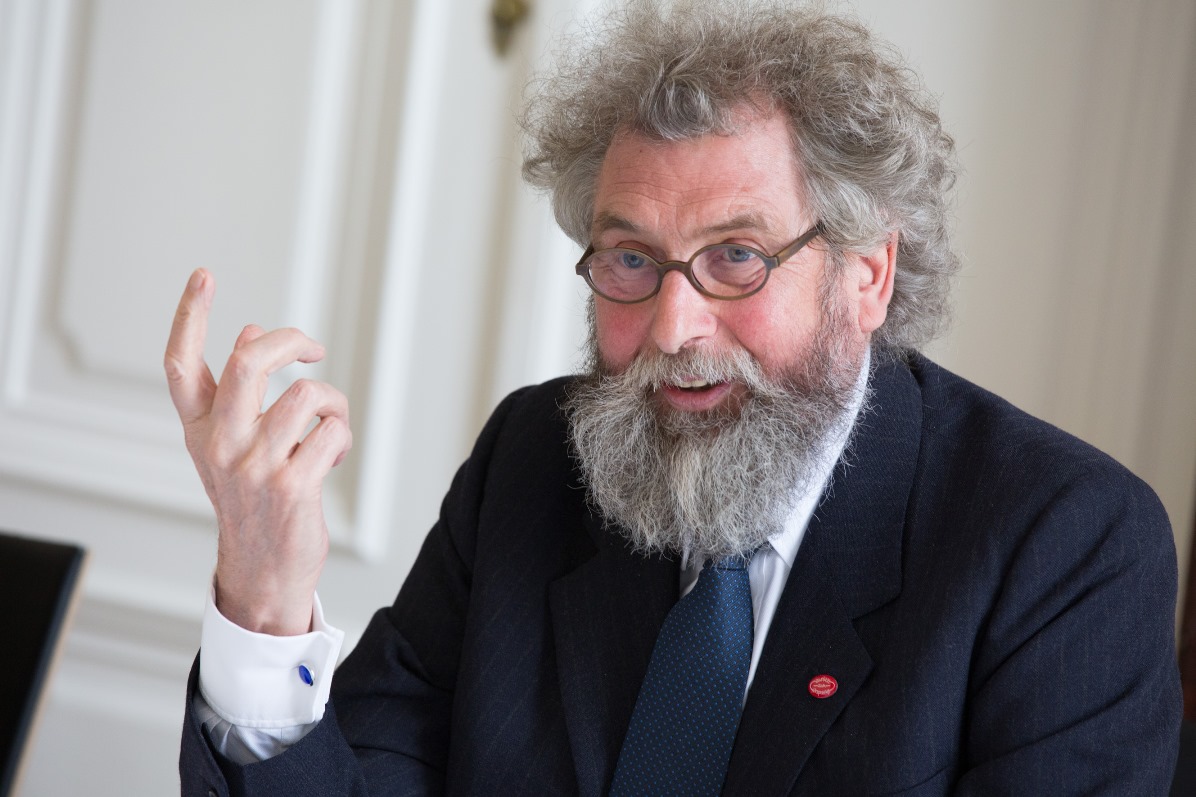 Werner Lampert (born in 1946 in Vorarlberg, Austria) is considered one of the pioneers in the field of sustainable products and their development in Europe. This organic pioneer has been deeply involved in organic farming since the 1970s. With Back to the beginning (Hofer) and Ja! Natürlich—he developed two of the most successful organic brands in the German-speaking world.
[/av_promobox]