We are currently experiencing the highest unemployment rate since World War II, and many self-employed people are fearing for their livelihoods. What is behind this? And is there still hope for a (economic) happy ending?
Crises are an inherent part of human existence. Even in recent decades, we have not been immune to them. Many of these crises—and especially those that garnered the most media attention—were of an economic and sector-specific nature. We recall the year 2008, when the collapse of Lehman Brothers triggered a global economic and financial crisis. Six years earlier, the dot-com bubble finally burst, and by September 2002, less than 30 billion euros remained of the “New Economy’s” 235 billion euros in market value. The Nemax 50 stock index, introduced on the Frankfurt Stock Exchange in 1999, plummeted into the abyss, just like the hopes and expectations for the internet and the digital economy. Today: The real estate and financial markets are booming, and we can no longer imagine the global economy without Microsoft, Facebook, Google, Amazon, and Apple.
What fundamentally distinguishes the current coronavirus crisis from the two examples mentioned above is that the resulting economic crisis was triggered by a viral pandemic. It was only through the socio-political measures—essentially the secondary effects—that it developed into the largest global economic crisis since World War II. From an economic perspective, this origin is both good and bad. Bad, because the current crisis does not have purely sectoral effects on the economy and—the longer the measures must be maintained—will extend to all sectors. Good, because it is not an economic crisis per se, and most global economies, and especially Austria, have been growing steadily since 2016, including falling unemployment rates.
[av_heading heading='What can we learn from past crises?' tag='h3' style=" size=" subheading_active=" subheading_size='15' padding='10' color=" custom_font=" admin_preview_bg="][/av_heading]
What we can learn from past experience for the immediate future is that the economy will rebound once these measures are lifted, and that the workers who have been laid off will gradually be needed by companies again. It is clear that the timeframe for returning to pre-coronavirus economic activity will correlate with the duration of lockdown-like measures. When we will experience this recovery will depend primarily on the availability of affordable medication (Step One) and a globally available SARS-CoV-2 vaccine (Step Two). The WHO is keeping a low profile regarding the timeline for research. A globally available and clinically tested medication is not expected before summer 2020, and a vaccine likely not until late 2021 at the earliest.
For me, however, the most important question—besides “whether” and “when” the economy will rebound—is what we can learn from the current extraordinary situation. In other words, how can we use the crisis as an opportunity to emerge from it even stronger and enriched by new experiences? Crisis situations require creativity and courage on the part of individuals. Creativity, in turn, fosters innovation. Innovations are the driving force behind overcoming crisis situations (more quickly).
Governments could gain concrete insights by examining the question of how sensible it is, from an economic standpoint, to outsource the production of system-critical goods—such as medical products—to Asia.
Every day, we are now seeing what preschool teachers and educators do, and how valuable caregivers, doctors, and other essential workers are to us as a society. Better financial and social conditions for nurses will come by 2030 at the latest, just as the universal basic income will. But perhaps much sooner now. We do not, however, “owe” this development to the coronavirus, but rather to the ongoing digitization and automation of economic processes. The current crisis is merely acting as an accelerator here.
Work-Life Balance: Many people are experiencing what it’s like to live and work more closely within their family circle again. Digitalization offers us unprecedented freedom in terms of time and space—freedoms we haven’t fully appreciated during the crisis. But we’ll surely appreciate them afterward!
This phase is an extremely positive time for the environment, which is benefiting from the sharp decline in mobility. However, this reduced mobility does not limit communication with colleagues and business partners. This is mainly due to the widespread adoption of Zoom and the availability of sophisticated video conferencing tools, combined with widespread broadband internet access.
[av_heading heading='Looking to the Future with Optimism' tag='h3' style=" size=" subheading_active=" subheading_size='15' padding='10' color=" custom_font=" admin_preview_bg="][/av_heading]
Can we use the points described above to develop new and economically realistic scenarios that will enable us to meet the goals of the 2030 Climate Action Plan? And can we, as individuals and as economies, derive values from these scenarios that will lead to a better, more livable, and healthier life for all of us?
In my work as a consultant and keynote speaker on trends and innovation management, I begin every project and every presentation by addressing the psychological aspect. In my experience, one’s personal mindset is crucial to how one experiences a crisis and what one makes of it. Only by adopting a positive mindset—one that embraces the changed circumstances—can we even begin to see and take advantage of the opportunities and avenues for growth that present themselves.
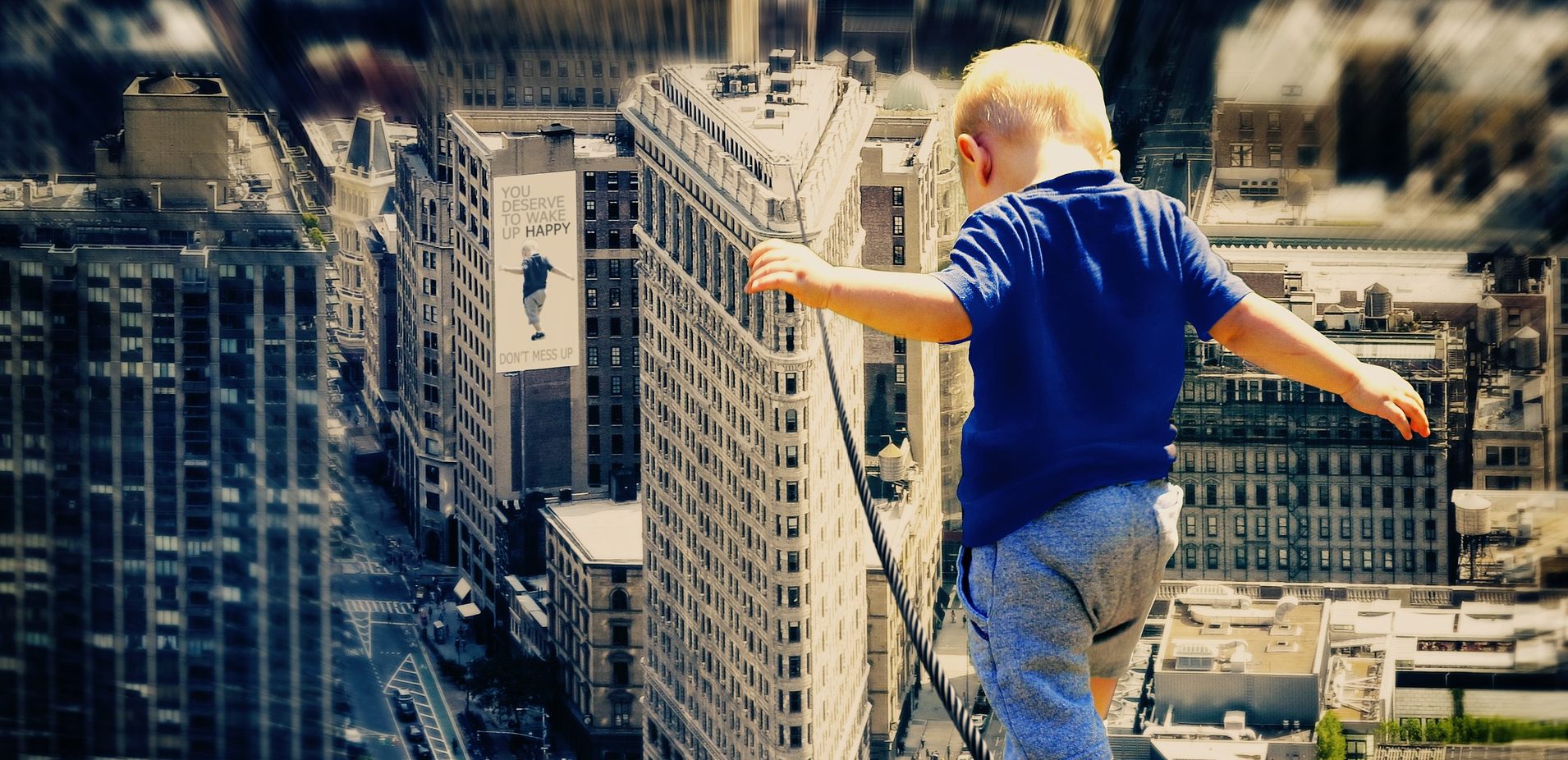
So if we want to seize this crisis as an opportunity—as individuals, entrepreneurs, and economies—it won’t do us much good to mourn the “normality” of the past; instead, we need to carry the positive lessons and opportunities we’ve gained from this phase into the post-coronavirus era. And yes, it hurts to be yanked out of your comfort zone. It hurts, just like a toddler falling over and over again while taking their first steps. But in the end, it will all have been worth it. Once we’ve learned to walk upright!
[av_promobox button='yes' label='More about this person' link='manually,https://www.lukasroessler.com/lukas-roessler/' link_target='_blank' color='theme-color' custom_bg='#444444' custom_font='#ffffff’ size=’medium’ icon_select=’no’ icon=’ue800’ font=’entypo-fontello’ box_color=“ box_custom_font=’#ffffff’ box_custom_bg=’#444444’ box_custom_border=’#333333’ admin_preview_bg=“]
About the Author Mag. Lukas Rössler, MBA
 After earning his degree in business administration and becoming a trends and innovation expert (in Vienna and Toronto), he gained experience at the storytelling agency Explore, where he worked with clients including Post AG, BEWAG, and Salinen Austria. In 2006, this digital native joined ORF Online as part of the leadership team for what was then Austria’s largest esports project, the ORF Ski Challenge.
In 2010, he founded the Innovators Agency fosbury_ (www.fosbury.at), through which he serves national and international clients such as Red Bull, Nike, Post Finance Swiss, Oracle, sIT solutions, Raiffeisen, United Optics, STRABAG Real Estate, Austrian Convention Bureau, Linzer City Ring, ESB Marketing Network, Salzburg Zoo, the Wanderhotel Tirol Group, and Xella. He authentically applies his diverse passions and expertise in digital marketing, marketing trends, digital storytelling, and experiential design to benefit his clients.
Lukas coined the term “Events 2.0,” a convergent approach that combines the best of both the online and offline worlds. Storytelling serves as the connecting link that blurs the boundaries between these two worlds. He also describes this concept in the book “The Business of Events Management” by John Beech, in which he co-authored the section on “Events 2.0.”
Lukas is constantly on the move throughout the German-speaking world, guiding companies, international corporations, and associations into the future and implementing convergent projects with his agency, fosbury_. In doing so, he keeps his finger on the pulse every day to identify new trends. As a keynote speaker and lecturer at universities (Vienna University of Economics and Business, Danube University Krems, Kufstein University of Applied Sciences, etc.), Lukas is on the road more than 30 days a year.
[/av_promobox]