Will it be a burger made from insect protein or pills containing all the essential nutrients? Or will many people simply have even less to eat, global hunger rise dramatically, and only a privileged segment of the industrialized world continue to eat as they have until now?
Forecasts predict a global population of about 10 billion people by 2050. That represents an increase of 3 billion people compared to 2010—or four times the population of Europe—who will need to be fed in addition to today’s population.
Knowing that enormous inequalities already exist worldwide, that soil degradation is advancing rapidly, that environmental pollution is on the rise, that we have already reached the limits of arable land, and that converting forests into farmland would only further accelerate climate change and species loss, it’s enough to make one feel quite uneasy. For what history and the present teach us is that resource scarcity leads to war, unrest, and suffering.
In industrialized nations, energy security is unlikely to be a major concern for some time to come, but declining prosperity and national security will be.
The ways out of the crisis have long been known; we just need to take them! The“Weltacker 2000m²”project is also convinced of this. The idea for the project was conceived in 2013, when the organizers were looking for a way to illustrate agricultural policy to the EU.
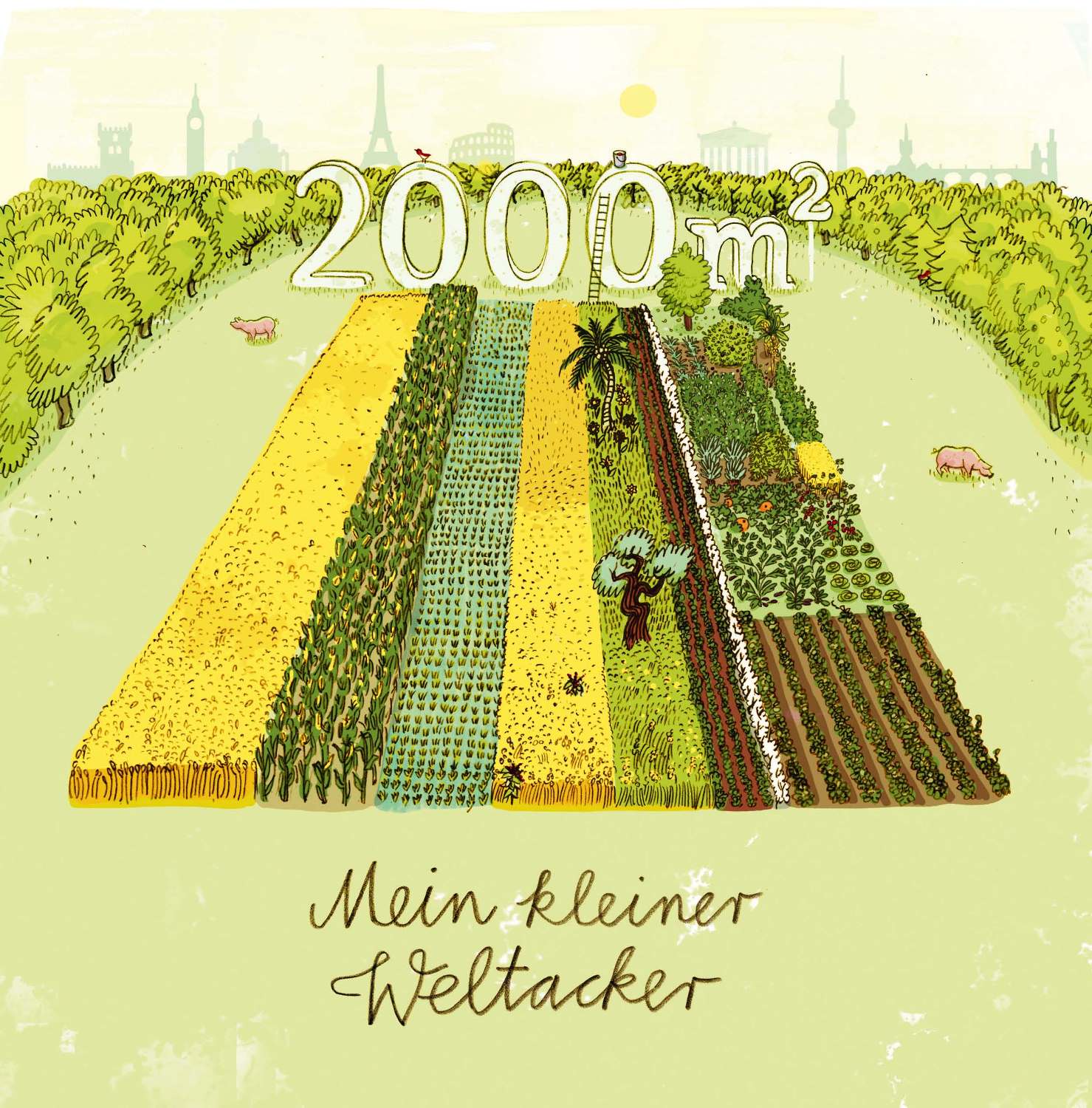
If you divide the 1.45 billion hectares of agricultural land used worldwide by the global population, you get 2,000 square meters per person. All the crops needed for food, clothing, and biofuel must grow on this land. An additional 3.55 billion hectares are available for grazing.
In theory , these areas are sufficient to feed everyone a balanced diet—even through organic farming—as scientists reported in *Nature Communications* in 2017. However, this is only true if meat consumption and food waste are drastically reduced. This is because feed for livestock is also grown on those 2,000 m², meaning that more than a third of the world’s grain harvest ends up in feed troughs.
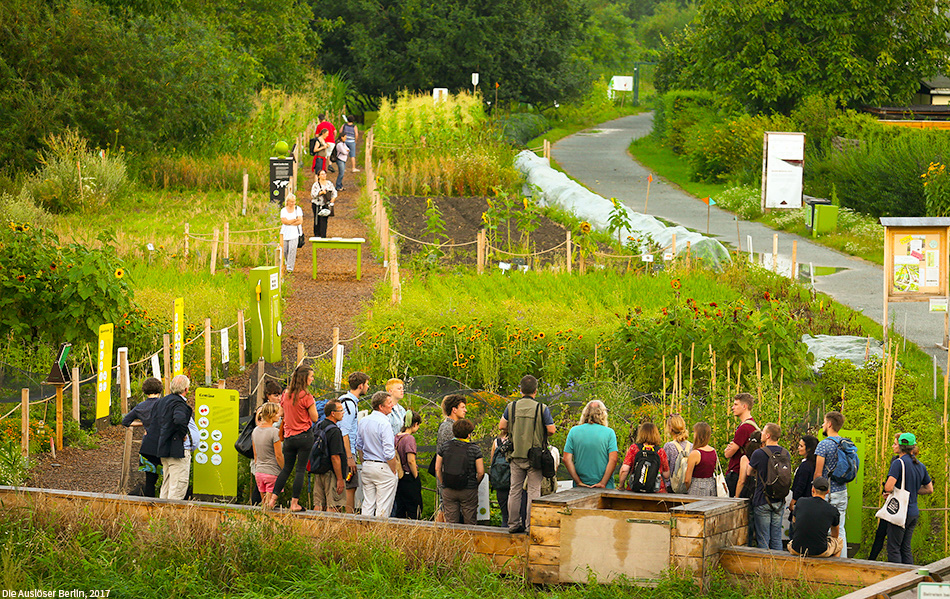
1.45 billion hectares—a figure that is almost impossible to imagine. In comparison, 2,000 square meters is a size we can grasp and comprehend. The “Weltacker 2000m²”project uses this scale to raise awareness about land area and its agricultural use. As a central element, the distribution of cropland worldwide is depicted across 2,000 m². For example, wheat is grown on 16 percent of the 1.45 billion hectares of agricultural land, which is why wheat also grows on 16 percent of the “Weltacker” site.
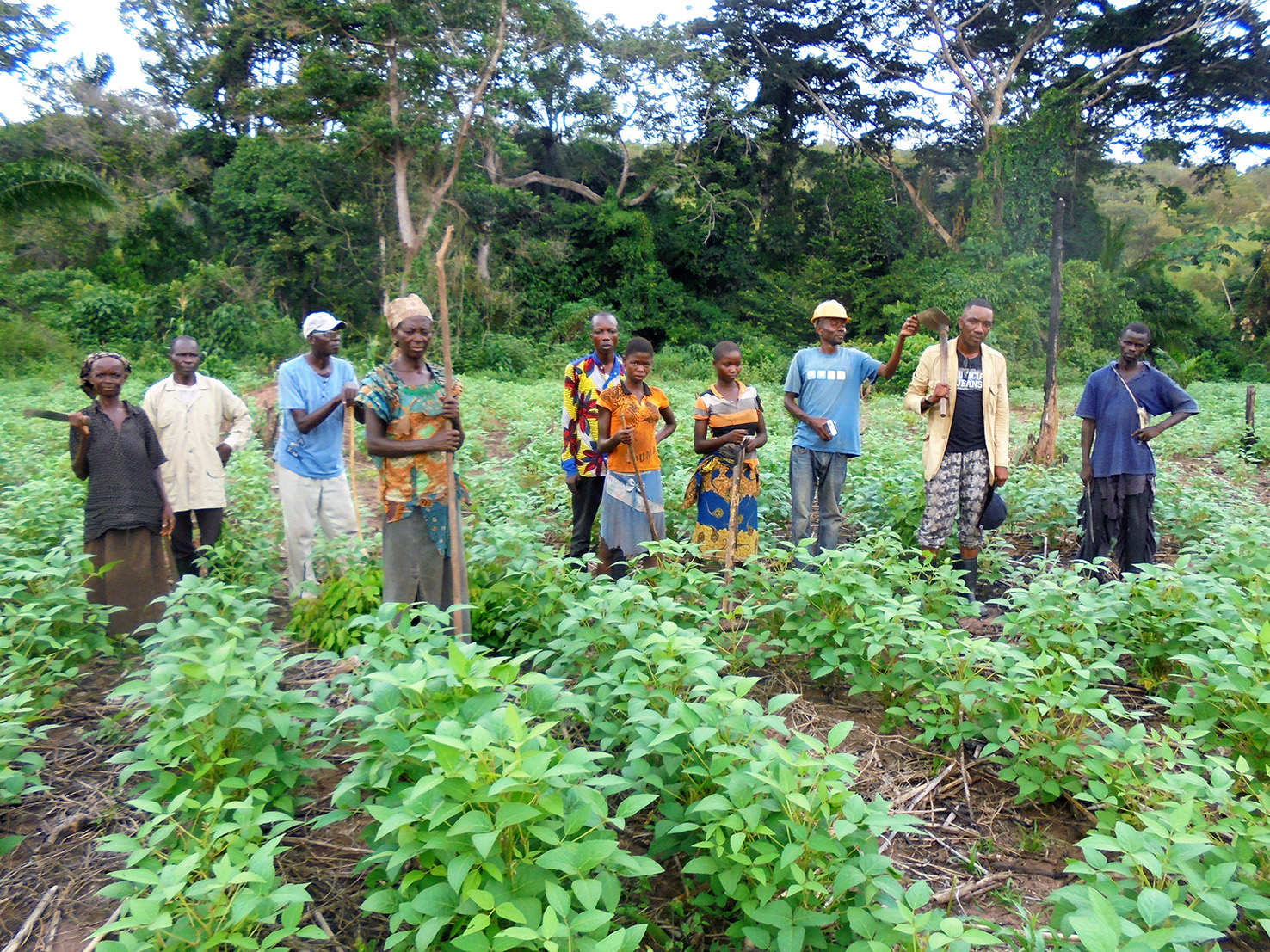
The first Weltacker was established in Berlin and has since inspired nine similar initiatives, including in the Democratic Republic of the Congo, Switzerland, France, and Sweden. What they all have in common is the goal of addressing the pressing challenges of global food production and encouraging visitors to reflect on their consumption habits.
“People need to understand that every meal, every cotton shirt, and every kilometer of biofuel has its origins in the field. We also want to use our field to create a connection between global structures and issues in agriculture and consumers,” says Carla Giardini from the Weltacker office in Berlin.
In a conversation with Bastiaan Frich, vice president of the Urban Agriculture Network Basel and founder of the Swiss Weltacker, it becomes clear just how well this works. With palpable enthusiasm in his voice, he tells the story of a little girl who, after visiting the Swiss Weltacker, suddenly started eating vegetables again at home because she now knew how they grow and where they come from. Even more impressive is the transformation of a woman whose favorite hobby was shopping and for whom consumption served as a substitute for satisfaction. After visiting the Weltacker, she decided to convert part of her lawn into a vegetable garden and is now investing the time she previously spent in shopping malls in a completely new way.
“It’s wonderful to see people change their consumption habits through direct experience and by developing practical skills that are encouraged and fostered right here on the ground,” says Bastiaan Frich, filled with joy.
[av_heading heading='How Can We All Be Fed?' tag='h3' style=" size=" subheading_active=" subheading_size='15' padding='10' color=" custom_font=" admin_preview_bg="][/av_heading]
We all realize that things cannot go on as they have been, that we must stop throwing away food on a massive scale and burning it to power transportation. We need to send the animals back to pasture instead of stuffing them with corn, grain, or soy.
The transition from knowledge to action can sometimes be difficult, but visiting a Weltacker makes it easier. Maybe there’s one near you? Spend a few hours with inspiring visionaries and look forward to a whole new perspective on food.
Dr. Isabell Riedl has served as Sustainability Officer and worked in communications at Werner Lampert GmbH since 2012. She studied ecology at the University of Vienna, specializing in nature and landscape conservation and tropical ecology. Her dissertation focused on the importance of tree lines in agricultural areas for forest birds in Costa Rica. Throughout her life, she has been particularly dedicated to ecological sustainability. She is part of the editorial team of the online magazine “Nachhaltigkeit. Neu denken.”
[/av_promobox]
 About the Author