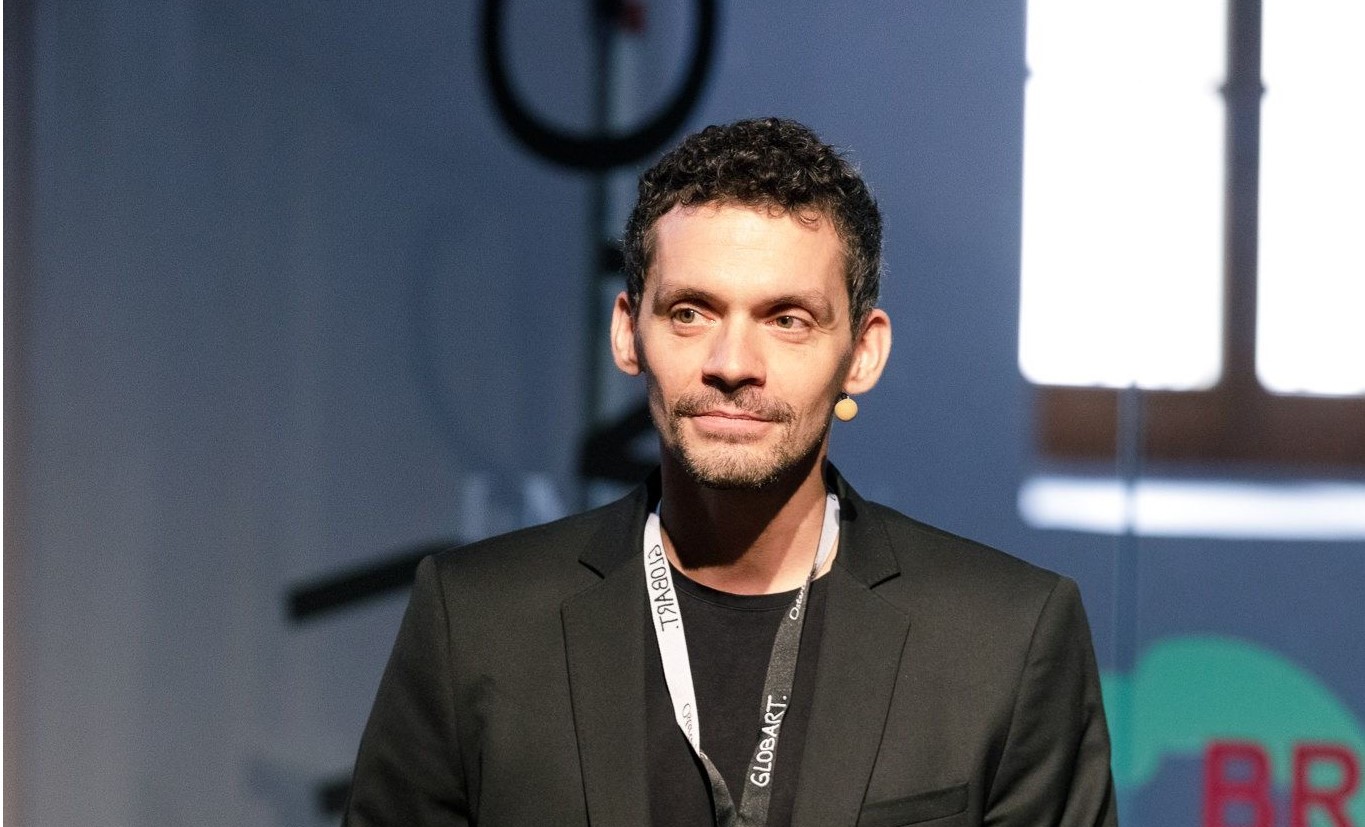
One day, humanity will colonize Mars—that is what visionaries are convinced of. But for now, we have only one planet; demand for raw materials is rising, and access to them is becoming more difficult. Furthermore, the impacts of resource use on the environment and people are increasing, and we are on the verge of exceeding planetary boundaries. This is confirmed by Stephan Lutter of the Vienna University of Economics and Business. Can these limits actually be measured? And what would an ecologically sustainable economic system of the future look like? An interview with the expert on sustainable resource use.
Our society functions like a human organism. Just like our bodies, social systems have a metabolism. In both cases, things come in and things go out—from water and food to air and raw materials. The problem with society is this: the more and the dirtier the substances we send through it, the greater the environmental impact. In ecological economics, we assume that there are planetary boundaries. We therefore take a close look at how much of what we use and whether we are reaching these limits.
The concept of planetary boundaries has identified nine categories. It shows that we have crossed the threshold for species extinction and the phosphorus cycle—phosphorus is a fertilizer in high demand in agriculture—and that we are in a very risky zone when it comes to climate change. Another point that emerges from the concept is that, when it comes to global water consumption, everything seems to be fine. This is a point where one can begin to discuss the matter. This is because it is difficult to define global limits for water, as regional resources vary greatly.
[av_promobox button='yes' label='Learn more' link='manually,https://lampert-nachhaltigkeit.com/2018/05/planetare-grenzen/' link_target='_blank' color='theme-color' custom_bg='#444444' custom_font='#ffffff' size='medium' icon_select='no' icon='ue800' font='entypo-fontello' box_color='' box_custom_font='#ffffff' box_custom_bg='#444444' box_custom_border='#333333' admin_preview_bg='']
What are the limits of our planet? In 2009, a team of 28 scientists led by Swedish resilience researcher Johan Rockström provided an answer to this question. Their concept of “Planetary Boundaries” defines the Earth’s ecological limits. It was updated in 2015. It encompasses nine dimensions: climate change, biosphere integrity, biogeochemical cycles, land-use change, chemical pollution, atmospheric aerosol pollution, ocean acidification, freshwater use, and stratospheric ozone depletion. Parts of the concept have been adopted as targets by international climate policy.
[/av_promobox]
On the one hand, there are territorial indicators. These measure resource consumption within a country—such asCO2 emissions or land use. On the other hand, there are consumption-based indicators. These ask: What resources were used along the value chains of the goods we consume in a country? Let’s take a car as an example. It contains aluminum. This is extracted from bauxite using highly energy-intensive processes, which in turn generate large amounts of waste and wastewater. So a car contains aluminum as a component; but if I calculate its so-called material footprint, I add to the mass of the aluminum all the raw materials used throughout the individual production steps, from the bauxite rock to the aluminum component.
My work, for example, addresses the following questions: How much water is contained in the agricultural products we consume in the EU? Where does it come from? And what is the state of the water supply in those regions? Here’s an example: If the water used to produce a food item comes from the Indus River basin in Pakistan, where water shortages are a year-round problem, then we as consumers are very likely contributing to that problem. So it’s always about keeping the big picture in mind—and then drawing conclusions from that regarding our behavior as consumers and in policy. Incidentally, water also plays a major role in other sectors: We are currently launching a five-year research project at WU in which I am focusing specifically on global water use in mining. In addition to the issue of water scarcity, water pollution is also of great significance here.
Of course, there are sectors that consume more water. However, the local impacts are particularly severe. It is therefore important to consider what happens to the products afterward. The mining sector supplies the manufacturing sector with its raw materials, and it is only after numerous stages that we hold the finished smartphone in our hands. A great deal depends on this—and with every smartphone, we have contributed to water pollution at a specific mine. The construction sector is a major user of raw materials. Here, too, we must ask: Which raw materials are used? What is the lifespan of the products? What insulation material is used? What about recycling? Once again, it is important to examine the entire value chain to identify potential savings.
The general public doesn’t know much about this. Only the term “urban mining” is somewhat familiar. This involves recovering raw materials from infrastructure that is no longer needed or from waste. This means, for example, that a smartphone would ideally be placed in the Ö3 “surprise bag,” and the metals would then be recycled. From a political perspective, the circular economy is a current concept. It’s about becoming more efficient and designing products right from the manufacturing stage so that they are easier to repair, have replaceable components, and are recyclable. In reality, however, many measures are still needed—including at the legal and political levels—to implement this sustainable concept.
It’s one piece of the puzzle. But I don’t believe that the circular economy alone is enough. The reason: Politically, the focus is primarily on increasing efficiency. But if I become more efficient, I can also sell more and end up using the same amount—or even more—raw materials than before; the much-cited rebound effect kicks in. Our goal must be to decouple economic growth from resource use. In other words, to grow while consuming fewer resources. Will that even work? That is currently the big question, and there is no clear answer yet.
“We need courageous people who can turn visions for a new economic system into reality.” Stephan Lutter, expert on sustainable resource use
There are currently many big ideas based on the premise that we need to rethink our entire system. Can an economy function without growth? So far, such concepts have not been put into practice, as no one wants to take responsibility for unforeseeable consequences. An economy without growth—and the associated reduced need for labor—is linked to other hotly debated topics such as the 30-hour workweek or the universal basic income. It takes courageous people to put such visions into practice, essentially “learning by doing.” That is my hope for the future.
Thank you very much for the interview!
[av_promobox button='no' label='Click me' link='manually,http://' link_target="" color='theme-color' custom_bg='#444444' custom_font='#ffffff’ size=’large’ icon_select=’no’ icon=’ue800’ font=’entypo-fontello’ box_color=“ box_custom_font=’#ffffff’ box_custom_bg=’#444444’ box_custom_border=’#333333’ admin_preview_bg=“]
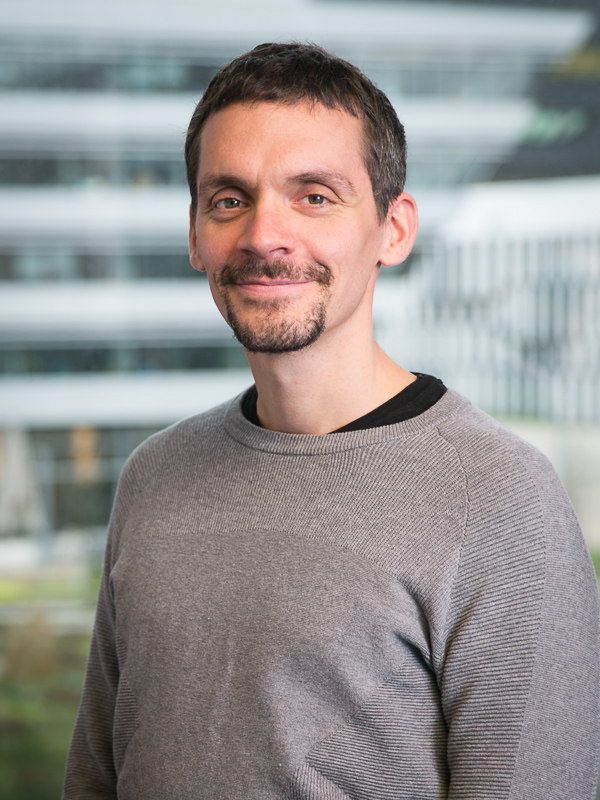
©Institute for Ecological Economics, Vienna University of Economics and Business
About Stephan Lutter
Dr. Stephan Lutter (born in Vienna in 1978) is the deputy head of the “Sustainable Resource Use” research group at the Institute for Ecological Economics at the Vienna University of Economics and Business. He studied agricultural engineering and water management as well as natural resource management at the University of Natural Resources and Life Sciences, Vienna, and Lincoln University in New Zealand. He subsequently earned his Ph.D. in ecological economics.
[/av_promobox]
[av_notification title=" color='silver' border=" custom_bg='#444444' custom_font='#ffffff' size='normal' icon_select='yes' icon='ue80b' font='entypo-fontello' admin_preview_bg="]
Source: Interview with Stephan Lutter on May 8, 2018
[/av_notification]
[av_notification title=" color='green' border=" custom_bg='#444444' custom_font='#ffffff' size='normal' icon_select='yes' icon='ue837' font='entypo-fontello' admin_preview_bg="]
Editorial article
[/av_notification]