
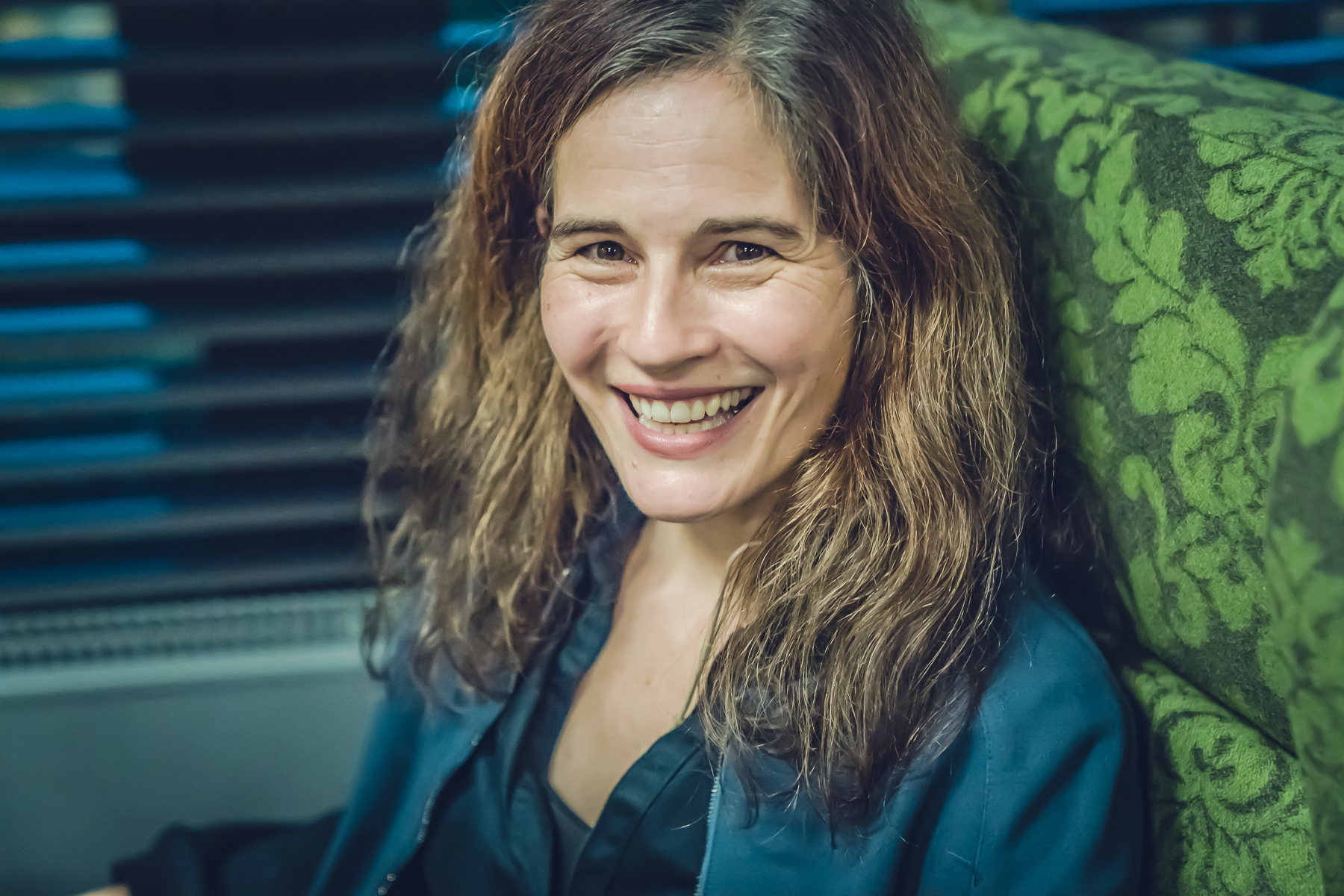
What happens inside us when we go through a crisis? Can we emerge from it stronger, or is that just a pipe dream? Do we have to view the crisis as an opportunity? Philosopher Natalie Knapp offers some answers—some of which may surprise you.
People experience these situations in very different ways. I know a pair of twins who, as young girls in Berlin during World War II, had to spend a lot of time in bomb shelters. They share the same history and the same family, and yet they both experienced the crisis very differently and emerged from it in very different ways. One is strong and full of life, the other remains depressed to this day. The experiences we have in such moments and how we evaluate them later have a great deal to do with our own perspective on life. But of course also with how existential the crisis is, how many different challenges there are to overcome at the same time, and what resources we can draw upon.
It is crucial to reassess our sense of uncertainty. After all, uncertainty does not mean we are doing something wrong; it simply means that something is unfolding in our lives or in our culture that we do not yet understand and for which we have not yet developed a routine. When we feel uncertain, we are called upon to blaze a completely new trail, and uncertainty is a helpful feeling for feeling our way forward step by step on new ground. We must constantly check whether the ground is still solid and, if necessary, change direction.
In times of crisis, much more can be achieved than usual because everyone involved recognizes the need for unconventional solutions and creative approaches.
Given the climate crisis, we are already living in a time when a great deal needs to change if humanity is to remain sustainable. But so far, far too little has happened because nobody likes to change their habits. That’s why it’s a huge opportunity to use the momentum of the COVID-19 crisis to initiate long-overdue changes toward a more sustainable way of living and doing business. Whether that will actually happen depends on many factors. It will depend heavily on whether government recovery programs are linked to climate programs.
The greatest danger in a crisis is that we wish for everything to quickly return to the way it was before, and so we invest a great deal of energy in ensuring that as little as possible changes. But the potential of instability lies precisely in the fact that it generates movement and makes change possible. So it is not at all a matter of knowing right now how things will proceed afterward, but rather of using this time of crisis to grow into a greater openness.
Crises are moments when life is renewed. Perhaps you remember Richard Linklater’s film *Boyhood*. There’s this wonderful final scene: the young man has moved out of his parents’ house and is off to college. He’s sitting outside on a hill with a girlfriend, and she says to him, “Everyone’s always saying, ‘Make something of your life, make the most of every moment. But I don’t know, somehow I think it’s the other way around. The moment does something to us.” This is especially true during times of transition or crisis. They transform us.
That is why the primary goal is not to get a handle on the upheaval, but rather to have an experience. Such experiences change the way we see the world, and from this inner transformation, something new emerges. This is not something we do, but something that happens to us. In these moments, we are the seed for the future; the moment makes use of us.
Unfortunately, the only way to break bad habits is to train yourself to adopt more helpful behaviors. This is because it is in the nature of the human brain to favor habits. For example, most people have gotten into the habit of comparing prices since childhood. Even when they realize that the price of a carrot—grown organically on a small farm—cannot be compared to that of a mass-produced supermarket carrot, their brain will still continue to compare the two prices and consider the organic carrot to be exorbitantly overpriced. This can only be overcome by making clear value-based decisions and acting differently until it becomes a way of life. Unfortunately, a few weeks aren’t enough for that. But it helps enormously to connect with like-minded people who have already made the desired attitude a habit.
My colleague Ariadne von Schirach once said: “Humans are the only animals capable of building a house they don’t want to live in.” We need to start building houses we actually want to live in. And that means taking action to make the world a better place. Every day.
The term “crisis” comes from Greek; it originally referred to the moment in a feverish illness when it is decided whether a person will emerge from the experience stronger or whether they will die. A crisis is a real challenge for the entire system. That’s why I actually don’t really like to talk about a crisis as an opportunity, because to many people that sounds as if you have to already know what the opportunity is right in the middle of the crisis. But at first, it’s simply a matter of getting through it somehow. And only much later will it become clear what has grown out of it.
The silence. When it settled in, I felt as though I had been waiting for it my whole life. This also means that people are no longer constantly thinking about shopping, and that consumer-oriented background noise in their minds has ceased. This has created an atmosphere that I find life-giving—a greater sense of space in the air, in our feelings, and in our minds. I would never have thought it possible that so many people could, in such a short time, refocus on things more essential than shopping and running errands.
And, of course, that the water in Venice’s canals is crystal clear and the fish have returned; that the sky above the Chinese city of Wuhan is clearer than it has been in decades; that nature recovers so quickly if we stop exploiting it; and that we are capable of changing faster than we realized. For me, these have been the most important lessons from this crisis so far.
[av_promobox button='no' label='Click me' link='manually,http://' link_target="" color='theme-color' custom_bg='#444444' custom_font='#ffffff’ size=’large’ icon_select=’no’ icon=’ue800’ font=’entypo-fontello’ box_color=“ box_custom_font=’#ffffff’ box_custom_bg=’#444444’ box_custom_border=’#333333’ admin_preview_bg=“]
About Dr. Natalie Knapp
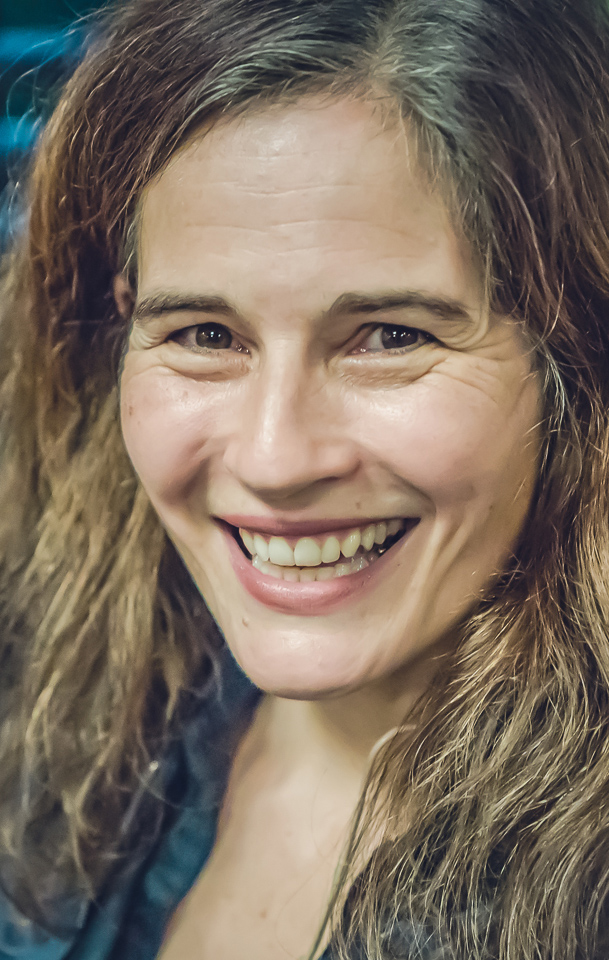
©Gaby Bohle
Dr. Natalie Knapp is a philosopher, speaker, and writer. She leads seminars, advises executives, and gives lectures on managing complexity, viewing crisis as an opportunity, and learning to embrace uncertainty. As an author of popular non-fiction books, Knapp has published “The Infinite Moment: Why Times of Uncertainty Are So Valuable,” “Compass for New Thinking: How We Can Find Our Way in a Confusing World,” and “The Quantum Leap of Thought: What We Can Learn from Modern Physics.”
[/av_promobox]
[av_notification title=" color='silver' border=" custom_bg='#444444' custom_font='#ffffff' size='normal' icon_select='yes' icon='ue80b' font='entypo-fontello' admin_preview_bg="]
Source: Interview with Natalie Knapp on April 10, 2020
[/av_notification]
[av_notification title=" color='green' border=" custom_bg='#444444' custom_font='#ffffff' size='normal' icon_select='yes' icon='ue837' font='entypo-fontello' admin_preview_bg="]
Editorial article
[/av_notification]