

Sarah Schill: Sometimes it really does feel like giving up. But that doesn’t help anyone. That’s why I consciously choose, time and again, to focus on what is possible, on positive developments, and on initiatives and people who want to make a difference. We often focus too much on what isn’t working—or on what others are doing wrong, in our eyes. In the long run, that makes us feel powerless and constricted in our hearts. I try to see what I can do myself. And that’s a lot.
[av_hr class='custom' height='50' shadow='no-shadow' position='center' custom_border='av-border-thin' custom_width='100%' custom_border_color=" custom_margin_top='1px' custom_margin_bottom='20px' icon_select='no' custom_icon_color=" icon='ue808' font='entypo-fontello' admin_preview_bg="]
Schill: I think it challenges many people’s sense of reality when you question things or try to change them. If one were to view this positively, the logical consequence would also be to rethink or even change one’s own behavior. That’s uncomfortable—and, in some cases, even frightening. After all, supposed truths and beliefs provide a sense of security. So dismissing or criticizing the whole thing protects one’s own reality in a way. On top of that, there’s a tradition of mocking so-called “eco-warriors,” which the industry is only too happy to fuel. Those who ask questions are, when in doubt, less willing to buy what’s being touted as worth buying. On the other hand: Some people who live sustainably practically invite others to distance themselves from their lifestyle with a latent condescending air of superiority and a morosely raised moral finger. The more positive and undogmatic such a lifestyle appears, the more I show what is beautiful and enriching about it, the less justification is needed.
[av_hr class='custom' height='50' shadow='no-shadow' position='center' custom_border='av-border-thin' custom_width='100%' custom_border_color=" custom_margin_top='1px' custom_margin_bottom='20px' icon_select='no' custom_icon_color=" icon='ue808' font='entypo-fontello' admin_preview_bg="]
Schill: “There’s no such thing as ‘the’ vegan, just as there’s no such thing as ‘the’ meat-eater. But I think it makes sense to take things a step further—beyond animal welfare and, especially, beyond the pursuit of the perfect, eternally youthful body.” I consider living a vegan lifestyle and subsisting exclusively on imported tropical fruits and “superfoods” or on energy-intensive, plastic-wrapped meat substitutes to be just as problematic as thoughtlessly consuming animal products.
[av_hr class='custom' height='50' shadow='no-shadow' position='center' custom_border='av-border-thin' custom_width='100%' custom_border_color=" custom_margin_top='1px' custom_margin_bottom='20px' icon_select='no' custom_icon_color=" icon='ue808' font='entypo-fontello' admin_preview_bg="]
Schill: Phew . There are so many good and important documentaries. Some of the ones that really opened my eyes were:
[av_hr class='custom' height='50' shadow='no-shadow' position='center' custom_border='av-border-thin' custom_width='100%' custom_border_color=" custom_margin_top='1px' custom_margin_bottom='20px' icon_select='no' custom_icon_color=" icon='ue808' font='entypo-fontello' admin_preview_bg="]
Schill: There are so many different projects, each one exciting and inspiring in its own right. I’m most inspired by projects that look beyond our immediate, “small” world: Valentin Thurn’s“Foodsharing” initiative is one such project for me, because it challenges the idea of perpetual growth. After all, growth here in our part of the world means that we enjoy our prosperity at the expense of the world’s poor. Buying more and more organic products, constantly producing new “fair trade” fashion… won’t fundamentally change the scarcity of resources or the system itself. Environmental protection and animal welfare are, of course, important issues—but there are people who are starving, who live in war zones and come to us as refugees. Projects that take this reality into account in some way and therefore strive for a fundamental shift in thinking really inspire me.
[av_hr class='custom' height='50' shadow='no-shadow' position='center' custom_border='av-border-thin' custom_width='80%' custom_border_color=" custom_margin_top='1px' custom_margin_bottom='20px' icon_select='no' custom_icon_color=" icon='ue808' font='entypo-fontello' admin_preview_bg="]
Schill: In most cases, yes. Almost all of my friends are interested in my thoughts or insights, and we talk about them a lot. With some friends or acquaintances, I avoid the subject because I know it won’t lead anywhere. And, of course, new people join the conversation as well. So overall, it’s clearly more of a gain than a loss.
[av_hr class='custom' height='50' shadow='no-shadow' position='center' custom_border='av-border-thin' custom_width='100%' custom_border_color=" custom_margin_top='1px' custom_margin_bottom='20px' icon_select='no' custom_icon_color=" icon='ue808' font='entypo-fontello' admin_preview_bg="]
Schill: For me, too, the biggest motivation is simply how good it makes me feel: local, seasonal fruits and vegetables, for example, taste better, are good for me, and heighten my anticipation of the changing seasons. Aside from that, I try to stay mindful. Sometimes I’m inconsistent—but at least I know what I’m doing now. And of course, it helps to keep exploring the topic through conversations, books, and movies. When the issues—and the people engaged with them—become part of everyday life, it happens quite naturally for the most part.
[av_hr class='custom' height='50' shadow='no-shadow' position='center' custom_border='av-border-thin' custom_width='100%' custom_border_color=" custom_margin_top='1px' custom_margin_bottom='20px' icon_select='no' custom_icon_color=" icon='ue808' font='entypo-fontello' admin_preview_bg="]
Schill: There are many things I’m experimenting with—perhaps not as clearly defined as the projects I mentioned, but definitely inspired by them. One idea—still quite vague—involves a collaborative initiative focused on reducing consumption. I’m also mulling over a few other topics. But it’s all still too vague to talk about. Overall, I’m trying to live more honestly and courageously in various aspects of my life. Not fooling myself and facing my fears or my own reluctance to think and act in uncomfortable ways is a rather lengthy personal experiment with many setbacks. But it’s worth it.
[av_hr class='custom' height='50' shadow='no-shadow' position='center' custom_border='av-border-thin' custom_width='100%' custom_border_color=" custom_margin_top='1px' custom_margin_bottom='20px' icon_select='no' custom_icon_color=" icon='ue808' font='entypo-fontello' admin_preview_bg="]
Schill: I have my reservations about guiding principles. People live in different situations and face different constraints, which is why I can only start with myself and my own specific reality.
For me, it all starts with responsibility: a community in which people take responsibility for one another, but above all for their own thoughts and actions—a community where the focus isn’t on blaming others for one’s own misfortune or making one’s own happiness dependent on others. This has a lot to do with citizens’ maturity—that is, a certain level of social, emotional, and intellectual development. Of course, it also has to do with a certain level of prosperity, a functioning healthcare system, and enough to eat. Precisely because we have these prerequisites, we should take action.
We’ve been given such wonderful hearts and minds—let’s make the most of them.
[av_hr class='custom' height='50' shadow='no-shadow' position='center' custom_border='av-border-thin' custom_width='100%' custom_border_color=" custom_margin_top='1px' custom_margin_bottom='20px' icon_select='no' custom_icon_color=" icon='ue808' font='entypo-fontello' admin_preview_bg="]
[av_promobox button='no' label='Click me' link='manually,http://' link_target="" color='theme-color' custom_bg='#444444' custom_font='#ffffff’ size=’large’ icon_select=’no’ icon=’ue800’ font=’entypo-fontello’ box_color=“ box_custom_font=’#ffffff’ box_custom_bg=’#444444’ box_custom_border=’#333333’ admin_preview_bg=“]
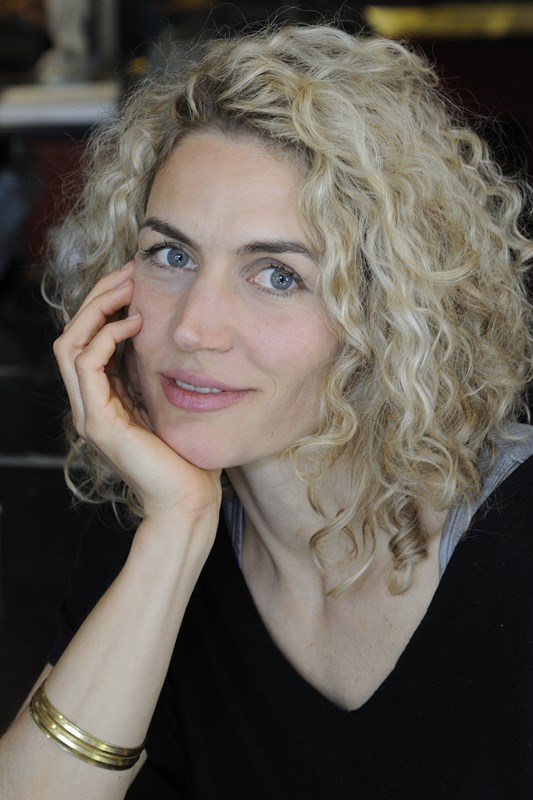
Sarah Schill initially studied film production in Berlin and worked on various projects in the fields of feature films and documentaries until she decided in 2006 to devote herself to writing. Since then, she has worked as a screenwriter for film and television, as well as an editor and television journalist. Driven by a desire to better understand certain social ills and to do something about them, she undertook various personal experiments on the topic of sustainability. This led to the non-fiction book “Anständig leben” (Living Decently), which was published by SüdWest Verlag in the spring of 2014. She lives with her husband and son in Munich and Berlin.
[/av_promobox]
[av_promobox button='yes' label='Buy Now' link='manually,http://www.randomhouse.de/Paperback/Anstaendig-leben/Sarah-Schill/e424336.rhd' link_target='_blank' color='theme-color' custom_bg='#444444' custom_font='#ffffff’ size=’medium’ icon_select=’no’ icon=’ue800’ font=’entypo-fontello’ box_color=“ box_custom_font=’#ffffff’ box_custom_bg=’#444444’ box_custom_border=’#333333’ admin_preview_bg=“]
 Order your copy now from a small bookstore and help keep them in business.
[/av_promobox]
[av_video src='https://youtu.be/0gBF_eEziZk' format='16-9' width='16' height='9']
[av_notification title=" color='custom' border=" custom_bg='#e2e8ca' custom_font='#444444' size='normal' icon_select='yes' icon='ue837' font='entypo-fontello' admin_preview_bg="]
Editorial article
[/av_notification]