The coronavirus and its drastic impact on the economy and society have put a damper on the euphoria surrounding globalization. Terms like “security of supply” are regaining importance. This is because, in times of crisis, it becomes clear that a certain degree of economic resilience can be vital for survival. This involves ensuring a steady food supply and maintaining an agricultural sector capable of sustaining a local supply of staple foods. But we also need basic medical supplies, which are suddenly at risk of becoming scarce. It is important that essential services such as food supply, healthcare, and energy continue to function even in crisis situations. However, the more globalized supply chains become, the greater the risk of disruption. Only if we maintain functioning local economic sectors alongside the globalized economy will the economy be resilient and able to endure even in times of crisis.
However, local food production is coming under increasing pressure. Multilateral free trade negotiations within the WTO have stalled, and as a result, countries—including the EU—are striving to conclude more and more bilateral free trade agreements with individual countries or economic zones. And agriculture, with its border protections that are vital to its survival, is coming under increasing pressure as a result. Surely no one wants to forego the development of new export opportunities just for the sake of a few farmers.
Yet there is a complete misunderstanding of what increased market orientation actually means for farmers in countries like Germany, Austria, or Switzerland: they would have to quit their jobs immediately and look for a new line of work! This becomes clear when we examine the annual value added per full-time employee in agriculture and compare it with other sectors. In Switzerland, this value added for farmers is around 30,000 Swiss francs. In sectors such as the pharmaceutical industry or financial services, this figure is more than ten times higher, at over 300,000 Swiss francs. Of all sectors, agriculture has by far the lowest value added!
From a purely economic perspective, we should specialize in the production of goods and services where we can generate high value added. Using the export proceeds from these products, we can then import food at low prices from countries that can produce it cheaply. And the remainder of the export proceeds is then available to us for further consumption. This is precisely the economic argument in favor of free trade. We specialize in the production of goods where we have a comparative advantage (e.g., pharmaceutical products) and refrain from producing goods where we have a comparative disadvantage (agricultural products).
[av_heading heading='Don't view agricultural goods purely in economic terms' tag='h3' style=" size=" subheading_active=" subheading_size='15' padding='10' color=" custom_font=" admin_preview_bg="][/av_heading]
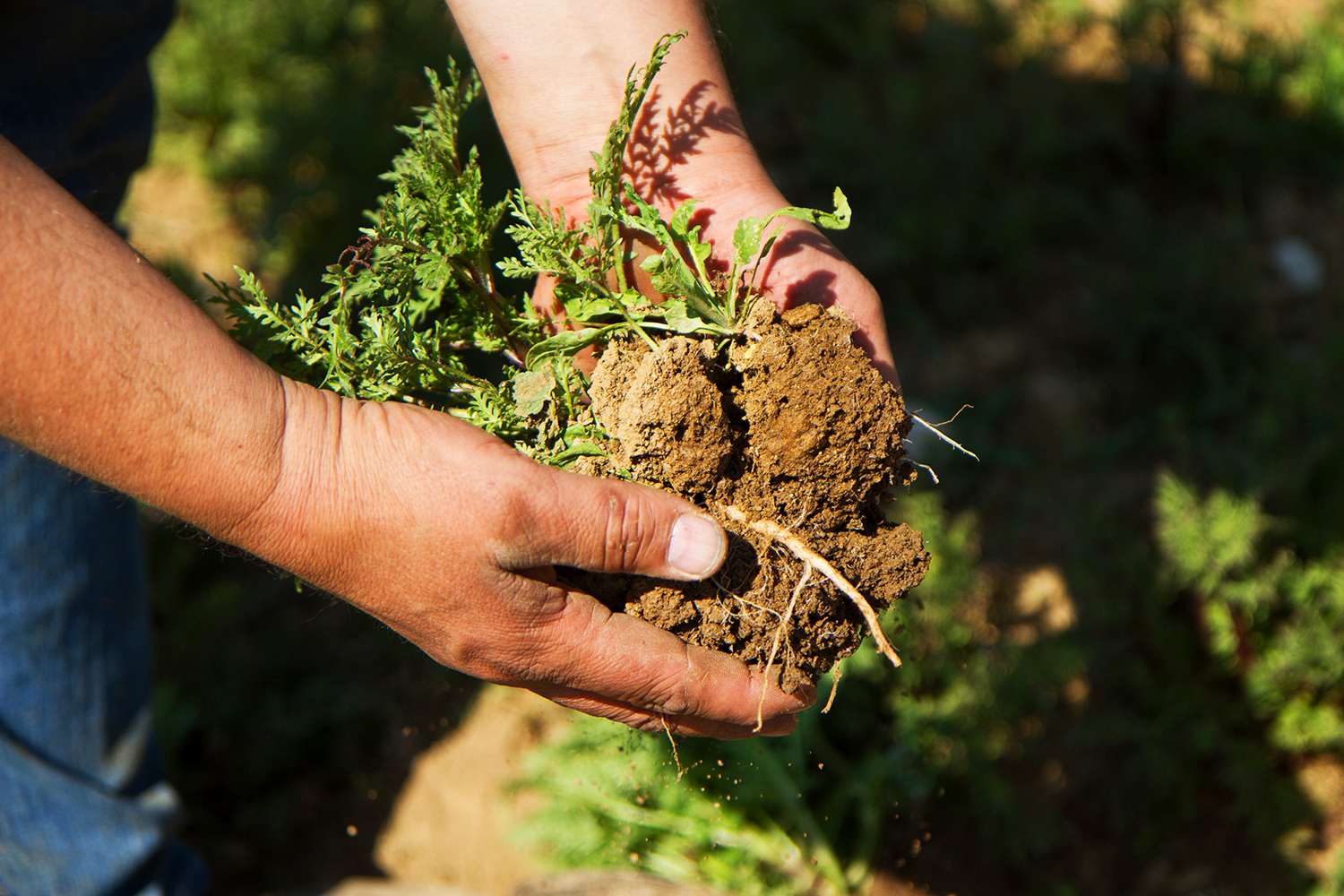
But farmers are not merely suppliers of certain goods that could be purchased more cheaply abroad. Through food production, they fulfill functions that are of considerable long-term importance. They ensure a secure supply of healthy food, the importance of which becomes apparent once again in crisis situations such as the current COVID-19 crisis. Farmers also ensure the preservation of cultural landscapes and biodiversity and produce food under conditions that we can determine ourselves through agricultural policy. However, this additional benefit of agricultural activity is overlooked in a purely economic analysis. Consequently, abandoning domestic agricultural production and shifting it abroad results in lost benefits or costs that go far beyond the loss of self-sufficiency in food. Farmers’ contribution to a country’s quality of life and sustainability is therefore systematically underestimated. Of course, there is still much room for improvement in agriculture. But any credible concept of sustainability ultimately relies on food supply that is as local as possible.
[av_promobox button='no' label='Click me' link='manually,http://' link_target="" color='theme-color' custom_bg='#444444' custom_font='#ffffff’ size=’large’ icon_select=’no’ icon=’ue800’ font=’entypo-fontello’ box_color=” box_custom_font=’#ffffff’ box_custom_bg=’#444444’ box_custom_border=’#333333’ admin_preview_bg=”]
Published in March 2020: MORE PROSPERITY THROUGH LESS AGRICULTURAL FREE TRADE
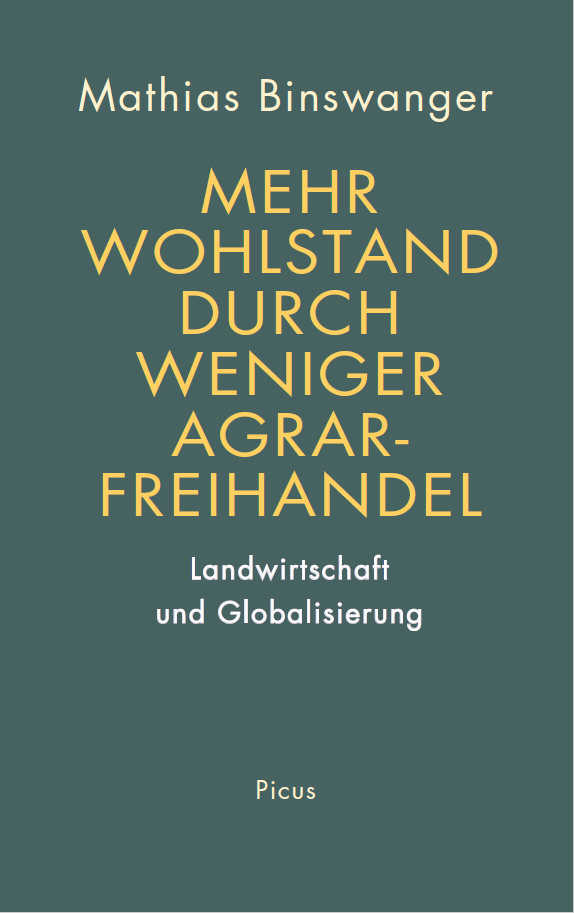 Economist Mathias Binswanger debunks one of the myths of trade theory—namely, that free trade always increases prosperity. In fact, when it comes to agricultural products, free trade creates many losers and only a few winners. The losers include many farmers in both industrialized and developing countries, while a few large-scale farmers and a handful of international corporations count themselves among the winners. In the poorest developing countries, small farmers make up the majority of the population. That is why these countries are often the hardest hit by the negative consequences of agricultural free trade, even though, according to theory, they should benefit the most.
For Binswanger, the political conclusions are clear: tariffs and trade restrictions on agricultural products are fundamentally justified and sensible. They contribute to quality of life and prosperity.
[/av_promobox]
[av_promobox button='no' label='Click me' link='manually,http://' link_target="" color='theme-color' custom_bg='#444444' custom_font='#ffffff’ size=’large’ icon_select=’no’ icon=’ue800’ font=’entypo-fontello’ box_color=“ box_custom_font=’#ffffff’ box_custom_bg=’#444444’ box_custom_border=’#333333’ admin_preview_bg=“]
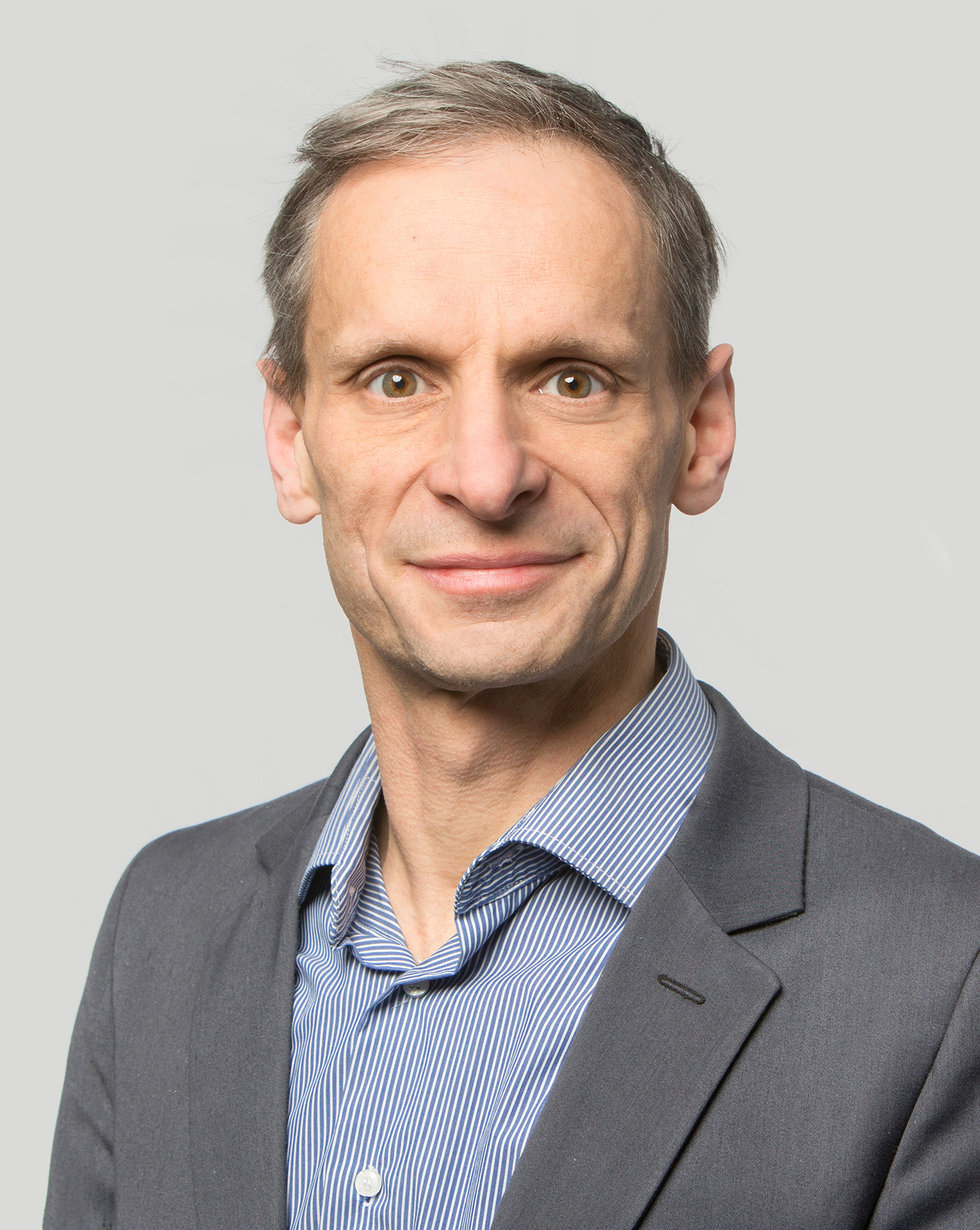 About the Author: Prof. Dr. Binswanger
Mathias Binswanger is a professor of economics at the University of Applied Sciences Northwestern Switzerland in Olten and a Privatdozent at the University of St. Gallen. He has also served as a visiting professor at the Technical University of Freiberg in Germany, at Qingdao Technological University and Lanzhou University in China, and at the Banking University in Saigon (Vietnam). Mathias Binswanger is the author of numerous books and articles in academic journals and the press. His research focuses on macroeconomics, financial market theory, environmental economics, and the relationship between happiness and income. Mathias Binswanger is also the author of the 2006 book *The Treadmills of Happiness*, which became a bestseller in Switzerland. Other well-known books include: *Pointless Competitions – Why We Produce More and More Nonsense* (2010), *Money Out of Thin Air – How Banks Enable Growth and Cause Crises* (2015), and his latest: The Compulsion to Grow – Why the Economy Must Keep Growing, Even When We Have Enough (2019). According to the NZZ’s 2019 ranking of economists, Mathias Binswanger is among the five most influential economists in Switzerland.
[/av_promobox]