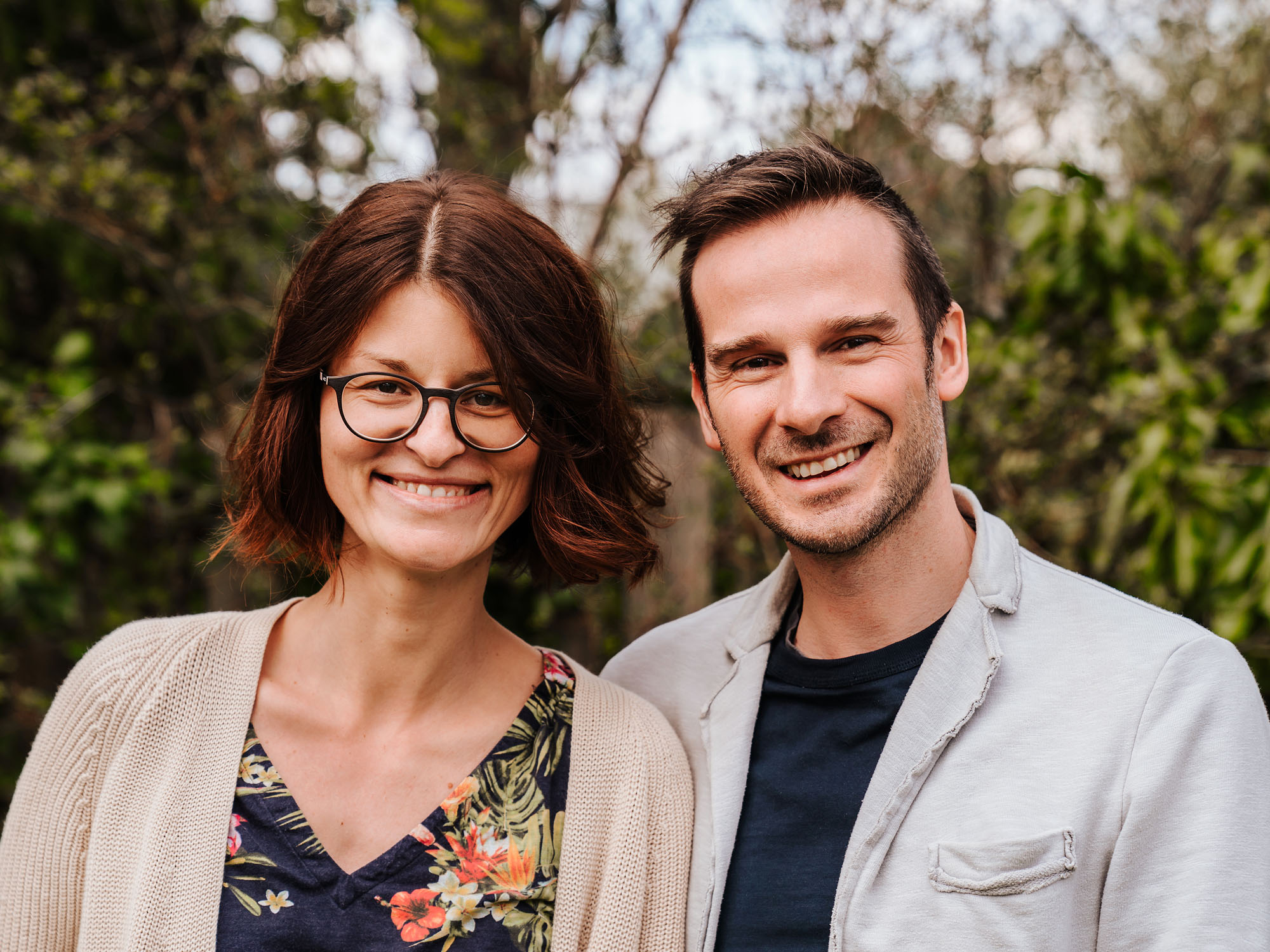
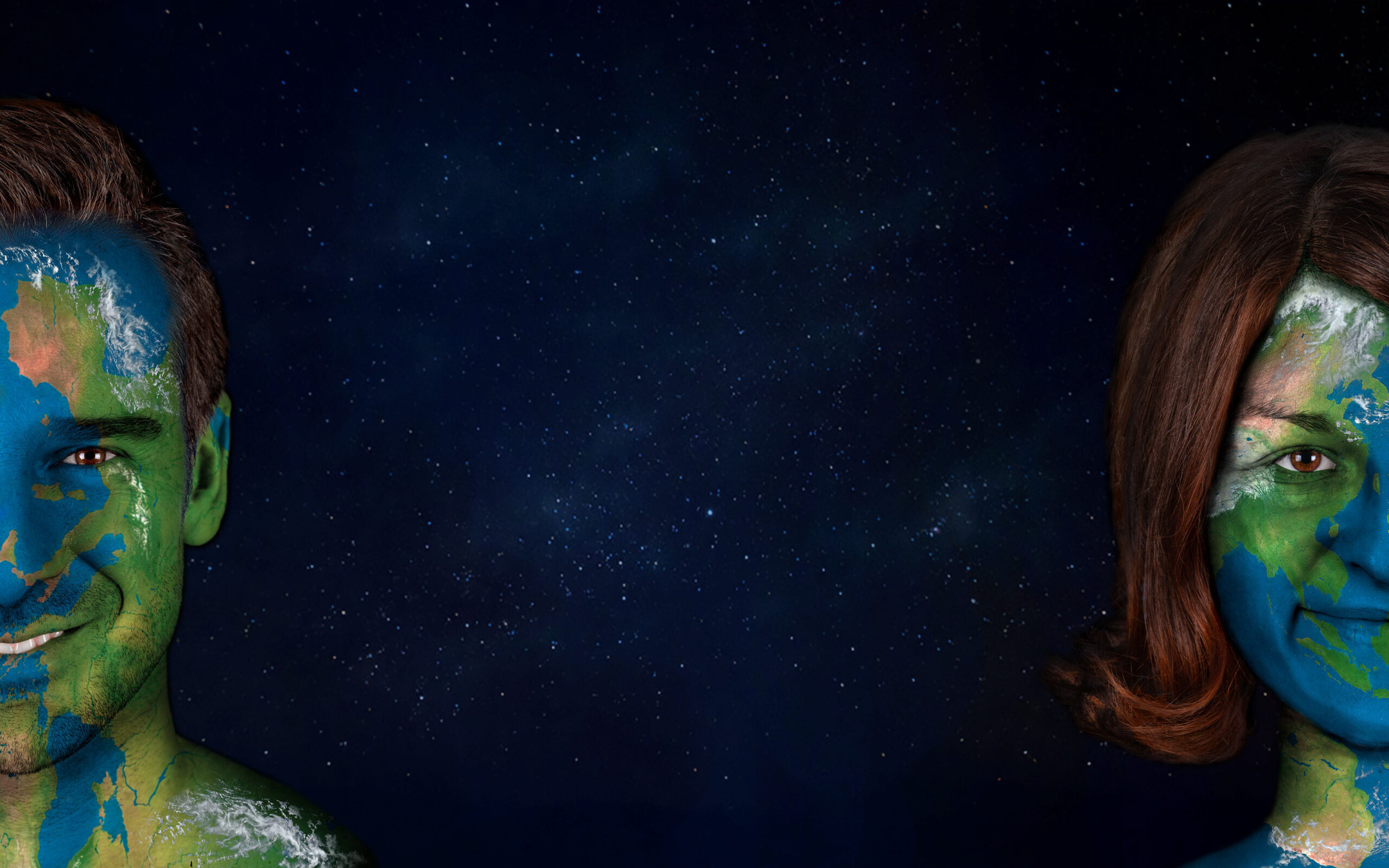
Julia Buchebner and Stefan Stockinger, the "alchemists of the future," are convinced that sustainability comes from within. It’s not just about reducingCO2 emissions and conserving resources, but also about a significant step forward in human development.
Stefan Stockinger: Alchemy was not merely concerned with the creation of gold. It also describes the symbiosis of science and spirituality. Back then, only those who had found themselves could find the “Philosopher’s Stone.” It therefore had both an external and an internal component. For the future, we hope for precisely this connection between the inner and the outer, between science and spirituality, between heart and mind.
Julia Buchebner: Alchemy is the art of transformation. Through “future alchemy,” we aim to foster the transformation toward a world that is livable, sustainable, fair, mindful, and loving. On this journey, we must also take into account inner aspects—the essence of being human. Our goal is to inspire this inner transformation—a profound shift in consciousness within society.
Stefan Stockinger: Before the pandemic, I was hopeful that a social breakthrough was just around the corner. Fridays for Future had brought global issues to light. There was growing demand for mindfulness in companies. The pandemic has shifted the focus, which feels as though we’ve taken a step backward. Recently, someone told us, “You’re 10 years ahead of your time with what you’re doing.” Still, it’s wonderful to see how many people are already engaging with this inner transformation.
Julia Buchebner: On an individual level, the pandemic has indeed sparked a sort of “wake-up call on a small scale.” People have come to realize what truly defines quality of life. Questions about finding meaning and true well-being have become tangible.
Julia Buchebner: It’s about the inner dimension of sustainability. We’ve both been working in the field of sustainability for many years and have noticed that the focus is almost always on external factors: technological innovations, better data, and legislation, etc. And of course, all of that is very important.
From our perspective, however, people often forget that internal factors determine whether we support these external measures in the first place. These factors include values, emotions, and worldviews. They determine the lens through which we view and interpret the world—and, ultimately, how we behave within it.
In the book, we describe which mental, emotional, and spiritual factors hinder or promote sustainable development, where transformation can begin, and what opportunities this opens up for us.
Julia Buchebner: I believe one major reason for a lack of sustainability is that we have lost that inner connection—that connection to ourselves. We’ve become eroded from within because our world is all about appearances. It’s about what I own, what I can do, how I look. It’s about achievements, success, and outward appearances. The connection to inner sources of happiness has been lost, as if that access has been cut off.
The search for happiness solely in the external world keeps the entire consumer machine running. If I don’t feel connected to my inner self, if I don’t value myself, and if I don’t find that happiness within myself, I try to fill that void with external things.
This also means that personal and planetary well-being can go hand in hand when we realize that connecting with ourselves makes us less dependent on resource-intensive consumption and waste.
Stefan Stockinger: When people ask why we need the inner dimension of sustainability, I often ask them this in return: Suppose we ignore that inner dimension. Suppose we manage to change everything on the outside so that we’ve become sustainable “on paper” by focusing solely onCO2, resources, technologies, laws, and so on. Is that the kind of world we want to live in?
I don’t think so. To me, sustainability also means that we have taken a step forward in our human development. That we live according to our authentic values, are compassionate, are more in touch with our emotions, can make decisions more freely, realize our potential, and experience deep happiness in life. Or, in the words of Otto Scharmer (founder of Theory U): that we transform our ego-worldview into an eco-worldview (ecological worldview).
Stefan Stockinger: …brought a simple cattle farmer to tears because he identified so strongly with the content. But I was also very pleased when a psychotherapist told us that we had beautifully described the emotional underpinnings of sustainability.
Julia Buchebner: I never would have thought that the title of our book would come to define our life as a couple. Just the act of writing the book together helped us grow as people, though it wasn’t always without its conflicts (laughs). Aside from that, what really made me happy was that several company executives bought our book as a Christmas gift for their entire staff.
Julia Buchebner: The Pioneers of Change network has always been a great source of inspiration to me. In my early twenties, it was truly inspiring to see that there are people who live out this connection between the inner and the outer worlds. Stefan and I actually met through this network. I am very grateful that this movement exists.
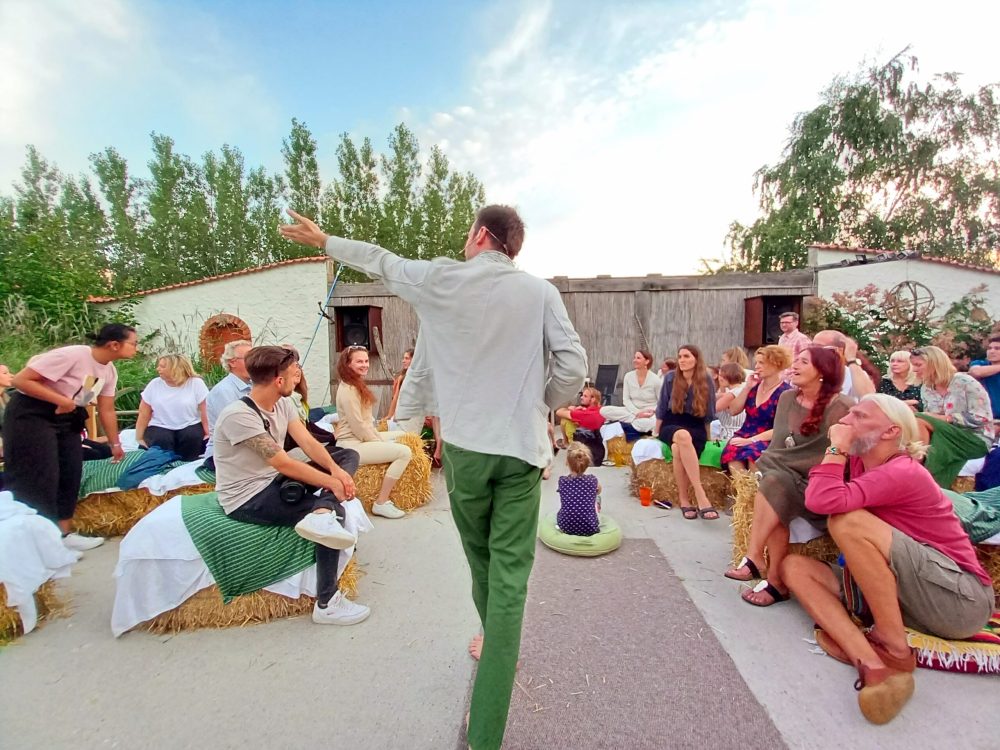
Julia Buchebner: To ensure that the inner dimension of sustainability doesn’t remain merely a philosophical concept, we also aim to convey it in practical terms—which we do through workshops, lectures, seminars, and our Change Maker Retreats. In our experiential lecture“Back from 2040,”we try to tell inspiring stories about the future in an entertaining and hopeful way as “time travelers.” We also collaborate with organizations on “Skills4future” and train transformative future skills.
Stefan Stockinger: When we talk about “mindsets,” however, we’re referring to something deeper than just the mind. It’s about a new attitude toward life. We want people to reconnect with their feelings. That’s the only way sustainability can succeed from the inside out.
Julia Buchebner: For me, the question of “What for?” is central—that is, knowing the purpose of one’s own existence. I am here to help shape this shift in consciousness, to bring something new into the world, and to remind people of their love for the world and for life. When I meditate, I feel this deep motivation in every cell, and that carries me through any difficult times. No war in the world and no negative news can stop me from living my deeper mission. Personally, this gives me an incredible amount of strength.
Stefan Stockinger: I would like to look back on a life in which we remained true to ourselves. With our book, we have outlined a certain ideal vision for society and for ourselves. I hope to have come closer and closer to realizing that vision. It would be wonderful if, through our work, we have succeeded in helping people reconnect more deeply with themselves and nature, and in helping to shape a new, life-affirming mindset.
These days, it’s almost painful for me to see how negatively many people think. That’s why I hope that in 25 to 30 years, we’ll be living in a more positive world, where people once again see the glass as half full rather than half empty. And where we’ll boldly, courageously, and with a sense of self-empowerment venture down entirely new paths.
______________________________________________________