
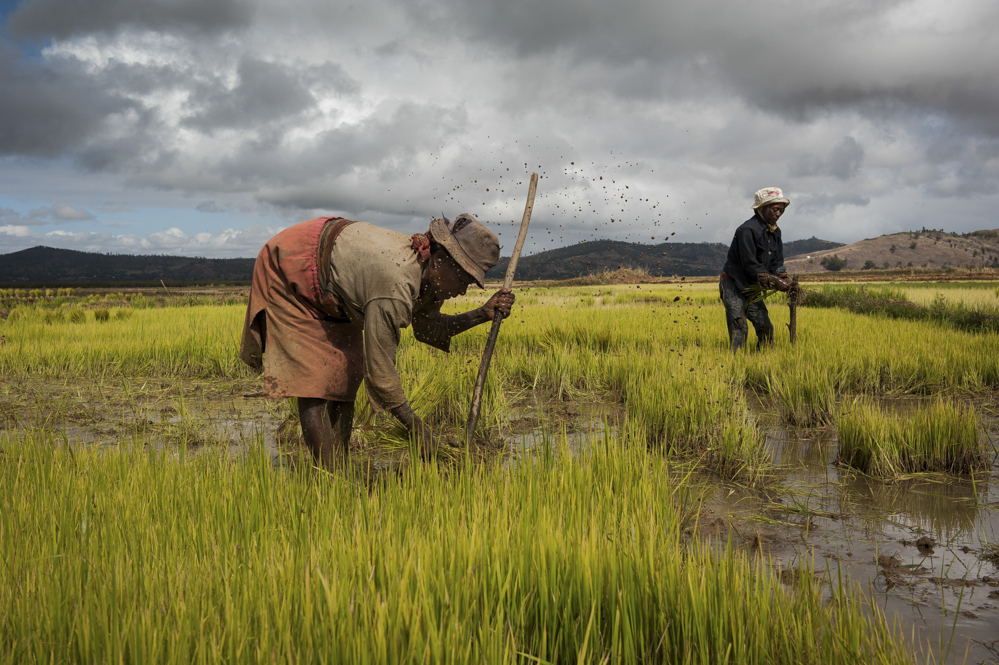
The concept of food sovereignty, which was initially criticized as unscientific, has been recognized by experts since the publication of the 2008 World Agriculture Report as a serious proposal for solutions to the hunger crisis and for sustainable agriculture.
In 2011, Slow Food International launched a food sovereignty project involving school and community gardens in Africa. Under the original title “1,000 Gardens for Africa,” this initiative led to the creation of sustainable vegetable gardens in schools, villages, and on the outskirts of cities in 26 African countries. In 2014, the successful project entered a major expansion phase: the goal is to grow from 1,000 gardens to 10,000!
[av_heading heading=’Africa’s (Self-)Liberation from Hunger’ tag=’h3’ style=“ size=“ subheading_active=“ subheading_size=’15’ padding=’10’ color=“ custom_font=“ admin_preview_bg=“][/av_heading]
The goal is for local residents to be able to grow and eat their own fresh, locally sourced food in community gardens. The transfer of knowledge across generations and the passing down of traditional and time-honored techniques also play a key role in promoting food sovereignty and food security. After the first four years of project work in Africa, it became clear that not only had more than 1,000 community gardens been established, but much more had been achieved. A sustainable network was built that is bringing about real change in society.
Children take pride in growing their own sustainable vegetables; young people once again see prospects and opportunities for the future in farming; and heirloom varieties and seeds are being preserved and reintroduced. And last but not least, healthy, clean, and fairly produced food makes a significant contribution to people’s health.
[av_gallery ids='4478,4479' style='thumbnails' preview_size='portfolio' crop_big_preview_thumbnail='avia-gallery-big-crop-thumb' thumb_size='portfolio' columns='2' imagelink='lightbox' lazyload='avia_lazyload' admin_preview_bg="]
[av_heading heading='Sustainable Development of a Community Garden' tag='h3' style=" size=" subheading_active=" subheading_size='15' padding='10' color=" custom_font=" admin_preview_bg="][/av_heading]
A garden is about more than just growing and caring for plants. Every single community garden a group wishes to create begins long before planting with the observation of the microclimate, analysis of the soil, and assessment of the site’s orientation to ensure the best possible conditions for the garden. It is also essential to ensure that water is available or can be collected and to identify any potential threats to the garden (animal intrusions, erosion, wind, etc.).
Through Slow Food, regional experts are available to provide advice and help establish contacts with other gardens from which native seeds and plants—free of genetic modification—can be obtained. To maintain and perhaps even expand the garden, a seed bed and a composting area are set up near the garden from the very beginning. In addition, the garden should be protected with fences and barriers made from local natural materials. Plants such as wild cacti or flowers can also serve this purpose, as they help attract beneficial insects that protect against diseases. Clear labeling of the plants facilitates learning and makes it easier for everyone to observe the plants at their various stages of growth.
[av_heading heading='Proven Success' tag='h3' style=" size=" subheading_active=" subheading_size='15' padding='10' color=" custom_font=" admin_preview_bg="][/av_heading]
The project has been underway since 2012 and is continuously evaluated by Slow Food Africa. Numerous partners are supporting the project to quickly achieve the ambitious goal of 10,000 “food gardens.” However, the project’s greatest and most sustainable success is its organic spread across the African continent through the initiative and efforts of teachers, students, and communities.
[av_video src='https://youtu.be/2bPNk0pX4XQ' format='16-9' width='16' height='9']
[av_notification title=" color='silver' border=" custom_bg='#444444' custom_font='#ffffff' size='normal' icon_select='yes' icon='ue80b' font='entypo-fontello' admin_preview_bg="]
Photos courtesy of Slow Food [/av_notification]
[av_notification title=" color='custom' border=" custom_bg='#e2e8ca' custom_font='#444444' size='normal' icon_select='yes' icon='ue837' font='entypo-fontello' admin_preview_bg="]
Editorial article
[/av_notification]