Ein Abend im Deutschen Theater in Berlin: Hunderte Menschen sind zusammengekommen, um miteinander zu diskutieren. Über die Gesellschaft, über die Demokratie und an diesem Tag vor allem über die Flüchtlingsbewegung. Eine Schülerin ergreift das Wort:
„Ich verstehe gar nicht, warum sich alle so aufregen und besorgt zeigen. Das ist doch jetzt nur eine neue Phase.“
Es ist ein einfacher und doch so weiser Satz, der das Plenum aufrüttelt. Und es sind Momente wie dieser, die die Initiative „Die Offene Gesellschaft“ so besonders machen.
Echte Gespräche braucht die Gesellschaft
Im September 2016 gegründet, verfolgt „Die Offenen Gesellschaft“ folgenden Anspruch: Die Demokratie gegen ihre Feinde zu verteidigen und unsere Gesellschaft weiterzuentwickeln. Und wie soll das geschafft werden? Durch öffentliche Debatten. Bis zu 700 Menschen pilgern zu den Events, die von den Initiatoren zwar kuratorisch betreut, aber ansonsten in keiner Weise beeinflusst werden. Mehr als 4.000 „Freundinnen und Freunde“ aus den unterschiedlichsten gesellschaftlichen Bereichen unterstützen die Bewegung. Zu den Partnern gehören neben vielen anderen die Open Society Foundation, die Robert Bosch Stiftung, die Bertelsmann-Stiftung, die Stiftung FUTURZWEI, die Diakonie, die Denkfabrik adelphi research, deutsch plus oder das Deutsche Theater.
Der Grundgedanke der Initiative war, analoge Räume zu schaffen, in denen Menschen sich austauschen können.
„Durch die Digitalisierung kommt es zu einer zunehmenden Atomisierung in der Gesellschaft. Und wir sind der Meinung, dass es öffentliche Situationen des Gespräches braucht, damit Leute sich orientieren können“, erläutert der Soziologe Harald Welzer, einer der Mitinitiatoren.
Mit den Debatten wird ein Moment geschaffen, in dem die Rednerinnen und Redner unmittelbar zu ihren Aussagen stehen müssen. Das sind auch die Stärken eines öffentlichen Diskurses: Die Leute werden verletzlicher und zugleich mutiger. Sie müssen sich zeigen, können sich nicht hinter der Anonymität im Netz verstecken. Und das bringt eine andere Qualität des Austauschs mit sich.
„Dauererregte“ sind in der Minderheit
Ebenfalls beeindruckend ist, wie ruhig und zivilisiert die Veranstaltungen bisher abgelaufen sind. Keine Eklats, keine Abbrüche. „Obwohl auch Pegida-Leute dabei waren und wir einmal die Identitären dahatten, hat es nie Aufruhr gegeben“, schildert Welzer. „Das war die große, positive Überraschung. Dass die Leute vernünftiger sind, als uns tagtäglich eingeredet wird. Die ‚Dauererregten‘ sind eine Minderheit.“
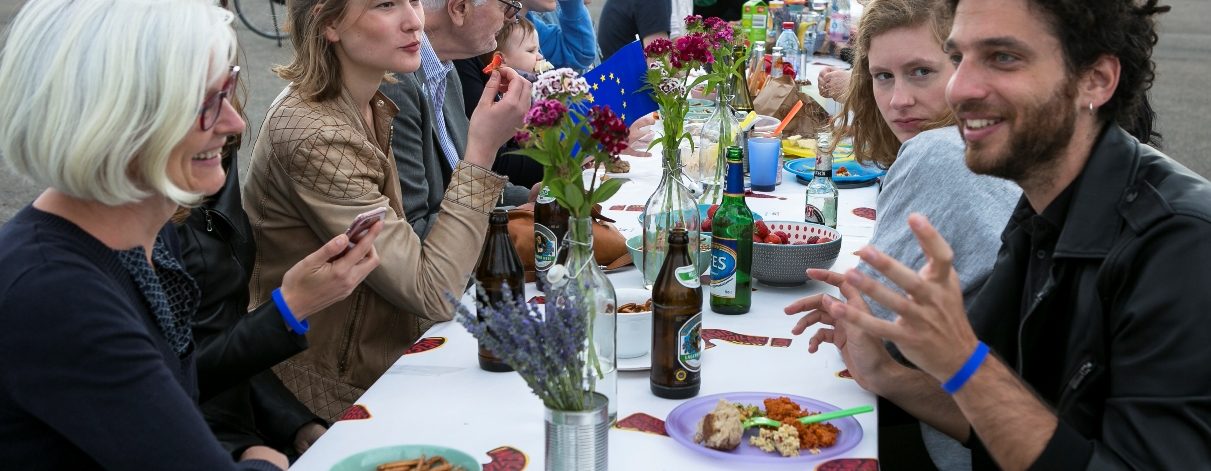
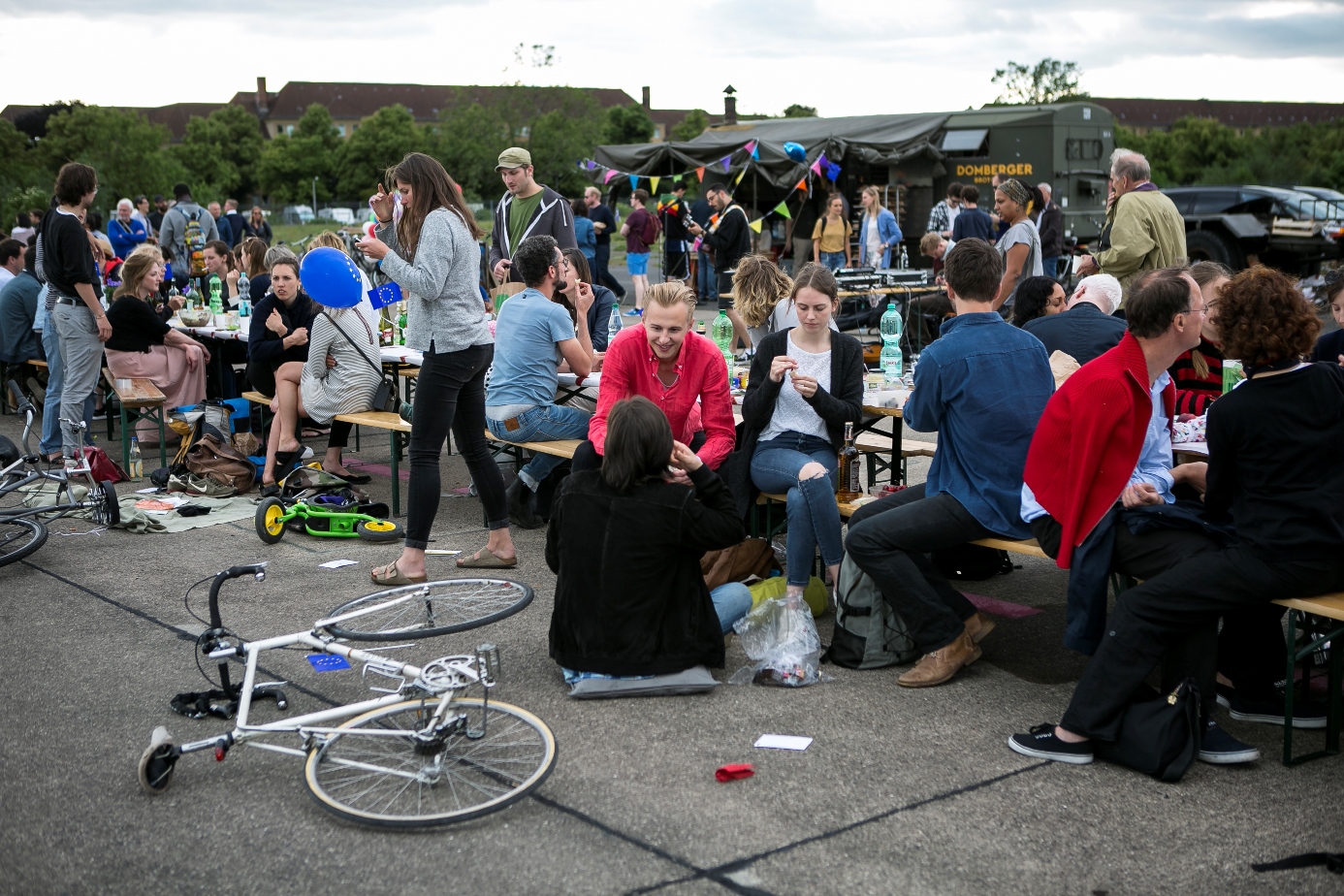
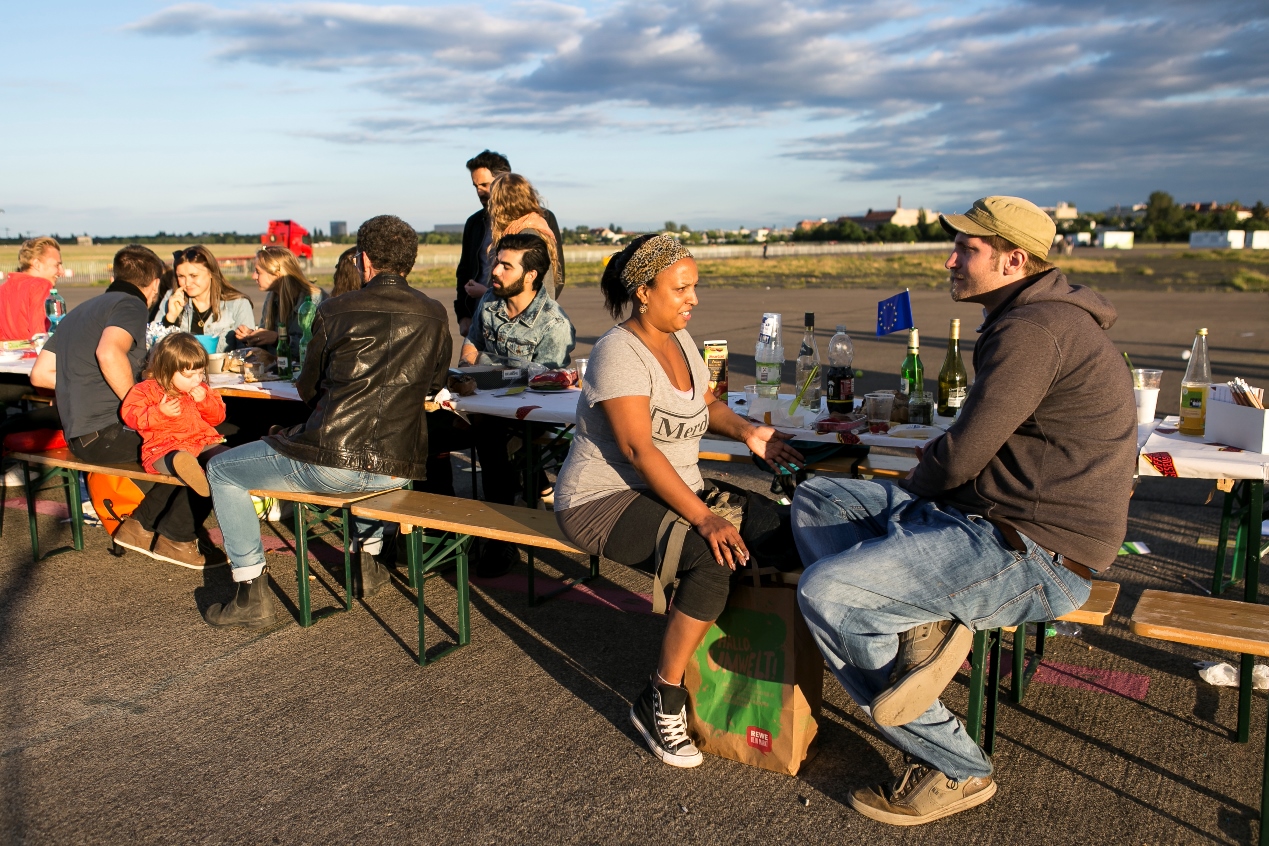
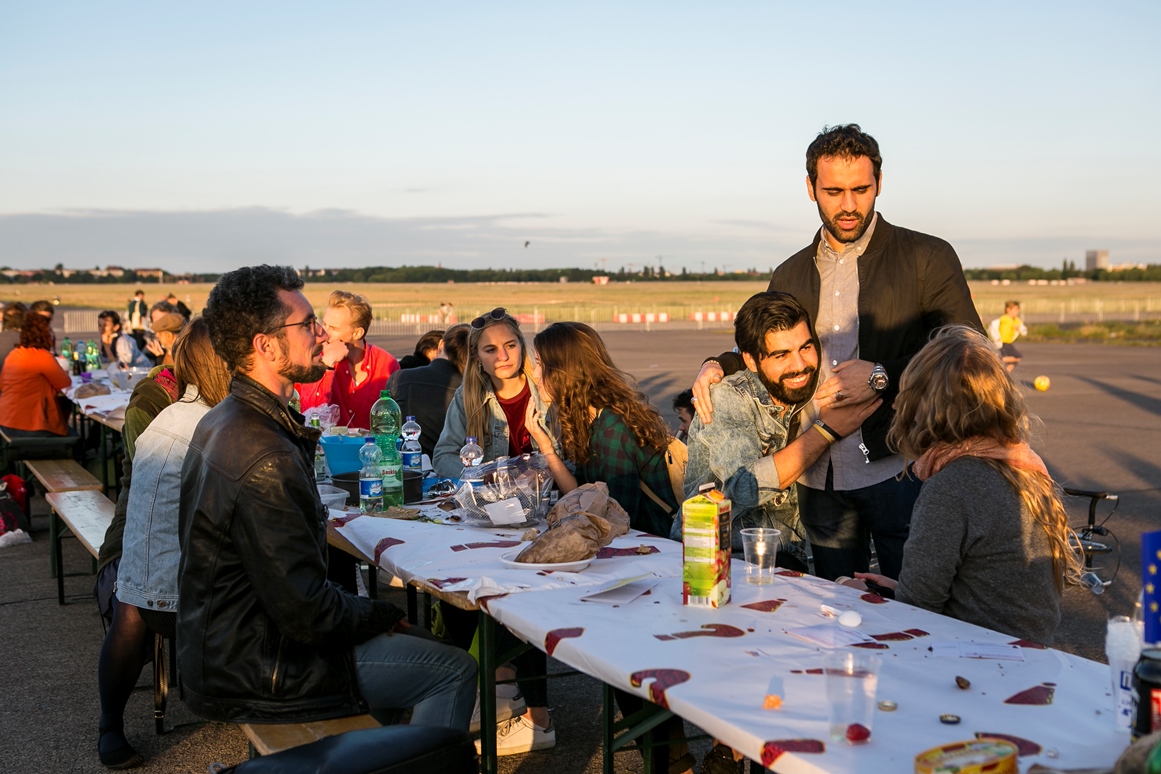
Ein besonderer Tag war der 17. Juni 2017. Der erste „Tag der Offenen Gesellschaft“. Das war der gewagte Versuch, so etwas wie einen neuen Feiertag zu erfinden. Eine Gelegenheit, zu der man sich offen zeigt und demonstriert, welche Art von Gesellschaft und Kultur man eigentlich sein will. Konkret sah das dann so aus: Überall in Deutschland luden sich Leute gegenseitig zum Essen ein. „Ein bundesweites Dinner“, wie Harald Welzer es bezeichnet. Eine schlussendlich ausgesprochen erfolgreiche Angelegenheit. Über 500 Veranstaltungen gingen über die Bühne. „Zum Teil mit tausenden Teilnehmerinnen und Teilnehmern“, schwärmt der Soziologe. „Da waren wir schon ein bisschen stolz.“
Eine Idee für ganz Europa
„Die Offene Gesellschaft“ beschränkt sich nicht nur auf Deutschland. Im gesamten deutschsprachigen Raum gab es bereits Versammlungen in ihrem Namen. In Österreich übrigens in Steyr und Wien.
„Von uns aus liegt es nahe, dass die Sache gesamteuropäisch wächst. Wir arbeiten ja kuratorisch“, erklärt Welzer abschließend. „Um eine Veranstaltung auf die Beine zu stellen braucht es nicht viel. Räume gibt es ja genug. Theater, Kirchen, Freizeitclubs, Sporthallen, was auch immer. Von uns bekommen die Organisatoren auf Wunsch Hilfestellung und Materialien wie Plakate. Wer etwas tun will, kann es machen.“
„Die Offene Gesellschaft“
Welches Land wollen wir sein? Das ist die Frage, die „Die Offene Gesellschaft“ durch öffentliche Gespräche und Debatten zu klären versucht. Die Initiative bietet Interessierten eine Bühne über die Website und Social-Media-Kanäle, einen Freundeskreis sowie Rat und Tat bei der Umsetzung von Projekten. Auch in Österreich gibt es laufend Veranstaltungen. Alle Interessierten sind herzlich willkommen. Mehr Infos finden Sie hier: Die Offene Gesellschaft.
Sie sehen gerade einen Platzhalterinhalt von Facebook. Um auf den eigentlichen Inhalt zuzugreifen, klicken Sie auf die Schaltfläche unten. Bitte beachten Sie, dass dabei Daten an Drittanbieter weitergegeben werden.
Sie sehen gerade einen Platzhalterinhalt von Instagram. Um auf den eigentlichen Inhalt zuzugreifen, klicken Sie auf die Schaltfläche unten. Bitte beachten Sie, dass dabei Daten an Drittanbieter weitergegeben werden.
Sie sehen gerade einen Platzhalterinhalt von X. Um auf den eigentlichen Inhalt zuzugreifen, klicken Sie auf die Schaltfläche unten. Bitte beachten Sie, dass dabei Daten an Drittanbieter weitergegeben werden.